Small Space Solutions
Storing Seasonal Items You Use Only Once a Year
Seasonal items are easy to live with when their season arrives and difficult to store for the other ten months. In a small home the problem is not only volume. The…
A bicycle is awkward to live with. It is long, it is dirty when wet, and it cannot be folded into a cupboard like most household objects. In a small home or…
A bicycle is awkward to live with. It is long, it is dirty when wet, and it cannot be folded into a cupboard like most household objects. In a small home or apartment, that creates a genuine storage problem. The good news is that a bike takes far less room when it is held vertically or off the floor, and several approaches suit different budgets and living situations.
Before choosing a storage method, measure the bicycle and the spot it will occupy. Note the overall length, the handlebar width and the height from floor to saddle. Then look at the available wall or floor area, including the door swings and the route people walk. A storage solution that projects into a narrow hallway will quickly become a nuisance even if it holds the bike perfectly.
Decide whether the bike needs to be accessed daily or only on weekends. A commuter that is used every morning should be easy to take down and put back. A bike that comes out occasionally can live in a less convenient, more compact position. That single decision rules out several options immediately.
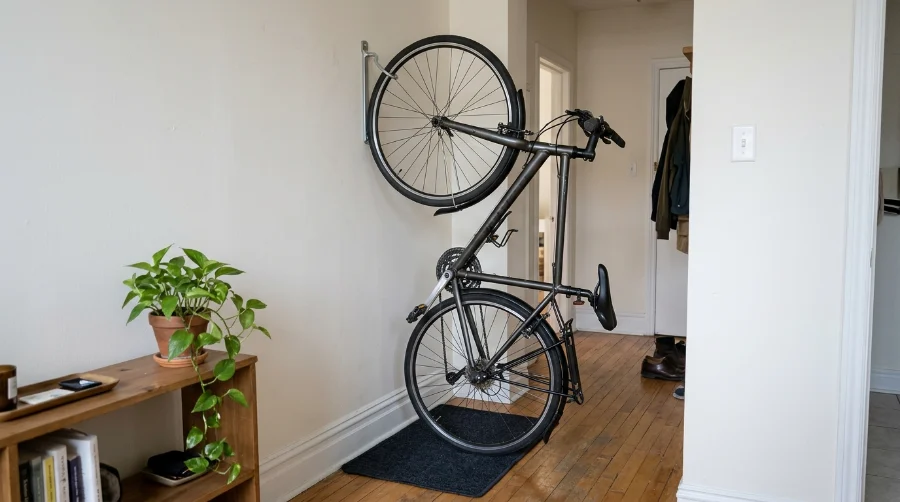
The simplest way to reclaim floor space is to store the bicycle upright against a wall. A front-wheel holder or a simple wall hook fixes the front wheel while the rear wheel rests on the floor. This keeps the bike stable and reduces its footprint to the length of one wheel plus the width of the frame.
Fix any wall-mounted holder into a stud or masonry, not just plasterboard, because the bike puts a surprising amount of leverage on the fixing. Position the holder so the bike hangs clear of doorways and furniture, and check that the handlebars do not knock the wall when the wheel is turned. A rubber pad or a short piece of tubing on the contact point protects both the paint and the wall.
Where wall space is limited and the ceiling is accessible, a ceiling-mounted hoist or a pair of heavy hooks can lift a bicycle completely out of the way. This works well in a garage, a utility room, or a tall apartment with high ceilings. The bike is raised by a simple pulley system and held above head height until needed.
Ceiling storage demands care. Fix the bracket into a joist, check the load rating, and make sure the lifted bike cannot fall onto anyone below. Avoid using it where a door opens directly underneath or where someone regularly stands. It suits light, infrequently used bicycles better than a heavy bike that is grabbed every day.
A freestanding vertical rack holds the bike upright on its own base, with no wall fixing required. This is useful for renters or for rooms where drilling is not allowed. The rack takes up roughly the space of a large suitcase and can be moved when the room is rearranged.
Choose a stand with a broad, stable base and a cradle that grips the wheel without rubbing the rim. Cheap, narrow stands can tip if the bike is loaded with a basket or child seat. Check that the stand suits the tyre width, particularly for wider tyres on hybrid or gravel bikes.
An over-the-door bike hanger uses the back of a door and needs no permanent fixing. It is a practical option in an apartment where every wall is already spoken for, though it does reduce how far the door can open and can put strain on the hinges if the bike is heavy. Use it on an internal door that is not used as the main entrance.
The gap beside a wardrobe or at the end of a hallway can sometimes hold a bike held by a single floor-to-ceiling tension pole. These systems work in a genuinely tight space, but they must be fitted correctly to avoid damaging the ceiling. Follow the fitting instructions and recheck the tension periodically.
Wet tyres bring water and grit indoors. Whatever storage method is chosen, place an absorbent mat under the contact points and wipe the bike down before bringing it into a living area in winter. A chain that has been treated with oil can mark a wall or floor, so keep a small cloth near the storage spot for a quick wipe.
In shared hallways, consider how the bike affects other residents. It should not block an escape route, trap a door or leave a trip hazard. A bike that is stored in a communal area without permission may be removed, so agree on the spot with a landlord or building manager first.
A bicycle kept in a garage or a communal entrance is more visible to thieves than one inside the home. Use a robust lock through the frame and wheels, and fix the lock to a solid anchor rather than to a thin railing. Where a bike is stored outside the living space, a compact lock that travels with the bike and a fixed ground anchor at home give useful protection.
Record the frame number and take a photograph of the bike. These details help enormously if it is stolen and make a claim more straightforward. They take a few minutes to gather and are easy to forget until they are needed.
There is no single best way to store a bicycle in a small home. A wall hook suits a daily bike in an apartment. A ceiling hoist suits a second bike in a garage. A freestanding vertical rack suits a renter who cannot drill. Start with how often the bike is used and what the space will allow, then choose the simplest method that keeps the bike stable, accessible and out of the walking route. A storage system that is easy to use is the one that will still be in use a year later.
Guides that pair well with this one.
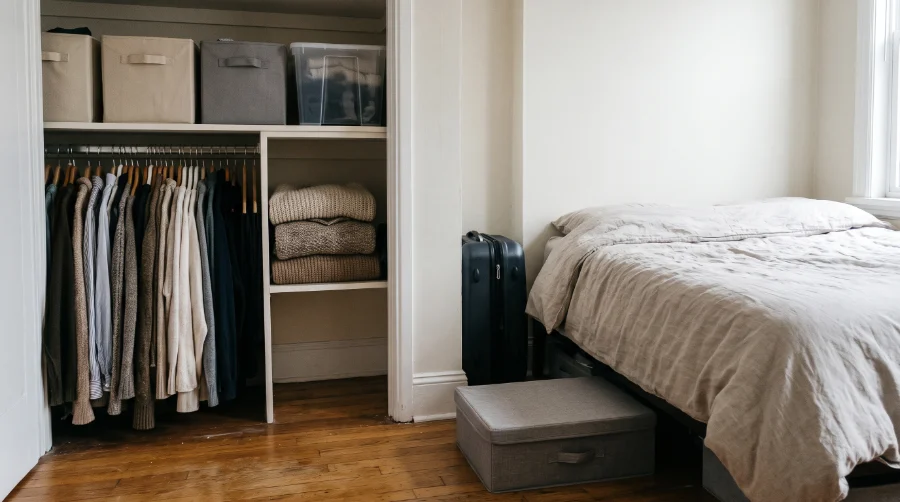
Seasonal items are easy to live with when their season arrives and difficult to store for the other ten months. In a small home the problem is not only volume. The…
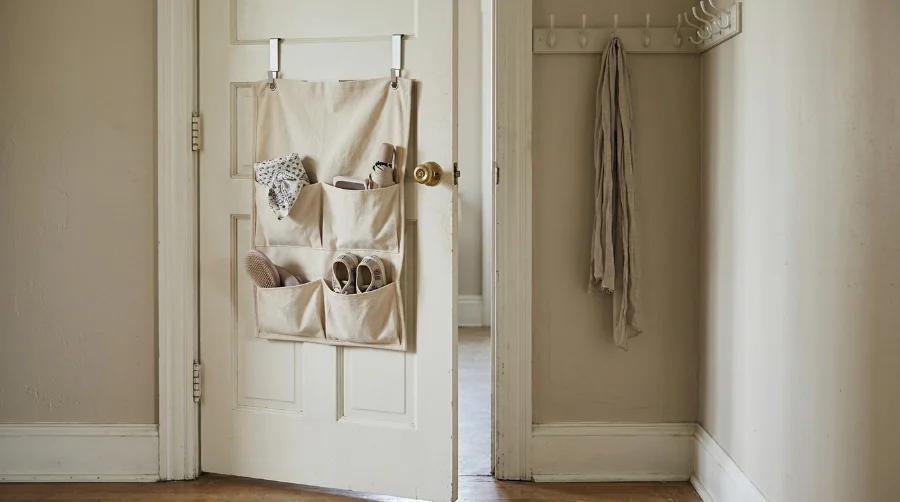
The back of a door is one of the few empty surfaces in a small home that nobody needs to walk across. A simple hook or hanging pocket can turn that surface into…
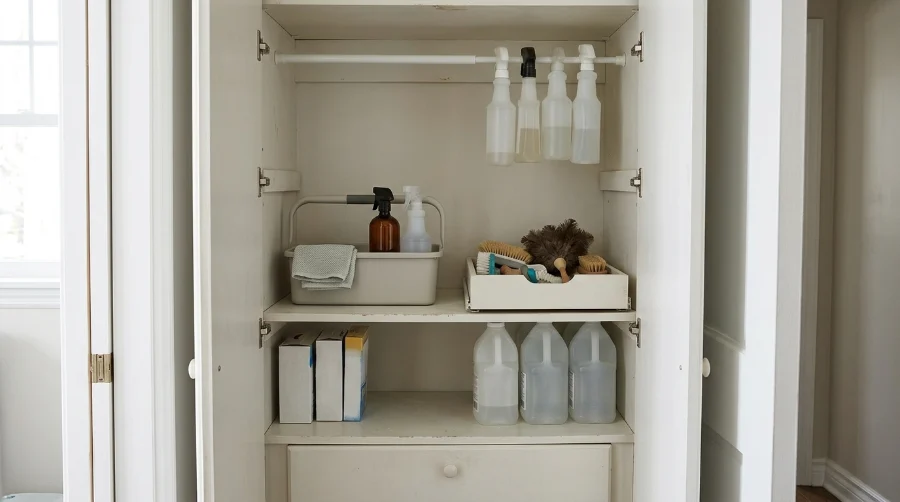
Cleaning products tend to spread across a small home because they are used in several places and bought one at a time. A bottle under the sink, a spray in the…