Small Space Solutions
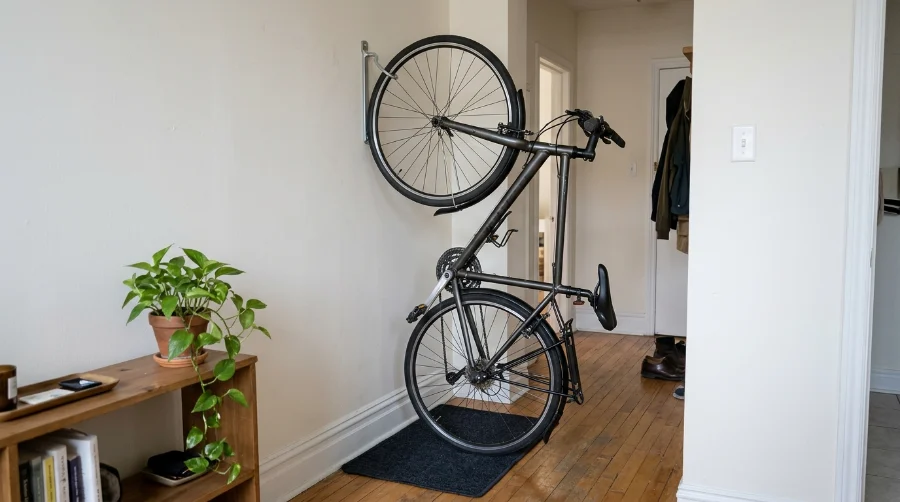
Where to Keep a Bicycle in a Small Home
A bicycle is awkward to live with. It is long, it is dirty when wet, and it cannot be folded into a cupboard like most household objects. In a small home or…
Seasonal items are easy to live with when their season arrives and difficult to store for the other ten months. In a small home the problem is not only volume. The…
Seasonal items are easy to live with when their season arrives and difficult to store for the other ten months. In a small home the problem is not only volume. The places that usually absorb this kind of stuff — a garage, a basement, a spare closet — may simply not exist. A workable system makes items easy to find when you need them and easy to put away when you do not.
Most people group seasonal things by category: holiday decorations together, winter clothes together. That helps, but it is not enough. Add a timing layer. Items used for one week each year can live in the least convenient spot; items needed for eight weeks every winter should stay reachable.
Divide belongings into three groups. The first is things used briefly once a year, such as holiday decorations or a snow shovel. The second is things used for one season, such as winter coats or summer linens. The third is things used occasionally without a fixed schedule, such as formal wear or spare bedding for guests. The first group can go high or deep, the second needs a predictable shelf, and the third benefits from a visible, labelled container.
Vacuum-sealed bags save a useful amount of space for clothing and bedding, but they are not right for everything. Compressing down jackets or wool blankets for long periods can affect how they recover their loft, so check the care label first. Foam items should not be compressed beyond what the manufacturer allows. For delicate fabrics, a breathable garment bag is safer than plastic.
Stackable bins with lids protect decorations and sporting goods from dust. Clear bins make the contents visible, which helps when you are not the person who packed them. If you prefer opaque bins, label two or three sides so the text can be read from different angles. Uniform bin sizes stack more neatly than a mixture of shapes.
Photos, paper documents and electronics do not belong in a hot attic or a damp basement. Keep them in a cool, dry place inside the living area. Candles and anything with a battery should stay away from high heat as well.
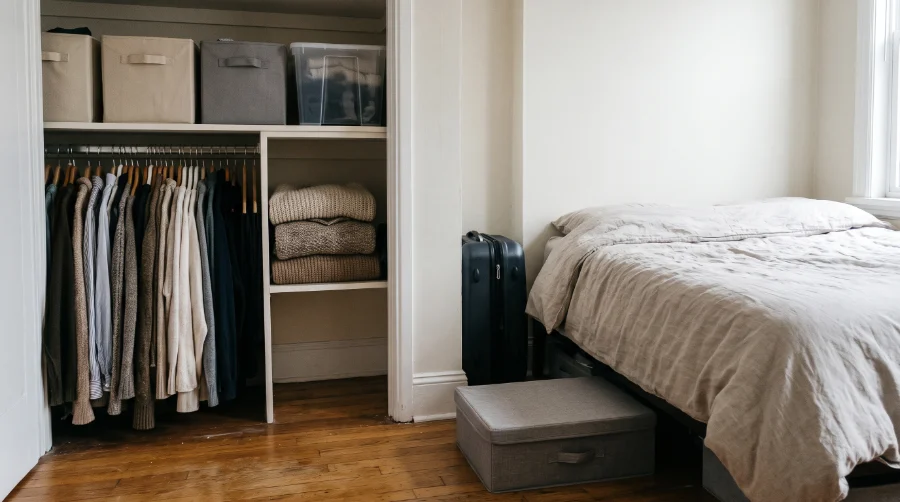
This is often the most useful space in a small bedroom. Low, flat bins with lids slide under most beds, but measure the clearance first because bed frames vary widely. Keep the heaviest bins near the center of the bed so they are easier to pull out, and leave a little gap for airflow if the area tends to be humid.
The shelf above a hanging rail is frequently wasted. It suits light, rarely used items. Use bins rather than loose objects, because reaching above eye level makes loose items easy to knock over. Avoid stacking bins so high that they become unstable.
A spare suitcase can double as seasonal storage if it is kept somewhere dry. Suitcases with wheels are easier to pull out than those you have to lift from a high shelf. The gap behind a sofa is less useful than it looks, but a slim rolling cart fits some narrow spaces and can be pulled out when needed.
A useful label answers two questions: what is inside and when it is needed. "Winter – gloves and scarves, October to March" tells you more than "clothes". Write on the bin itself rather than on the lid, because lids get swapped. If several people share the home, use words everyone understands instead of a private shorthand.
Keep a short list on your phone of what is stored where. It does not need to be detailed. A note such as "holiday lights – top shelf, clear bin" can save an afternoon of searching when the time comes.
Moving everything out once a year feels overwhelming. A rotation is easier to maintain. When the weather changes, swap one group of items: put away the summer linens and bring out the warmer bedding. Do the same with clothing. Each swap takes about twenty minutes rather than a weekend.
At the same time, remove anything that did not get used. If a piece of sports equipment has not left the closet in two full seasons, it is taking space that a used item could occupy. Pass it on only after checking that nobody else in the household still relies on it.
Overfilling bags is the problem people regret most. When a bag is packed too tight, items crease, zips strain, and nothing goes back in the same way twice. Pack slightly less than you think you need. Mixing categories in one container causes a similar headache: a bin holding wrapping paper, batteries and spare bulbs is almost impossible to search. One bin, one purpose.
Humidity causes slower damage. A musty smell means the storage area needs ventilation or that items were put away damp. Dry everything fully before packing, and use a moisture absorber in enclosed spaces if needed. Check stored items once a season rather than assuming they will be fine.
Good seasonal storage in a small home depends less on clever products than on a few firm decisions: what belongs in the least accessible spot, which container suits each item, and how you will find it again. Keep the number of containers small enough that you can remember what is in them. If the system needs a complex map to understand, it will not survive the next busy month.
Start with one category and store it properly. Once that works, move to the next. A small system you maintain is worth more than a complete system you abandon after a fortnight.
Guides that pair well with this one.
A bicycle is awkward to live with. It is long, it is dirty when wet, and it cannot be folded into a cupboard like most household objects. In a small home or…
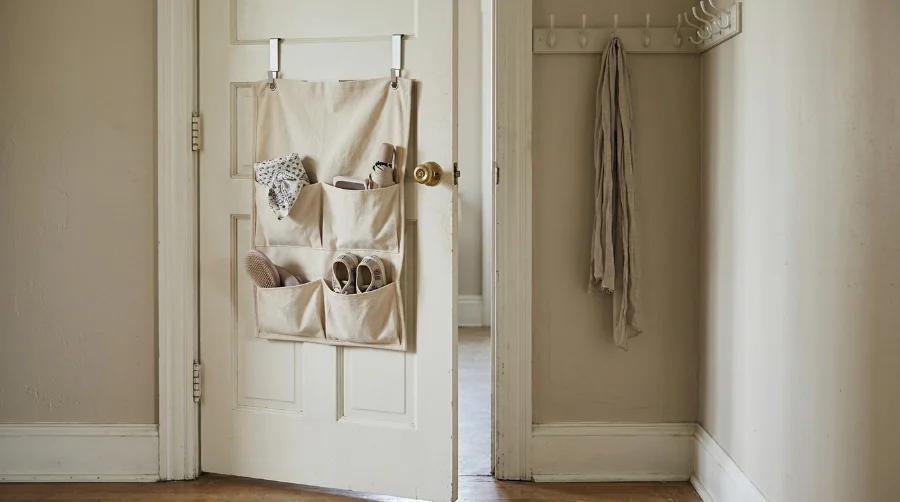
The back of a door is one of the few empty surfaces in a small home that nobody needs to walk across. A simple hook or hanging pocket can turn that surface into…
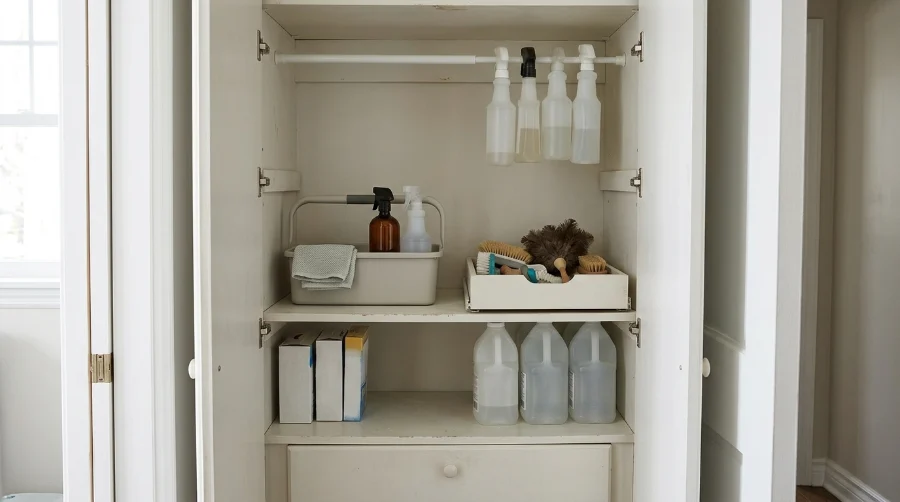
Cleaning products tend to spread across a small home because they are used in several places and bought one at a time. A bottle under the sink, a spray in the…