Small Space Solutions
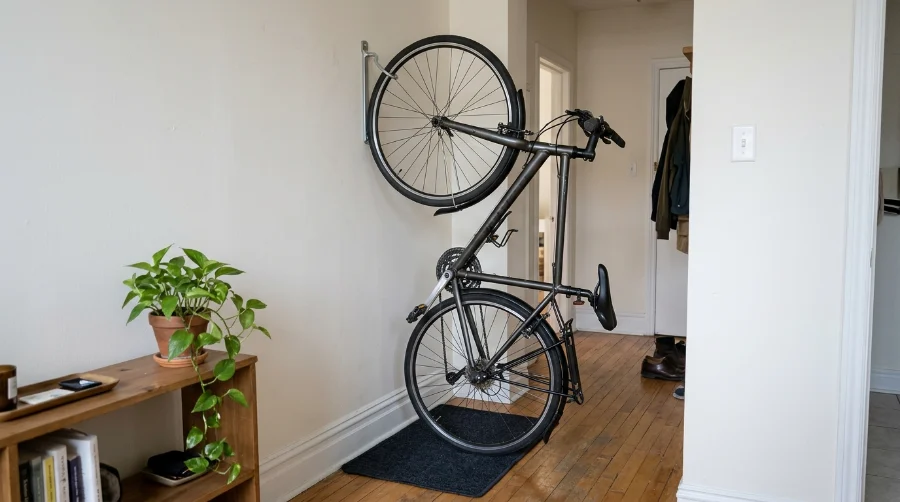
Where to Keep a Bicycle in a Small Home
A bicycle is awkward to live with. It is long, it is dirty when wet, and it cannot be folded into a cupboard like most household objects. In a small home or…
The back of a door is one of the few empty surfaces in a small home that nobody needs to walk across. A simple hook or hanging pocket can turn that surface into…
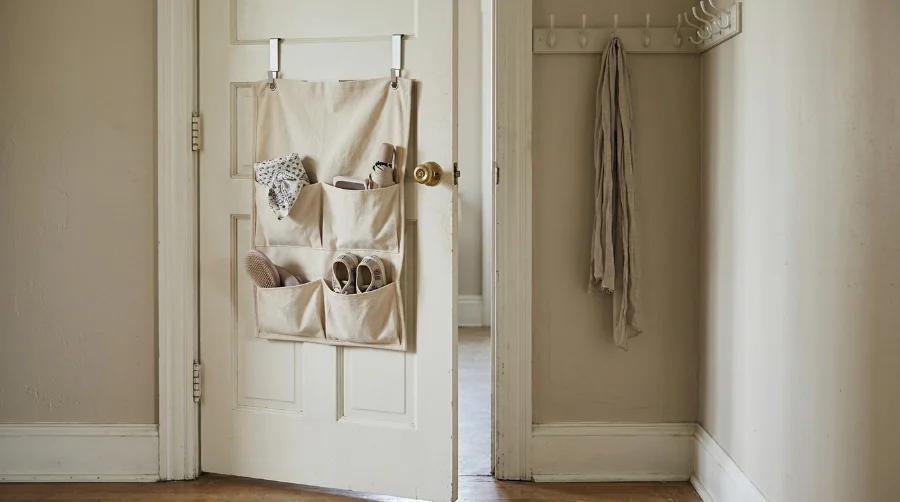
The back of a door is one of the few empty surfaces in a small home that nobody needs to walk across. A simple hook or hanging pocket can turn that surface into useful storage without touching a wall or taking a square inch of floor. Used carefully, it can hold the things that otherwise collect on chairs and worktops.
Start by opening the door fully and watching what it does. Note which way it swings, how far it travels, and whether it meets a wall, a radiator, or another door. A hanging organizer that adds even a few inches of depth can stop a door from opening or cause it to strike the wall.
Look at the door itself. Hollow interior doors hold light loads well but have limits, especially near the edges where the frame is thin. Heavy items belong on screws fixed into solid wood or into a wall, not on a hook pushed into a hollow panel. If the door is old or the paint is soft, check that a hook can grip before trusting it with anything heavy.
Measure the gap between the top of the door and the frame. Many over-the-door hooks are designed for a standard gap, but older homes and recent installations vary. A hook that does not sit flat will tilt, and a tilted hook drops its contents.
Different rooms need different hangers. A fabric pocket organizer with several compartments suits small items such as cleaning cloths, socks, or children's supplies. A rail with hooks suits coats, bags, and umbrellas. A shoe organizer with clear pockets keeps footwear visible and off the floor.
In an entry, a rail of hooks is usually enough for coats and bags that are used daily. Keep the lower hooks for items a child can reach, and reserve higher hooks for anything that should be out of reach. Avoid hanging so much that the door becomes difficult to close.
In a bathroom, a hanging pocket can hold towels, spare rolls, and washing baskets, but fabric stays damp in a poorly ventilated room. Choose a material that dries quickly, leave the door open when possible after showers, and remove anything that smells damp. A wire basket that air can pass through is often better than a closed fabric pocket.
An over-the-door organizer hangs from the top edge, which means its weight pulls on the door and its hinges. A light load spread across several pockets is fine. A single heavy object on one hook pulls the door out of alignment over time and may loosen the hinges.
Put heavy items on the lower pockets or hooks, close to the hinge side if possible. Keep the upper, far edge light. This is especially important with shoe organizers, where a row of heavy shoes at the far end can make the whole hanger sag.
If the door is used constantly, check the fixings every few weeks. A hook that has slipped a little can be adjusted before it damages the paint or drops its contents. A soft pad between the hook and the door protects the finish.
The most common mistake is treating the back of a door as a storage wall and filling every inch. A door covered in hanging pockets catches on furniture, brushes against light switches, and looks busy in a small room. Leave space around the handle and the lock, and keep the full swing clear.
Do not hang anything that sticks out far enough to be knocked off when someone passes. A shallow organizer is far more practical than a deep one in a narrow hallway. The goal is to use space that would otherwise be wasted, not to move clutter into a new place.
If a door leads to a shared room, consider whether visitors will use it. Hanging a rail of coats behind a bedroom door is private and convenient. Hanging one behind a bathroom door may leave guests with nowhere to put a towel.
Over-the-door storage works best for items that are used often and are light. Cleaning tools, shoe polish, umbrellas, scarves, children's art supplies, and spare towels all suit it well. These are things that are easy to reach but bad to leave on a surface.
It is less suitable for anything heavy, fragile, or valuable. Glass, ceramic items, and expensive electronics are better stored on a shelf where they cannot be knocked. Medicine and sharp tools need a secure place, not a pocket on a door that anyone can open.
Avoid using a door organizer as the only home for an item that is needed daily in another room. If the thing is always taken out and never hung back, the storage is working against the habit. Put it where the routine actually ends.
A hanging organizer that shifts each time the door moves is annoying and can spill its contents. Most designs use fabric straps or metal hooks over the top edge, and both can slide if the door is used often. Choose a hanger with a wide contact area or a non-slip pad, and check that it sits level before loading it.
If the organizer has hooks, fasten the ones at each end first so the weight is spread evenly. A hanger fixed at only one point will twist. For a door that is opened many times a day, a model that can be screwed to the door is steadier than one that simply hangs, provided the door is solid enough to hold fixings.
Because door storage is easy to add, it can quietly become a place for too much. A shoe organizer with twenty pockets does not need twenty pairs of shoes. When every pocket is full, finding anything takes longer than it would on the floor.
Leave a few pockets empty. Spare space makes it possible to put something back without rearranging everything else. It also gives the door a chance to close without strain.
Used with restraint, the back of a door solves a real problem in a small home: it gives everyday items a home without consuming floor or wall space. Choose an organizer that suits the room, respect the door's weight limits, and keep the swing clear. When those basics are right, the door can hold a surprising amount without the room feeling crowded.
Guides that pair well with this one.
A bicycle is awkward to live with. It is long, it is dirty when wet, and it cannot be folded into a cupboard like most household objects. In a small home or…
Seasonal items are easy to live with when their season arrives and difficult to store for the other ten months. In a small home the problem is not only volume. The…
A home office in a small room works best when it is planned as a room within a room. The desk is only one part of it. You also need enough space to pull out the…