Small Space Solutions
Giving a Small Hallway a Second Job
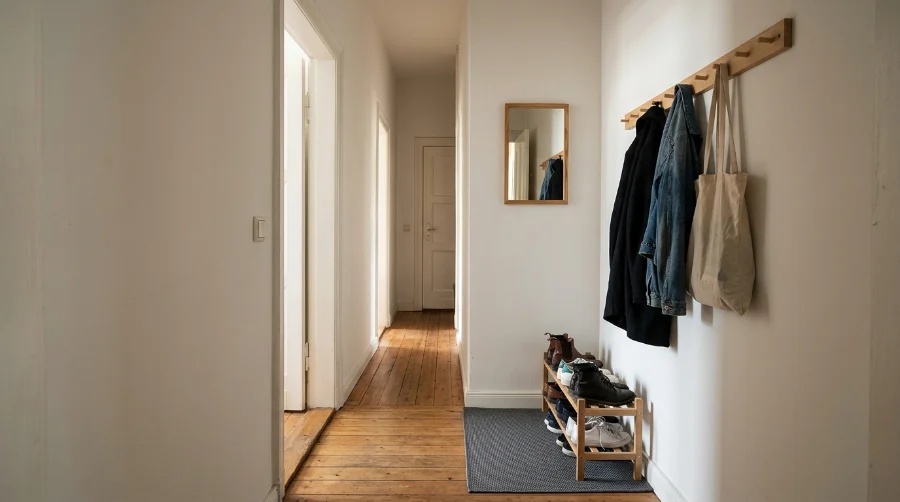
A hallway is usually treated as a corridor: a strip of floor between rooms that nobody stops in. In a small home, that strip is valuable space. Used well, it can…
Cleaning products tend to spread across a small home because they are used in several places and bought one at a time. A bottle under the sink, a spray in the…
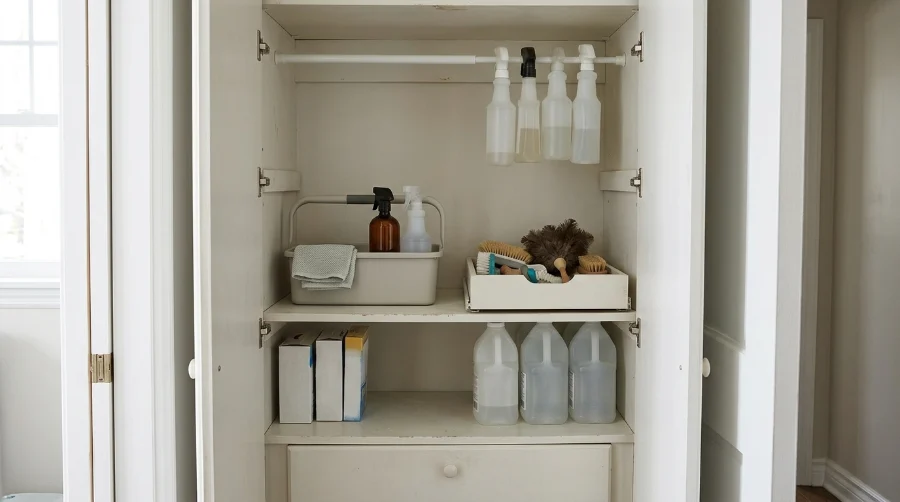
Cleaning products tend to spread across a small home because they are used in several places and bought one at a time. A bottle under the sink, a spray in the bathroom and a spare pack in a cupboard all seem reasonable until nobody knows what is left. A compact storage plan keeps the supplies together, safe and easy to grab.
Group items by room or task rather than by how they look on a shelf. A kitchen group might include surface cleaner, dish soap and a cloth. A bathroom group might hold a toilet cleaner, a brush and a squeegee. This matches the way cleaning is actually done and reduces the number of products you carry from room to room.
Keep a small amount in each area if that saves time, but avoid duplicate full bottles. A travel-size spray in the bathroom is more practical than a second large bottle that sits unused for months.
A caddy works well when supplies are needed in several rooms. Fill it with the items used weekly, carry it with you and bring it back afterwards. A fixed shelf works better in a home where each area has its own cleaner and tools.
In a very small home, one caddy is usually enough. Keep it in a central place such as a utility cupboard or a high shelf in the laundry area. If carrying it becomes annoying, split it into two smaller kits rather than leaving bottles scattered around.
Store cleaning products out of reach of children and pets, ideally in a cupboard with a secure latch. Keep them in their original containers where possible, because the label carries important instructions and warnings. Do not transfer a cleaner into a food container, even if the container is clearly marked.
Never mix products, particularly anything containing bleach with another cleaner. Some combinations release harmful gases. Store bleach separately from other bottles and make sure the caps are closed tightly. If a bottle leaks, follow the label's guidance for cleanup rather than wiping it into a pile of other supplies.
Under-sink cupboards are the usual home for cleaning supplies, but they are often deep and awkward. A tension rod fitted across the cupboard can hold spray bottles by their handles, leaving the floor clear. A shallow bin on wheels can be pulled out so items at the back are visible.
A narrow rack on the inside of a cupboard door holds cloths and brushes, provided it does not stop the door from closing. In a small bathroom, a high shelf above eye level may be safer than a low cupboard, as long as it can be reached with a stable step stool.
Buying refill pouches can reduce clutter, but only if you have somewhere to keep them. Store a refill with the bottle it belongs to rather than in a separate drawer. One spare of each product is useful; four spares are a pile waiting to be organized again.
Check the expiry or use-by information on products that are kept for a long time. Scented items and anything with active ingredients may lose effectiveness. Dispose of old products according to local guidance rather than pouring them all down the drain.
Most bottles already have labels, but small containers and cloths benefit from a simple mark. A bin marked "kitchen" or "bathroom" tells everyone where things belong. If several people share the home, clear grouping matters more than neat rows.
Keep the most used items at the front. When a bottle is pushed behind two others, it will not be used and will be bought again. A shallow tray that slides out can solve this in minutes without buying a new system.
Do not keep cleaning chemicals near food, medicines or towels that touch skin. If a cupboard must be shared, use closed bins with clear labels and keep the chemicals on a separate shelf. Avoid storing bottles on the floor of a shower or bath, where they collect water and become slippery.
Aerosols should be kept away from heat sources. Follow the storage instructions on the can, especially in small rooms that warm up quickly. A cool, shaded cupboard is better than a windowsill.
Buying cleaning products in bulk can save money, but the savings disappear when bottles crowd every cupboard. Decide how many spares are reasonable for your home. For most products, one unopened spare is enough to avoid running out without taking over a shelf.
Keep refills with the product they belong to rather than in a separate store. If a refill pouch is opened, transfer it carefully into its bottle and recycle the empty pouch according to local guidance. A short note on the shopping list when a bottle is half full prevents an emergency purchase of a different brand.
Another mistake is treating the storage spot as permanent. Household needs change. A product bought for a specific job may no longer be needed, and a kit that suits one room may not suit the next. Review it lightly once a season.
Once a week, look through the supplies while doing a short clean. Return stray bottles to the kit, check that caps are closed and note anything that is nearly empty. Add it to the shopping list immediately rather than discovering it mid-clean.
Good storage for cleaning supplies is not about a perfect matching set. It is about knowing what you own, keeping it safe and making it easy to use. In a small home, those three things saves both space and time.
Guides that pair well with this one.
A hallway is usually treated as a corridor: a strip of floor between rooms that nobody stops in. In a small home, that strip is valuable space. Used well, it can…
A home office in a small room works best when it is planned as a room within a room. The desk is only one part of it. You also need enough space to pull out the…
A small balcony is often asked to do two jobs at once. It needs to be a place to sit outside, and it quietly becomes the home for things that do not fit indoors…