Small Space Solutions
A Home Office That Fits in One Small Room
A home office in a small room works best when it is planned as a room within a room. The desk is only one part of it. You also need enough space to pull out the…
A small balcony is often asked to do two jobs at once. It needs to be a place to sit outside, and it quietly becomes the home for things that do not fit indoors…
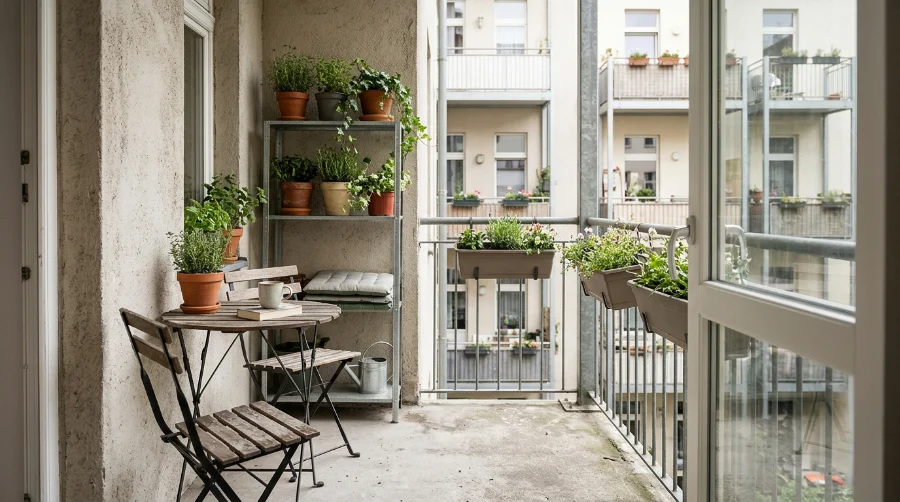
A small balcony is often asked to do two jobs at once. It needs to be a place to sit outside, and it quietly becomes the home for things that do not fit indoors: plant pots, a folded bike, garden tools, or spare boxes. Balancing those uses takes a little planning, because seating and storage compete for the same few square feet. Done well, the balcony feels like an extra room rather than a crowded ledge.
Measure the length and depth of the balcony and note where the door opens and where the walls meet. Then check the building rules and the lease before fixing anything. Many apartments restrict what can be attached to the outside of a building, how a balcony may be enclosed, and whether items may be stored there at all. A quick check avoids having to remove a system later.
Also consider the weather the space faces. A balcony exposed to heavy rain or strong sun needs different materials and storage from a sheltered one. Knowing the conditions shapes both what can be stored safely and what furniture will survive.
Try to make the balcony equally a storeroom and a sitting area and neither works well. Decide the primary purpose. If the household wants a place to sit with a coffee, storage should be pushed to the edges and kept out of sight. If storage is the real need, accept that seating will be minimal and choose a single compact option.
Most small balconies work best with seating as the priority and storage built around it. A person sitting down needs clear elbow room and a view that is not filled with boxes. Once that space is protected, the leftover edges usually reveal where storage can go.
Floor area on a balcony is limited, so the walls and the vertical dimension matter more than the ground. A tall, narrow shelving unit against one wall can hold plant pots, a watering can and a few baskets while taking little floor space. Wall-mounted rails and hooks hold tools and folding chairs off the ground.
Choose materials that tolerate outdoor conditions. Powder-coated metal, treated wood and weather-resistant plastic last far better indoors-style furniture that absorbs moisture. Fix tall units to the wall or railing so they cannot tip in wind, and keep heavier items on the lower shelves.
A fixed chair and table can dominate a small balcony all year. Folding furniture changes the space in seconds. A wall-mounted table that drops down when needed and folds flat against the wall leaves the floor almost entirely clear. Slim folding chairs can hang on a hook or slide into a narrow gap when not in use.
Look for pieces with a small footprint and a stable frame. Check that a folded chair actually fits the storage spot before buying, and that the table can be opened without knocking over the plants. The easiest balcony to use is one that can be reset in under a minute.
Plants are the main reason many balconies become cluttered. Group them by the light they need rather than scattering pots across the floor. Use a single tiered stand or a wall rail at the sunniest side, and keep the number of pots realistic for the space. A few healthy plants look better than a crowded collection that nobody can water easily.
Saucers and self-watering containers protect the floor and reduce the mess from regular watering. If the balcony drains poorly, avoid leaving standing water in trays, which can damage the surface and attract insects.
A balcony that feels exposed is rarely used. A simple screen, a row of tall plants or a fabric panel fixed to the railing can create a sense of enclosure without closing off light. Check the building rules first, since many properties restrict screens and coverings for safety reasons.
Wind is a practical concern for both comfort and storage. Lightweight items can blow about or fall, so store them in a closed box or secure them to a rail. Anything placed on a ledge above street level must be fixed so it cannot be knocked or blown off.
A balcony used in the evening needs light that is soft and practical. Battery-powered or solar lanterns avoid the need for wiring and can be moved as the seating changes. Place them low and warm rather than flooding the space with a bright overhead beam, which tends to flatten the atmosphere and disturb neighbors.
Keep any electrical equipment rated for outdoor use and store it away from rain. A small weatherproof box for the remote or a solar light's components keeps everything together and dry.
One frequent error is treating the balcony as an overflow store for indoor clutter. Boxes of unused household items do not belong outside, where damp and dust will damage them. Store only things genuinely used outdoors or items designed for outdoor conditions.
Another is buying furniture before measuring the door and the walking route. A chair that cannot be carried through the door or a table that blocks the door swing is useless. Measure the access path as carefully as the balcony itself before bringing anything home.
A small balcony will not stay organized without a little repeated care. Leaves, dust and water collect quickly in an outdoor space, and a clean surface is more inviting to sit on. Keep a small brush and a cloth in the storage box so a quick wipe takes a minute. At the end of each season, check that fixings are still tight and that nothing has been left out in weather it cannot tolerate. A short tidy at the change of season prevents the balcony from turning into a store for forgotten objects.
A small balcony does not need to choose between storage and seating forever. By keeping the floor clear, building upward, choosing folding furniture and storing only weather-appropriate items, it can do both on a modest scale. The result is an outdoor space that gets used rather than one that slowly fills with things nobody wants to look at.
Guides that pair well with this one.
A home office in a small room works best when it is planned as a room within a room. The desk is only one part of it. You also need enough space to pull out the…
Cleaning products tend to spread across a small home because they are used in several places and bought one at a time. A bottle under the sink, a spray in the…
A hallway is usually treated as a corridor: a strip of floor between rooms that nobody stops in. In a small home, that strip is valuable space. Used well, it can…