Small Space Solutions
Baby Gear Storage by Stage, Not by Room
Baby gear has a way of arriving faster than any storage plan can keep up with. A single purchase soon turns into a stroller frame, a car seat base, a bag of…
Line drying outdoors is not an option in every season or every home. Rain, cold, pollen, a shared balcony, or the lack of a yard can all make it impractical, and…
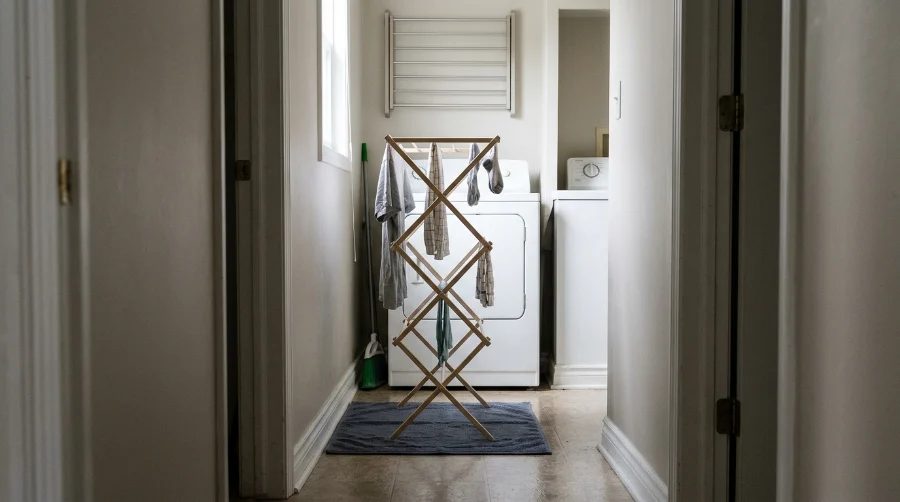
Line drying outdoors is not an option in every season or every home. Rain, cold, pollen, a shared balcony, or the lack of a yard can all make it impractical, and leaving wet clothes over a radiator is a poor substitute. Indoor drying can work well in a small home, but it needs a deliberate setup. Without one, garments end up draped over chairs and doorframes, and the moisture they release has nowhere to go. A good arrangement gives clothes airflow, gives the room protection from drips, and keeps the whole process away from heat sources.
Start with air rather than with furniture. A rack placed in a still corner dries slowly and leaves the wall damp, while the same rack near a window or in the path of a gentle draft performs far better. Look for a room that already has some ventilation: a laundry area with an extractor fan, a bathroom with a window, a hallway with cross-flow, or a spare bedroom that can be opened up while drying.
Height matters as much as airflow. The top rail of the rack should be reachable without standing on a chair or stretching awkwardly, because wet laundry is heavier than it looks. Check the space above the intended spot for light fittings, shelves, or a low ceiling. A rack that must be loaded from a step stool will be used less often and carries a greater risk of a fall.
Consider what is beneath and beside the area. Hanging clothes above a bed, sofa, or the surface where food is prepared is best avoided, since drips and lint will land there. A corner of a utility room, the end of a hallway, or an unused section of a landing usually works better. If the only option is a living area, choose a position that can be screened or folded away when the drying is finished.
Drying equipment varies more in shape than in function, and the right choice depends on the space available. A folding A-frame rack offers many rails and stands freely in a room, but it occupies a noticeable floor area even when loaded lightly. A compact collapsible rack fits a narrow gap and opens flat, though it holds fewer items and can be less steady with heavy towels.
Wall-mounted and drop-down racks use no floor space when closed, which suits a hallway or a small laundry cupboard. Their capacity is modest, and they need a secure fixing into a suitable wall or stud. A ceiling-mounted rack with pulleys saves even more space and works well over a stairwell or a utility area, but it requires confident installation and careful handling of the load.
A tension rod across an alcove or between two walls can turn an existing gap into a drying line without permanent fixings. It is a sensible choice for a small bathroom, provided the walls are sound and the rod is tightened firmly. Whatever the type, check the stability with a wet towel before trusting it with a full load. A rack that wobbles when loaded will be used for fewer items than its rails suggest.
Water will reach the floor, so plan for it rather than mopping it up afterward. Place a washable mat or a shallow tray under the rack, with enough coverage to catch drips from the outer rails. On hard flooring, a mat with a non-slip backing prevents both water marks and a sliding rack. On carpet, a waterproof layer beneath an absorbent towel is safer, and the area should be checked during drying rather than only at the end.
Space garments apart so air can pass between them. Crowded rails hold more items but dry slowly, which keeps the room damp for longer. A half-loaded rack often finishes sooner than a packed one. Heavy items should hang from the lower rails where the rack is most stable, with lighter pieces above.
Wipe the mat and the surrounding floor once drying is done. Standing water near skirting boards or under furniture can mark a finish over time, and a quick wipe takes less effort than repairing a damaged floor. Let the mat dry fully before storing it, since a damp mat folded into a cupboard will develop an odor.
Wet fabric should not be draped over radiators, space heaters, or any appliances that become hot. This is a fire risk as well as a poor drying method, and it applies equally to gas and electric appliances. Keep racks clear of open flames, candles, and cooking areas, and leave a comfortable gap between hanging clothes and any heated surface. A garment that touches a heater regularly will eventually be damaged even if nothing else goes wrong.
Electrical safety deserves the same attention. Do not run an extension cord across a walkway where a loaded rack or a basket might catch it. Keep clothes clear of wall switches, sockets, and the vents of a tumble dryer or dehumidifier. If a fan is used to move air, place it where it cannot be knocked over by someone carrying laundry, and make sure its cable is out of the walking route.
Where a tumble dryer shares the space, do not use the rack in a way that blocks the appliance's airflow or its door. A dryer needs clear space around it to work safely. The rack should also stay away from a fuse box or meter cupboard, which needs to remain accessible.
Every liter of water in wet clothes has to go somewhere, and in a closed room it goes into the air. Ventilation is the main control. Open a window when weather allows, run an extractor fan, or use a fan positioned to move air across rather than directly at the clothes. A small dehumidifier can help in a consistently damp room, but it should be emptied and kept clear of hanging fabric.
Close the door of the drying room if the moisture would otherwise spread through the home, then ventilate that room directly. Wipe condensation from windows and tiles after a drying session, and check the corners of the room periodically for signs of mildew. If walls or a ceiling begin to spot, the load is too large for the ventilation available, and fewer items should be dried at once.
Doors and cupboards in the room can be left open between sessions to let air circulate. Drying a full load in a small unventilated bathroom on a regular basis is a common cause of persistent damp, so treat the room's limits as real. Spreading laundry across two shorter sessions is often kinder to the space than one large batch.
Air-drying works best for items that fit comfortably on a rack and do not hold much water. Delicates, knitwear, sportswear, and light cotton garments dry reasonably quickly and benefit from the gentler treatment. Shoes and small items can share a corner of the setup if they are given their own space.
Thick towels, heavy bedding, and dense fabrics take far longer and release much more moisture. In a small home, these are often better handled by a machine, with air-drying reserved for the items that need care. In humid weather, almost everything dries more slowly, and a full rack can remain damp for a long time. A practical approach is to dry a few items at a time and accept that the machine will still have a role.
The goal is a setup that gets used, not a perfect system that demands too much effort. A rack in a ventilated spot, a mat beneath it, and a habit of clearing it the same day will keep indoor drying manageable through the seasons.
Guides that pair well with this one.
Baby gear has a way of arriving faster than any storage plan can keep up with. A single purchase soon turns into a stroller frame, a car seat base, a bag of…
Shoes, wet coats, and muddy gear arrive through the same door every day, and in many homes there is no room set aside to receive them. Without a defined spot, boots…
A home office in a small room works best when it is planned as a room within a room. The desk is only one part of it. You also need enough space to pull out the…