Small Space Solutions
Baby Gear Storage by Stage, Not by Room
Baby gear has a way of arriving faster than any storage plan can keep up with. A single purchase soon turns into a stroller frame, a car seat base, a bag of…
Shoes, wet coats, and muddy gear arrive through the same door every day, and in many homes there is no room set aside to receive them. Without a defined spot, boots…
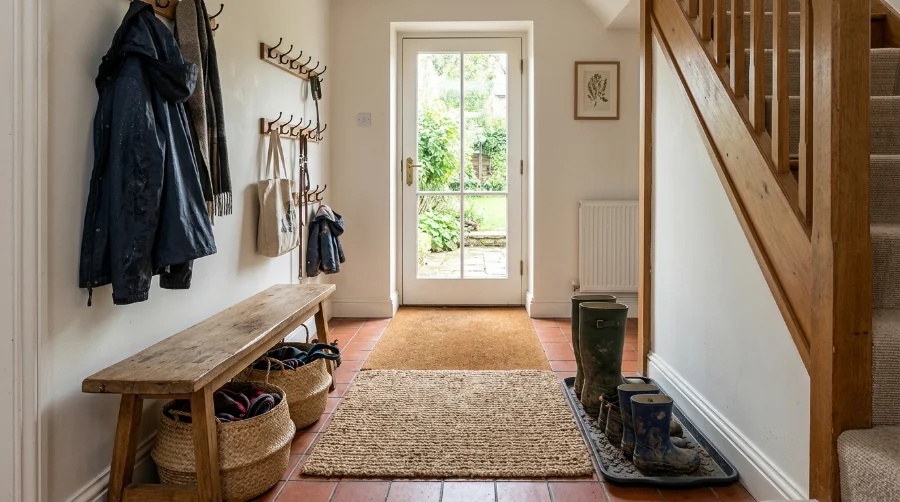
Shoes, wet coats, and muddy gear arrive through the same door every day, and in many homes there is no room set aside to receive them. Without a defined spot, boots collect beside the entrance, damp jackets go over the nearest chair, and the floor gradually disappears. A mudroom does not have to be a full-sized room to solve this. It can be a narrow stretch of hallway, a section of a utility area, or the corner of a closet, as long as it is planned around the transition from outdoors to in.
This is a different problem from keeping track of mail and keys. Those belong to a daily drop zone near the entrance. The concern here is what comes in on clothes and shoes: water, mud, grit, and the equipment that carries them. A small setup that handles those materials will keep the rest of the home cleaner without needing a spare room.
Look for a stretch of wall near the door that is used mainly for passing through. The end of a hallway, the approach to a back door, a deep closet, or a corner of the laundry area can all work. The useful width is modest: enough for a person to stand while removing a coat and setting down a bag. If the spot forces everyone to turn sideways, it will be abandoned within a week.
Avoid fixing the arrangement across a doorway or in front of a cupboard that is opened daily. The best borrowed spaces are slightly wider than the traffic lane, such as the landing at the foot of stairs or the wall opposite a radiator. Mark the area visually with a mat and a row of hooks so that it reads as a place with a purpose. A clearly defined boundary stops gear from spreading along the whole hallway.
If the chosen spot is a closet, keep the door usable and reserve the lower section for dirty items rather than filling it with clean storage above. A utility room corner can serve the same role, provided wet gear does not sit against a washing machine or block its door. The arrangement should make the short walk from the entrance to the washing area easier, not harder.
The floor in this zone takes the most wear, so hard and washable finishes are the sensible choice. Tile, sealed wood, and resilient vinyl all tolerate water and grit far better than carpet. Where the existing floor cannot be changed, a large washable mat with a non-slip backing gives the same protection and can be lifted and cleaned.
The mat should be long enough that a person can step onto it with both feet and remove a coat without stepping off onto a clean floor. It should lie flat, with no curled edge to catch a toe. Shake or vacuum it regularly, because a mat holding grit will grind that grit into the floor beneath it. A second, smaller mat closer to the door can trap heavier dirt before it reaches the main one.
Walls need a little protection too. A wipeable finish or a washable panel behind the hooks survives wet coats better than plain paint, and a durable skirting board stands up to boot brushes. Where the wall is exposed to repeated splashes, a low splash panel is a small addition that prevents marks building up over time.
Gear should not have to be set on the floor the moment the door closes. A bench, a low shelf, or a sturdy wall-mounted ledge gives bags, sports equipment, and shopping a place to land while shoes are removed. Even a narrow shelf at hip height changes the way the area works, because it separates dirty items from the clean floor.
Use the space beneath a bench for baskets, but keep those baskets for outdoor items only: hats, gloves, dog leads, or reusable shopping bags. Mixing them with scarves or clean laundry defeats the purpose. Reserve one basket for things that are still damp, and make it easy to carry to the washing area.
If there is no room for seating, a wall-mounted ledge with a lip serves the same purpose without taking floor space. It should be deep enough to hold a bag upright and fixed securely, since loaded bags are heavier than they appear. The key is that the surface exists at all; even a small landing place prevents the pile from starting on the floor.
Coats, bags, and children's gear do not hang at the same level, so a single row of high hooks rarely works for a whole household. Place a high row for long coats and waterproofs, a middle row for everyday jackets and bags, and a low row within reach of children. The low hooks should be at a height where a child can hang and retrieve a coat without help.
Space the hooks far enough apart that wet garments can hang open. Crowded hooks trap moisture and leave clothes stiff and slow to dry. Where the wall is short, use the back of a door for the lighter items and keep the wall for wet outerwear. Check that the chosen fixings suit the wall type and that the hooks can carry a loaded coat without pulling out.
A small rail can replace hooks where garments are removed and replaced frequently. Rails keep shapes open but use more depth, so they suit a wider corner rather than a narrow hallway. In a very tight spot, a set of staggered hooks on one wall is the more forgiving choice.
Boots need containment and airflow. A shallow tray with raised edges keeps water and mud from spreading across the floor and gives each pair a defined spot. Stand boots upright rather than on their sides, and remove insoles where possible so they can dry separately. Newspaper or an absorbent insert placed inside helps draw out moisture overnight, though it should be replaced when damp.
Keep the tray away from radiators and heaters. Direct heat can crack leather and deform synthetic materials, and a boot left against a heater may look dry on the outside while remaining wet inside. A position with a little air movement is better, even if it takes longer. Rotate pairs when two sets are drying at once so that neither stays damp for days.
Brush off heavy mud before the boots enter the house. A stiff brush kept in the mudroom area makes this quick and keeps the tray from filling with loose dirt. Wet boots should never be put straight into a closed cupboard; the trapped moisture affects the cupboard and the items stored beside them.
A mudroom works only while things return to their places. A short reset at the end of the day keeps it from becoming a second clutter zone: wet gear hung open, boots set in the tray, and the mat shaken out. This takes less time than clearing a pile that has built up over a week.
Once a week, wipe the tray, check the mat, and remove anything that has drifted in from elsewhere in the house. Seasonal gear is the main cause of overflow. When winter ends, the heavy boots and waterproofs should leave the active zone and go into longer-term storage, making room for what the current season needs.
Set a limit on baskets and hooks, and treat that limit as full. If another basket is needed, decide what leaves rather than adding capacity. A borrowed hallway has less tolerance than a dedicated room, and a small area stays useful by staying shallow. The aim is a clean, predictable handoff between outside and inside, not a storage space that slowly fills with everything the household owns.
Guides that pair well with this one.
Baby gear has a way of arriving faster than any storage plan can keep up with. A single purchase soon turns into a stroller frame, a car seat base, a bag of…
Line drying outdoors is not an option in every season or every home. Rain, cold, pollen, a shared balcony, or the lack of a yard can all make it impractical, and…
A home office in a small room works best when it is planned as a room within a room. The desk is only one part of it. You also need enough space to pull out the…