Bedroom Ideas
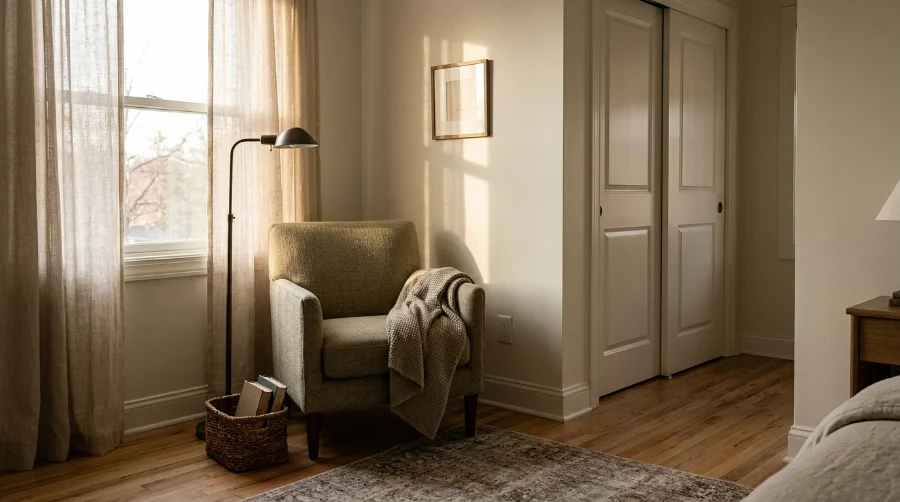
Reading Nook in a Small Bedroom - Just Three Things
A reading nook in a small bedroom does not need a whole corner to itself. It needs a seat, a light and somewhere to put a book down. When those three things are in…
Two people can share a small bedroom comfortably, but the room has to be planned for two sets of habits. The usual problems are not solved by more storage. They…
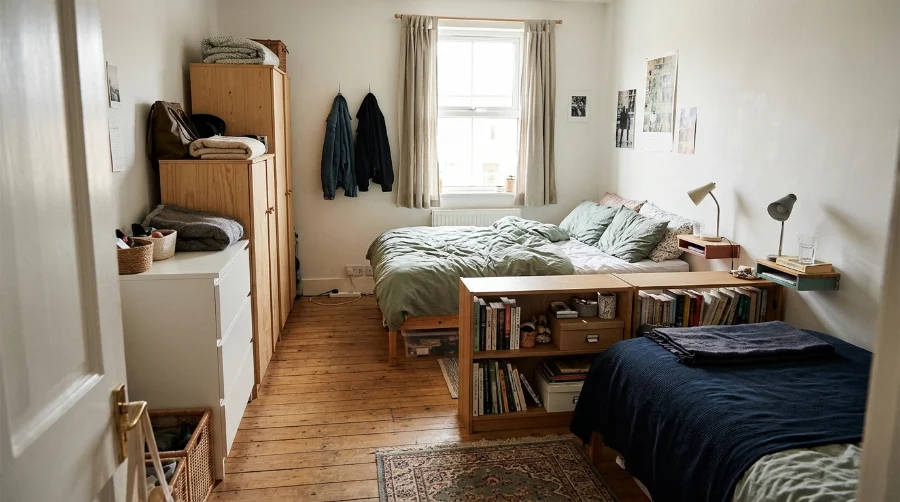
Two people can share a small bedroom comfortably, but the room has to be planned for two sets of habits. The usual problems are not solved by more storage. They come from unclear boundaries, shared surfaces and beds placed so that neither person has any privacy.
Write down the jobs the bedroom has to handle: sleeping, dressing, studying, storing clothes and perhaps getting ready at different times. If two people have different schedules, that changes the layout more than the size of the furniture does. A room used by a night-shift worker needs a way to protect daylight sleep.
Once the jobs are clear, decide which areas can be shared and which should be personal. A shared room does not mean every item is shared. Giving each person a drawer, a hook and a small surface prevents most everyday friction.
Two single beds with a small gap between them are often easier than one large bed in a narrow room, because each person gets their own side and their own bedding. A bunk bed frees floor space but needs enough ceiling height for the upper sleeper to sit up safely. Check the stated height and the room's ceiling before buying one.
A trundle bed or a daybed can work when the room is also used during the day. If the beds are pushed together, use separate mattresses and bedding where possible. That gives each sleeper a clear personal space and makes the beds easier to make.
Assign storage by person rather than by item type. One drawer for each person is better than one drawer for socks and another for shirts, because the second system requires both people to open everything. If the closet is shared, divide the rail into two clear sections.
Use bins or baskets in different colors if labels feel too formal. The point is that each person can put something away without asking where it belongs. Shared storage should be limited to things that genuinely belong to both, such as spare bedding or cleaning supplies.
In a single room, a low bookcase can act as a divider without blocking light. A curtain across a closet or a corner can give one person a changing space. Full-height dividers make a small room feel smaller, so use them only where privacy is more important than openness.
Face one bed toward the divider and the other toward the room if the layout allows. Even a small visual separation helps people feel they have their own area. Keep the path between the beds clear so nobody has to climb over a bag or a pile of clothes at night.
When one person sleeps while the other is awake, light and noise become the main issues. A low lamp with a shade directed downward allows reading without lighting the whole room. A chair with a cushion can be softer underfoot than dragging furniture across the floor.
Keep a small basket for the late-night person's things so they do not spread across the shared surfaces. Discuss quiet hours early rather than after several disturbed nights. The room works better when both people know what to expect.
Nightstands and dressers become contested space in shared rooms. Give each person a defined spot, even if it is only a shelf or a tray. A surface that belongs to nobody will collect everything. If there is only one bedside table, replace it with two small wall shelves or narrow units.
Avoid decorating every available surface. In a small shared room, empty space is useful. It gives people somewhere to put a book, a glass of water or a bag for a moment.
The busiest moments in a shared bedroom are usually the first twenty minutes after waking and the last twenty before sleep. Both people need access to clothes, a surface for personal items and a route to the door at the same time. Place storage so that one person is not blocking the other's drawer while it is open.
If one person gets up earlier, keep their clothes and a small bag together near the exit so they can dress without opening every drawer. A chair can hold a clean outfit overnight, provided it does not become a permanent clothes pile. In the evening, a tray or a hook for watches and keys stops those items from migrating across the room.
When the room doubles as a study or dressing area, agree when those activities stop. A desk lamp that can be turned off independently allows one person to keep working without lighting the whole room. Predictable routines reduce friction more effectively than extra furniture.
Most of these problems appear because the room was planned for one person and then adapted. Planning for two from the start avoids them.
Live with the setup for a few weeks and notice where tensions arise. If one person's things keep moving into the other's area, the storage boundary may be too small. If the room feels cramped in the evening, a lamp or a table may need to move.
A shared small bedroom rarely looks like a magazine photograph, and it does not need to. When each person has a place to sleep, a place to keep their things and a little control over light and noise, the room works for both of them. Review the arrangement whenever a work or study schedule changes, because a layout that suited one routine may not suit the next.
Guides that pair well with this one.
A reading nook in a small bedroom does not need a whole corner to itself. It needs a seat, a light and somewhere to put a book down. When those three things are in…
A spare room rarely turns into a guest room by accident. It starts with a bed and a lamp, then a box of out-of-season clothes goes in, followed by a suitcase, a…
Choosing storage for a small bedroom is different from organizing one that is already furnished. The decisions made at the point of purchase shape how the room…