Bedroom Ideas
Organizing a Small Bedroom - Measure, Place and Clear
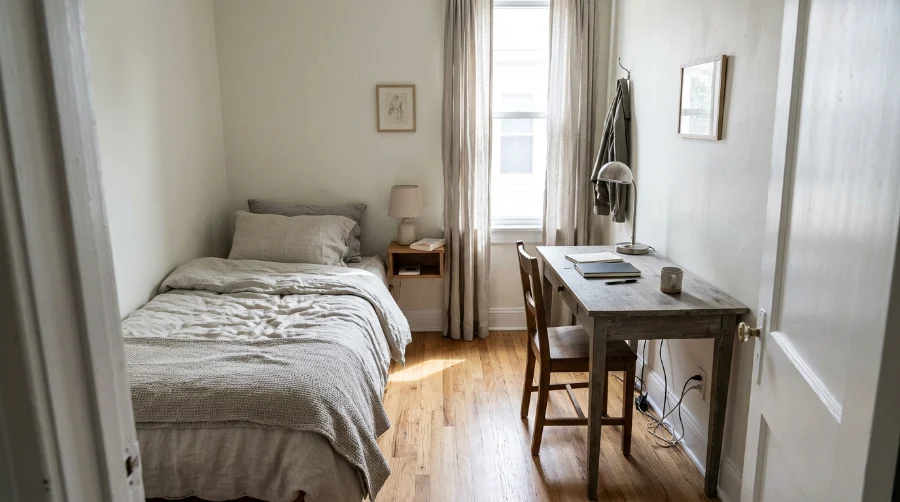
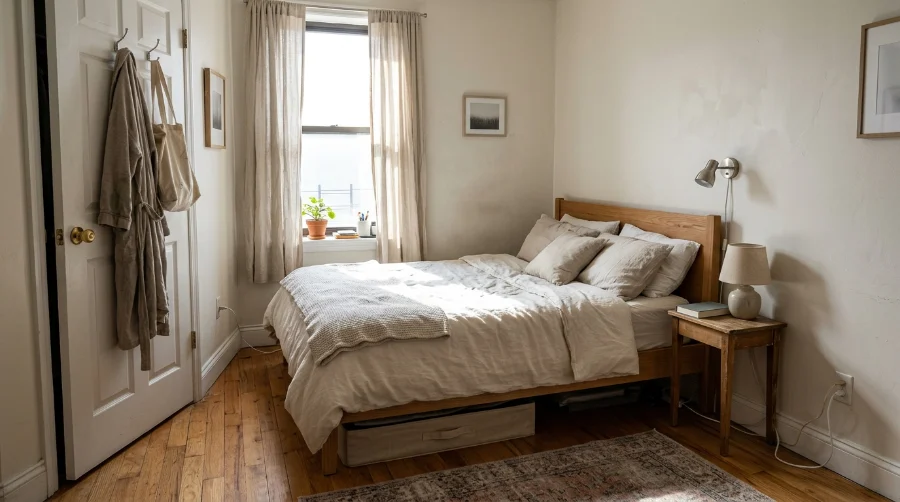
A small bedroom has to do more than sleep. It may also hold clothes, a desk, a place to sit and the things you want within reach at night. The trick is not to find…
A guest bedroom is used in short bursts, often by people who are tired from travelling. That changes what matters. The room does not need the storage of a main…
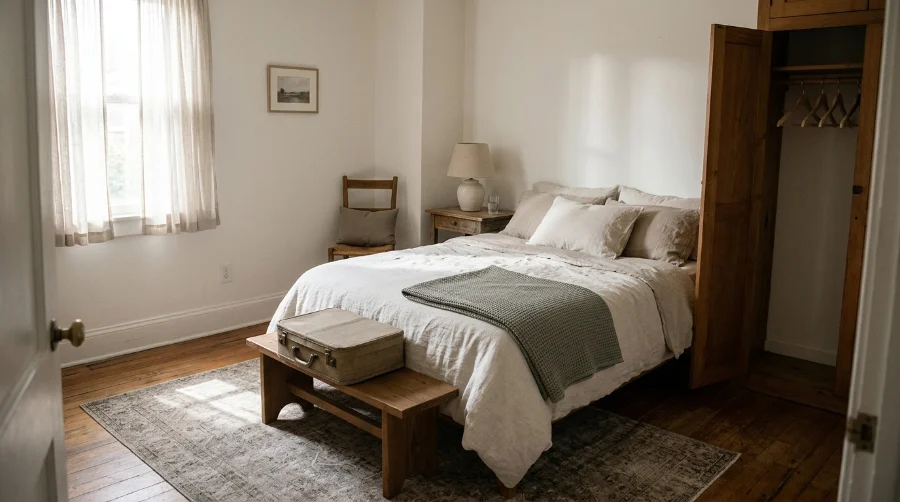
A guest bedroom is used in short bursts, often by people who are tired from travelling. That changes what matters. The room does not need the storage of a main bedroom or the careful layout of a small daily space. It needs to be comfortable within a few minutes of someone walking through the door.
The bed is the one thing a guest will judge immediately. If a spare room already has a bed, check the mattress rather than the frame. A mattress that has been stored for years in a damp room may need replacing or airing before anyone sleeps on it. A worn mattress topper is a cheaper fix than a new bed, but it should be clean and supportive.
Bedding should be ready to use, not washed and left in a cupboard for the guest to work out. Make the bed before they arrive if possible. If the room is prepared in advance, stack a clean set inside a drawer or on a shelf with a pillowcase folded over it, so the items are obviously clean and in the right order.
Have one spare blanket within reach. Rooms used occasionally are often colder than the rest of the house, and a guest may not want to ask for another layer. A folded blanket at the foot of the bed solves this without a conversation.
Suitcases need a resting place. Without one, they open on the floor and clothes stay inside for the whole visit. A low bench, a luggage rack, or even a clean folded blanket on the floor gives a bag a clear spot. The surface does not need to be large; it needs to be obvious.
Clear at least part of a drawer or a shelf for personal items. Guests should not have to ask before opening something. If the room also stores household belongings, keep those in closed boxes or behind a door, leaving one or two empty spaces that are clearly available. A note left on the bed explaining what is free can prevent awkwardness.
Avoid filling the wardrobe completely. Empty hangers are useful, and a guest who cannot find one will leave clothes in a suitcase. Two or three spare hangers on a rail are enough for a short stay.
A few details make a spare room feel considered. A glass of water, a lamp that can be switched on from the bed, and a surface for a phone and watch cover most needs. A mirror somewhere in the room is helpful, especially if the only bathroom is shared.
Charging is a common problem in older rooms with few sockets. A small power strip with a switch is useful, but it should be in good condition and not hidden under bedding. Keep it where it can be reached and switched off. If the room has no bedside socket, a lamp on a separate circuit may still leave a phone charging across the room, which is inconvenient but safe.
Anyone staying more than a night needs somewhere to sit other than the bed. A single chair, even a simple one, gives the room a second function and a place to put on shoes. It also makes the room usable for the household between visits.
The biggest risk with a spare room is slow drift. It becomes the place for things that have no home: old packing, gifts to wrap, a broken fan waiting to be fixed. Because nobody uses the room daily, the pile grows unnoticed.
Choose one rule for the room and keep it simple. Many households decide that nothing temporary goes into the spare room at all. Others keep one labelled box for items that genuinely belong there and nothing else. A rule with one exception is easier to follow than a rule with none.
Every few weeks, open the door and check for damp, dust, or unpleasant smells. A room that is closed for long periods needs air, and soft items such as mattresses and pillows can hold moisture. If the room is rarely used, air it on a dry day and check the window and radiator for condensation.
A guest with children may need a bed guard or a floor space for a cot. A guest with limited mobility may need a clear path from the door to the bed and a light that can be reached without stretching. These needs are not predictable, but the room can be kept flexible. Avoid furniture that blocks the path, and leave enough space at one side of the bed for someone to sit and stand.
If visitors stay often, consider keeping a small labelled box with clean towels, a spare toothbrush still in its packet, and a notebook. These are practical rather than luxurious, and they remove the need for the guest to borrow things. Replace used items after each visit so the box stays ready.
Do not overload the room with decorations and objects that cannot be moved. A guest needs surfaces for their own things, and a room full of ornaments leaves nowhere to put a glass or a book. Keep the bedside surface almost empty.
Do not assume the guest will know where towels are. Leave one visible in the room or say where they are before bedtime. Hiding towels in a cupboard the guest has not opened is a small kindness that often becomes a small annoyance.
Finally, do not wait until the day of arrival to prepare the room. Cleaning a spare bedroom at midnight after a long journey is a common and avoidable stress. A short check the day before — bed made, water present, path clear, light working — is enough.
A guest bedroom succeeds when a visitor can sleep, unpack a small bag, and find the basics without asking. Everything else is optional. Keeping the room simple makes it easier to maintain, and a room that stays ready is far more welcoming than one that is deeply cleaned only twice a year.
Guides that pair well with this one.
A small bedroom has to do more than sleep. It may also hold clothes, a desk, a place to sit and the things you want within reach at night. The trick is not to find…
Fitting a bed and a desk into one small bedroom means asking a single room to do two jobs that normally claim separate floors. A bed needs access along at least one…
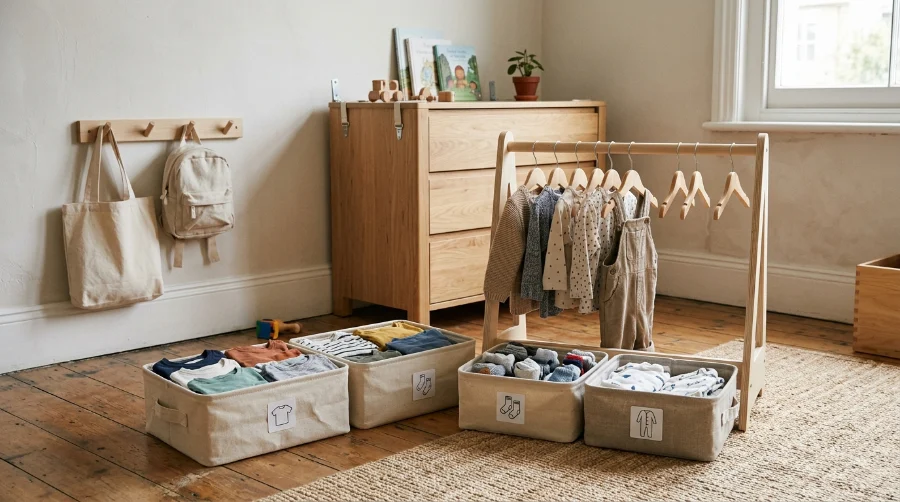
The point of a child's clothes storage is not tidiness for its own sake. It is the quiet goal of a child getting dressed without an adult fetching everything first…