Bedroom Ideas
A Bedside Table With Only What You Use
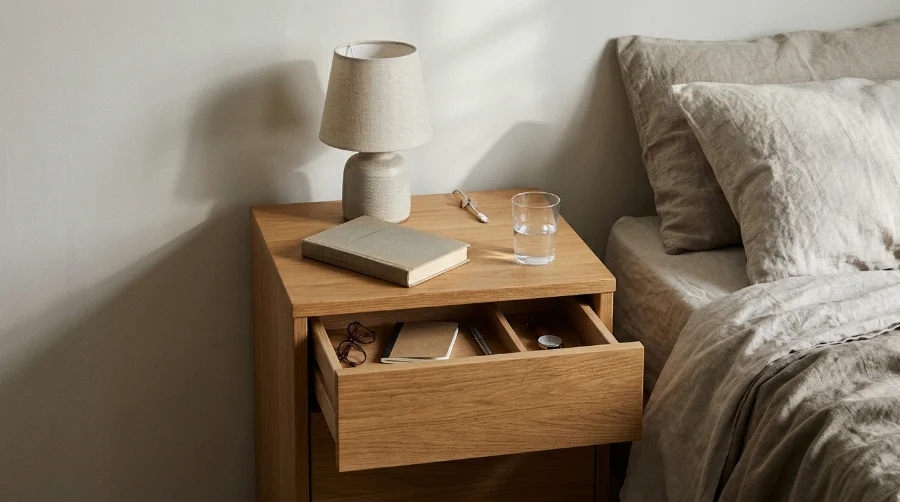
The area beside a bed collects a peculiar mix of things. A glass of water, a phone on charge, a book halfway through, medication, glasses and a notepad all gather…
A small bedroom has to do more than sleep. It may also hold clothes, a desk, a place to sit and the things you want within reach at night. The trick is not to find…
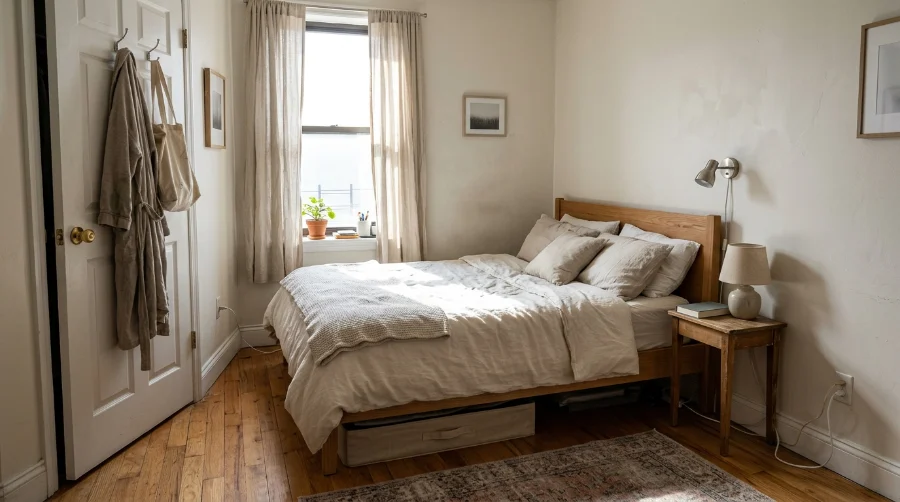
A small bedroom has to do more than sleep. It may also hold clothes, a desk, a place to sit and the things you want within reach at night. The trick is not to find more storage. It is to decide which jobs the room really needs to do and give each one a clear boundary.
Start with a tape measure and a rough sketch. Note the width and length of the room, the position of the door, the window, the radiator and the outlets. Then check the bed you plan to keep. A standard queen mattress is about 60 by 80 inches (152 by 203 cm), a full about 54 by 75 inches (137 by 191 cm), and a twin about 38 by 75 inches (97 by 191 cm). These dimensions help you judge how much floor will be left.
Aim for at least 24 inches (60 cm) of clear walking space along the side of the bed where possible, and more if two people use the room. If the door or a wardrobe door opens into that path, include the swing in your plan. A layout that blocks a door will be changed within a week.
The bed usually takes the most space, so its position sets the rest of the room. Putting the headboard against the longest solid wall often frees the most floor. If the only solid wall is under a window, check that the radiator or window sill will not be covered and that you can still open the window.
Pushing the bed into a corner can leave more open floor, but it makes one side harder to access. If two people share the bed, both should be able to get out without climbing over the other. That matters more than a few extra centimetres of empty space.
In a small room, wall space is more valuable than floor space. A shelf above the bed can replace a bedside table, provided it is fixed securely and nothing heavy sits above a sleeping area. Wall-mounted lights free the surface below for a book and a glass of water.
Hooks on the back of the door or along a wall can hold a robe, a bag or the clothes you wore yesterday. Set a limit on the number of hooks. A row of eight holding two items looks like a storage failure rather than a solution. If the room has a high ceiling, the area above a wardrobe can hold light bins that are used rarely.
Every piece in a small bedroom should have a clear job. A nightstand about 12 inches (30 cm) wide may be enough for a lamp and a phone, while a full-width dresser may block the path to the closet. Look for furniture with visible storage rather than hidden compartments that are hard to reach in a tight space.
Beds with built-in drawers can replace a chest of drawers, but check how much clearance you need to pull the drawers out. If they only open a few centimetres because the wall is too close, they are useless. A slim bench at the foot of the bed can hold a suitcase and provide seating, but only if there is room to walk around it.
Start with the garments you use every week. These should be the easiest to reach, either hanging at eye level or in the top drawer. Out-of-season clothing can go into labelled bins in less convenient places, but keep the system simple: one bin for winter knitwear, one for summer shirts, and so on.
If the closet is shallow, slim hangers gain a little width. Matching hangers are not only about appearance; uniform shapes make it easier to see what you own. Fold bulky sweaters rather than hanging them, since they keep their shape better and take less rail space. Shoes can go in a low rack inside the closet or under the bed in flat boxes.
Nightstands, dressers and the top of a chest become cluttered because they are within easy reach. Give each surface one or two allowed items. A tray on a nightstand can hold small things so they do not scatter. On a dresser, a single dish for jewellery or keys is enough.
Clear surfaces make the room feel larger, but they also have a practical benefit: you can wipe them, and you can find what you put down. A surface covered in papers and clothes is a sign that the room is missing a home for something, not that you need a bigger bedroom.
Each of these is easy to correct with a change of position rather than a purchase. Move one piece of furniture, then live with the room for a few days before deciding what to do next.
Take everything off the floor that does not belong there. Put it into three piles: laundry, items with a home elsewhere, and items you genuinely use in the bedroom. Return the first two piles where they belong and give the third pile a specific spot. Then make the bed, clear one surface and stop. A room improved in an hour is easier to maintain than one rebuilt in a day.
A small bedroom will never have the spare space of a large one, and it does not need to. When the bed is positioned well, daily items are close at hand and the floor is clear, the room works. That is a more useful goal than copying a layout from a much bigger house.
Guides that pair well with this one.
The area beside a bed collects a peculiar mix of things. A glass of water, a phone on charge, a book halfway through, medication, glasses and a notepad all gather…
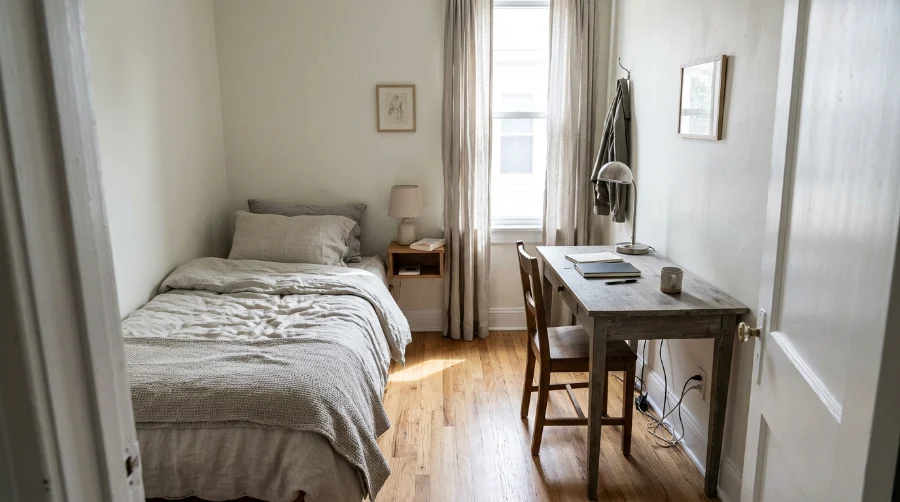
Fitting a bed and a desk into one small bedroom means asking a single room to do two jobs that normally claim separate floors. A bed needs access along at least one…
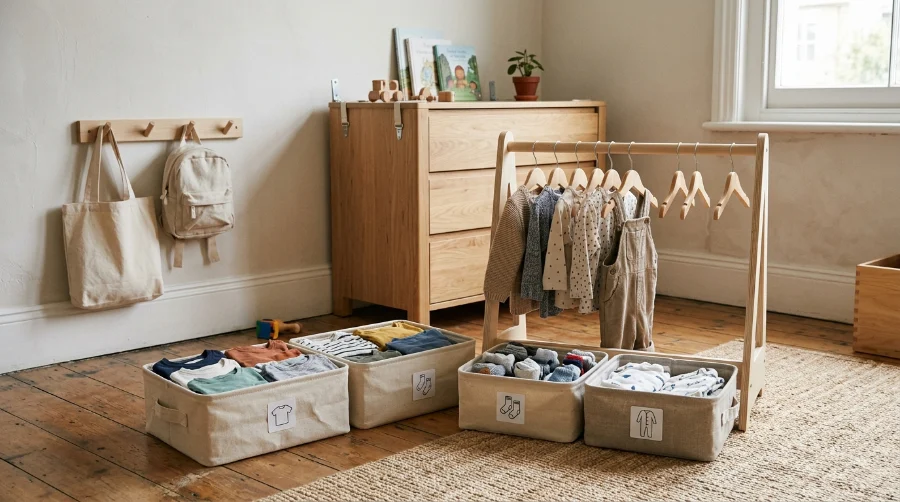
The point of a child's clothes storage is not tidiness for its own sake. It is the quiet goal of a child getting dressed without an adult fetching everything first…