Bedroom Ideas
Kids' Clothes Storage They Can Reach Themselves
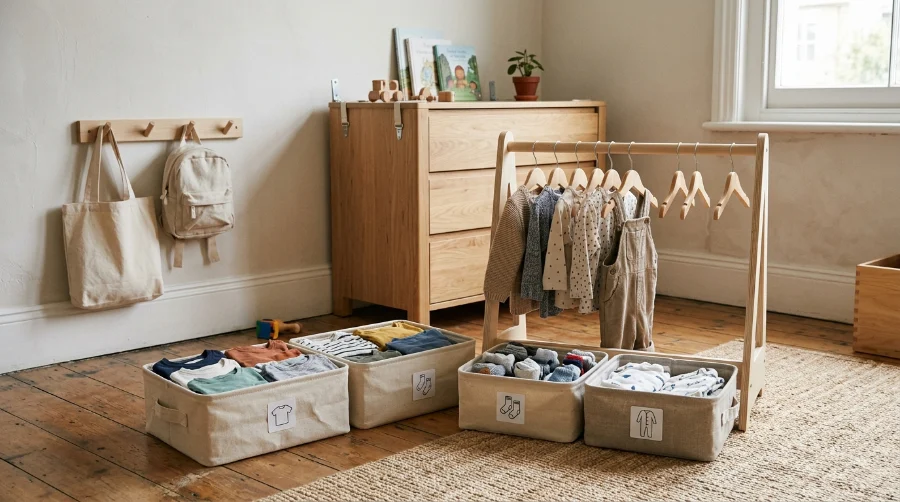
The point of a child's clothes storage is not tidiness for its own sake. It is the quiet goal of a child getting dressed without an adult fetching everything first…
A small wardrobe becomes difficult when the way it is built does not match the clothes it holds. Many wardrobes give most of their space to a hanging rail and very…
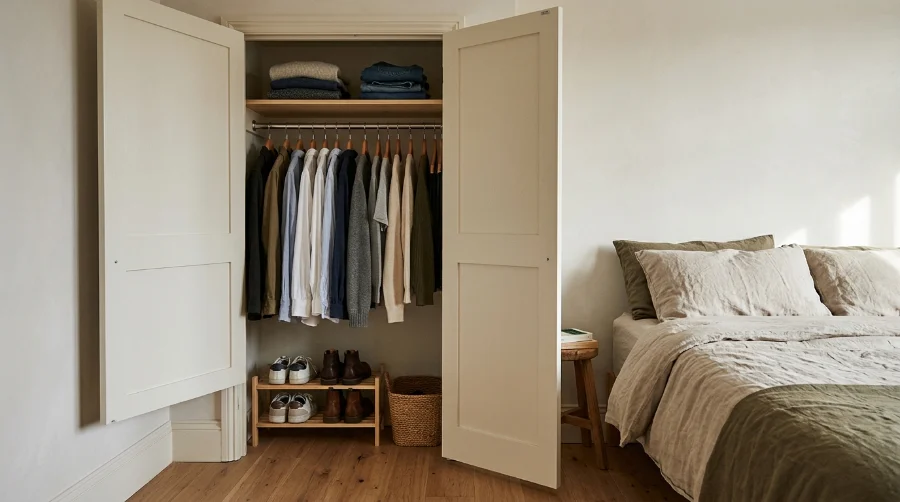
A small wardrobe becomes difficult when the way it is built does not match the clothes it holds. Many wardrobes give most of their space to a hanging rail and very little to shelves, even though a large share of a typical wardrobe is folded clothing. Organizing it means adjusting the inside, not buying a bigger piece of furniture.
Empty the wardrobe and sort the contents into two piles: items that must hang and items that can fold. Be honest about the first pile. T-shirts, knitwear, and casual trousers usually fold without damage, while tailored jackets, shirts that crease easily, and long dresses need to hang.
If the hanging pile is small, give it less space. A rail that runs the full width of the wardrobe wastes room when only a few items need it. A shorter rail with a shelf below is often far more useful. The aim is to match the inside of the wardrobe to the clothes, not the other way round.
Check the condition of the hanger set at the same time. Mixed wire and plastic hangers of different widths leave gaps and make a rail look full before it is. Using one slim, consistent shape frees noticeable space and helps garments sit at the same level.
Folded clothing works best in shallow stacks that can be seen from above. A stack deeper than the eye can read becomes a pile that nobody wants to disturb. Use shelves, or add a simple insert that creates shelves where none exist, and keep each stack to a height that can be lifted without toppling.
Put the stacks where they can be reached without moving hanging clothes aside. If a shelf is hidden behind a row of jackets, it will be used less often. Keep rarely worn items on the top shelf and daily items between waist and eye level.
Folding method matters less than consistency. Some people prefer upright folds in a drawer so that everything is visible; others use flat stacks on a shelf. Choose one method and keep it. A mix of styles makes a stack unstable and hard to return to.
The space below the hanging rail is often left empty or filled with shoes in a jumble. That area is useful for shallow drawers, a basket for accessories, or a second lower rail for trousers. Which option is best depends on what the wardrobe lacks most: drawer space or hanging space.
If the wardrobe has no drawers, a fabric hanging organizer with compartments can hold belts, socks, and small items. These organizers are light and cheap, but they sag when overloaded. Keep them for light items only and leave a few compartments empty.
Shoes on the floor of a wardrobe should be in a low, flat rack rather than loose pairs. Loose shoes collect at the back and are forgotten. A shallow rack keeps them visible and leaves the floor easy to clean.
The inside of a wardrobe door can hold a rail of hooks or a hanging pocket for accessories. Scarves, belts, and a laundry bag are good candidates. This space is convenient but limited, and a door that is loaded heavily may not close properly.
Do not hang bulky items on the door. A coat on each hook stops the door from closing and puts strain on the hinges. Keep the door storage for flat or light things, and check that opening the wardrobe does not block the bed or a walkway.
No layout can make an overfull wardrobe work. If the door struggles to close, the first task is removal, not reorganization. Set aside items that no longer fit, that have not been worn for a long period, or that belong somewhere else. Be realistic about repairs and alterations that have been pending for months.
A wardrobe used by one person should hold what that person actually wears in the current season. Out-of-season clothing can be stored elsewhere, leaving the working wardrobe uncluttered. This is different from a full seasonal storage system; it is simply moving items that are not in use out of the daily space.
Keep a small bag for donations and remove it from the room once full. A bag left in a corner becomes part of the furniture.
Where hanging space is limited, the way clothes are placed on the rail matters. Group similar items together and order them by length within each group, with shorter pieces at one end. This leaves a clear drop of space beneath the short items that can hold a small basket or a pair of shoes.
Keep the rail from becoming overcrowded. If garments have to be pushed along before one can be removed, the wardrobe is full. A useful test is to lift one hanger cleanly without moving its neighbors. When that becomes difficult, it is time to remove or fold something rather than to buy another hanger.
Double hanging rails can help in a tall wardrobe, but only when the lower rail leaves enough length for the clothes beneath it. Measure the longest garment on the upper rail before fitting a second one. A rail that leaves jackets crushed against the shelf below solves one problem by creating another.
Do not buy a set of matching boxes before sorting the clothes. Uniform containers look appealing but rarely fit the real mix of items in a small wardrobe. Sort first, then choose storage for what remains.
Do not keep everything on hangers. A rail packed with folded-looking shirts and jumpers uses far more space than necessary and makes it harder to see what is there. Fold what can be folded, and reserve the rail for garments that truly need it.
Do not rely on scent to keep a wardrobe fresh. If clothes smell musty, find the cause. A damp room or a damp garment needs attention, and a scented sachet only hides the problem for a short time.
An organized small wardrobe is not about expensive fittings. It is about a hanging rail that matches the clothes that need it, stable stacks for folded items, and a clear place for accessories. When the inside reflects real habits, the door closes easily and the right garment can be found without moving half the contents.
Guides that pair well with this one.
The point of a child's clothes storage is not tidiness for its own sake. It is the quiet goal of a child getting dressed without an adult fetching everything first…
A small bedroom has to do more than sleep. It may also hold clothes, a desk, a place to sit and the things you want within reach at night. The trick is not to find…
Fitting a bed and a desk into one small bedroom means asking a single room to do two jobs that normally claim separate floors. A bed needs access along at least one…