Bedroom Ideas
Sharing a Small Bedroom Without the Friction
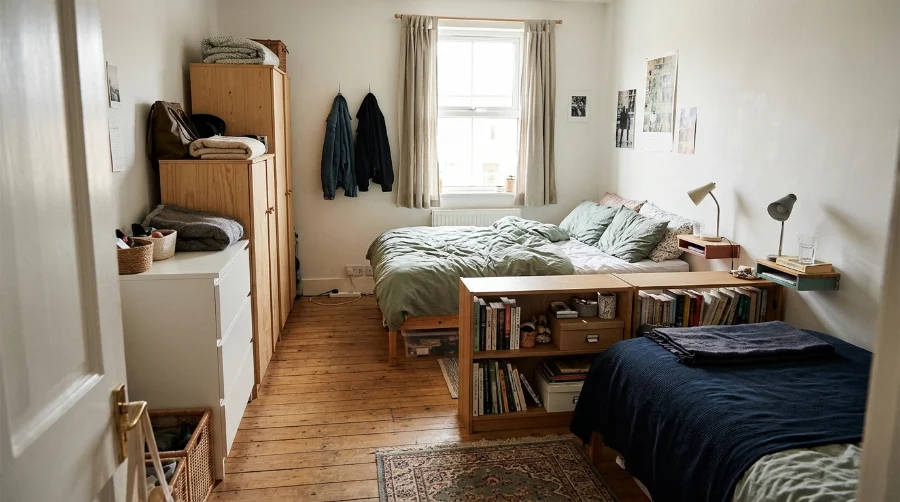
Two people can share a small bedroom comfortably, but the room has to be planned for two sets of habits. The usual problems are not solved by more storage. They…
A spare room rarely turns into a guest room by accident. It starts with a bed and a lamp, then a box of out-of-season clothes goes in, followed by a suitcase, a…
A spare room rarely turns into a guest room by accident. It starts with a bed and a lamp, then a box of out-of-season clothes goes in, followed by a suitcase, a pile of books, and the exercise bike that has nowhere else to live. Within a year the bed is still there in theory but covered in storage. Keeping the room ready for visitors is less about decorating than about resisting that slow drift, and building a setup that takes minutes to restore rather than an afternoon to dig out.
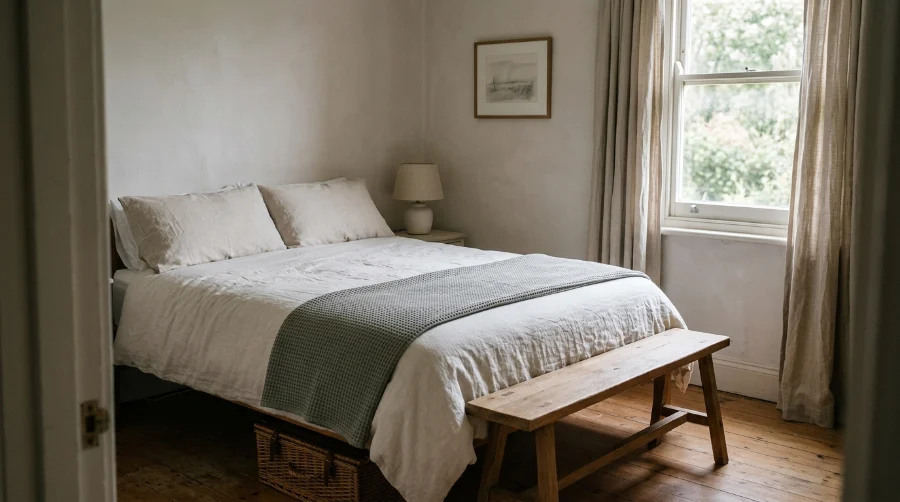
The single rule that matters most is simple: the bed is for sleeping, not for storing. Once it becomes a surface for folded laundry or a temporary ironing board, the room has quietly changed jobs. Keep the mattress bare of everything except bedding, and make a habit of returning anything that lands there to its proper place the same day. A bed that is always visible as a bed is the clearest signal that the room is still a guest room.
Protect the mattress without adding fuss. A washable cover and a single extra blanket folded at the foot are enough; layers of decorative cushions look welcoming for a day and then become obstacles nobody wants to move. If space allows, keep a spare set of sheets in the room itself, in a drawer or a lidded basket, so a visitor can be made up for quickly without a trip through the rest of the house. One set is plenty for most stays, with a second held elsewhere for changes.
Soft items are the main reason a guest room feels hard to keep ready. Extra cushions, throws, and fabric storage baskets are attractive in isolation, but each one offers a place for a stray object to hide. Choose fewer pieces and make each one useful. A single washable throw at the foot of the bed gives warmth without becoming a pile, and two pillows per guest are more practical than an arrangement that has to be rebuilt every morning.
Where storage is needed, prefer closed containers over open ones. A lidded box under the bed keeps spare bedding clean and out of sight, while an open basket at floor level tends to collect whatever is nearest. If a fabric basket suits the look, accept that it needs emptying regularly and keep it for one purpose only. The test is whether a item can be put away in one motion; anything that requires lifting three other things aside will be left out.
Visitors need somewhere to put a case that is not the floor and not the bed. A bench at the foot of the bed, a small table beside it, or a cleared shelf in the wardrobe all work, provided the surface stays empty between visits. This is where storage creep usually begins: a clear surface is too tempting for household odds and ends. Choose one spot, decide it belongs to guests, and keep it that way even when nobody is coming.
A folding luggage stand or a low stool takes little room and can be tucked away under the bed when not in use. If the room is too tight for either, clear the top of a small chest of drawers and leave it bare. A guest who can unpack in two minutes feels at home immediately; one who has to move a stack of paperwork first does not. Hang a few empty coat hooks or clear a short rail as well, since a case on the floor is only half the problem.
Preparation should be a short list, not a project. Before visitors arrive, strip anything that has gathered on the guest surfaces, check that the bed has clean sheets, empty the small bin, and put out one towel per person. Wipe the bedside surface and clear a path from the door to the case spot. That is enough in most cases; a guest room does not need to look newly decorated to feel considered.
The routine works best when the room is never allowed to drift too far. Spend a few minutes at the end of each month opening the door and returning anything that has wandered in. Setting a recurring reminder is acceptable if it helps, though a regular household tidy often covers it. Keep a single small box or bag in the room marked for items that belong elsewhere; during a reset, anything that is not guest furniture goes in the box and is carried out in one trip. The alternative, sorting each object as it is found, is how a five-minute job becomes an hour.
A room can feel friendly without a great many objects. Good lighting makes more difference than ornaments: a bedside lamp with a warm bulb, a curtain that can be opened fully, and a clear mirror all help a small room feel considered. One simple piece of art, a plain rug that can be shaken out, and a vase kept empty are enough to avoid a bare feel. Choose items that can be wiped or laundered, since anything delicate will be a worry rather than a pleasure.
Avoid living plants unless someone is willing to water them on a schedule; a guest room is the classic place for a plant quietly to die behind a closed door. Scented products can trouble visitors, so keep them mild or skip them. The welcome comes from practical comfort: a chair that is not piled high, a glass of water within reach, and a clock that can be seen from the bed. These are small details, but they are the ones a guest actually notices.
The harder part of a guest room is the months when nobody uses it. A closed door and drawn curtains can leave a room feeling damp and stale, and soft furnishings hold dust. Open the window on a dry day for a short while, even in cooler months, to move the air through. In humid weather, run a fan briefly or use a dehumidifier in the room rather than shutting the problem away; a musty smell discovered on arrival is difficult to remove quickly.
Dust the surfaces that are rarely touched, including the top of the wardrobe, the lamp shade, and the skirting board, on a rotating schedule. Wash the bedding even if nobody slept in it, because it absorbs dust over time. Lift the mattress cover and let the bed breathe before making it up again. Check under the bed and inside any lidded storage for signs of moisture or insects, and deal with a small problem before it becomes a large one.
Where the room doubles as a home office or hobby space, keep the work equipment in a closed unit that can be shut at short notice. A fold-away desk is easier to reset than a permanent workstation covered in papers. The aim is a room that can be brought back to guest-ready condition in the time it takes to change the sheets, whether the last person to use it was a visitor or a household member storing a few boxes. A spare room that stays usable is worth far more than one that is merely available on paper.
Guides that pair well with this one.
Two people can share a small bedroom comfortably, but the room has to be planned for two sets of habits. The usual problems are not solved by more storage. They…
Choosing storage for a small bedroom is different from organizing one that is already furnished. The decisions made at the point of purchase shape how the room…
A reading nook in a small bedroom does not need a whole corner to itself. It needs a seat, a light and somewhere to put a book down. When those three things are in…