Bedroom Ideas
Organizing a Small Bedroom - Measure, Place and Clear
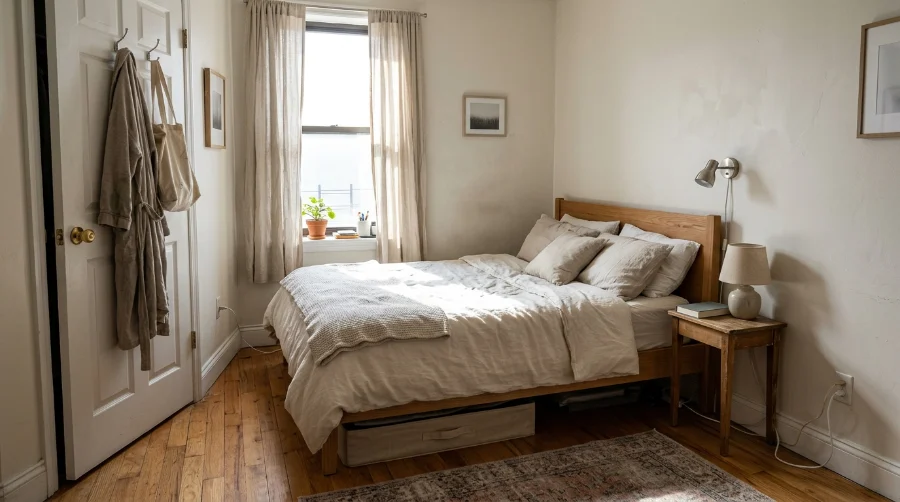
A small bedroom has to do more than sleep. It may also hold clothes, a desk, a place to sit and the things you want within reach at night. The trick is not to find…
The area beside a bed collects a peculiar mix of things. A glass of water, a phone on charge, a book halfway through, medication, glasses and a notepad all gather…
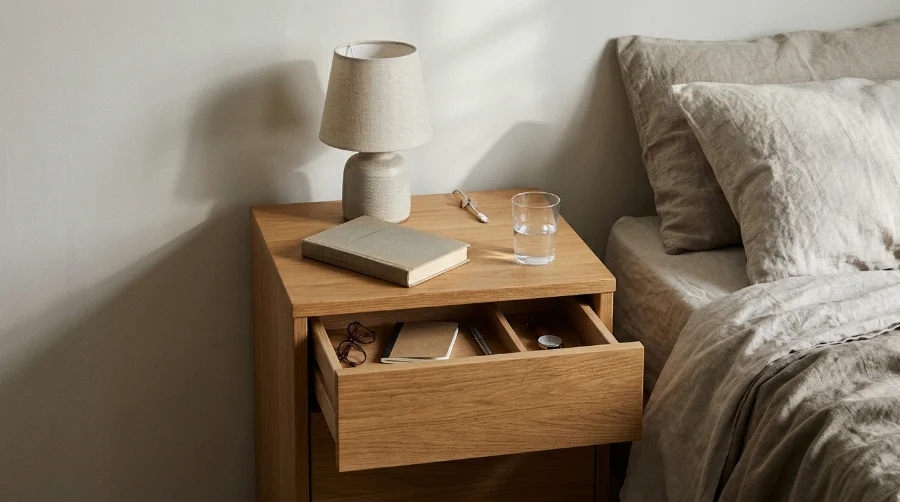
The area beside a bed collects a peculiar mix of things. A glass of water, a phone on charge, a book halfway through, medication, glasses and a notepad all gather on a surface that is usually no bigger than a dinner plate. Because the bedside table is used at the start and end of every day, clutter there is noticed twice daily. Organizing it well is less about storage capacity and more about deciding what genuinely belongs within arm's reach.
A bedside surface works best when it holds only what is needed while getting ready for sleep or waking up. That usually means a lamp, a glass of water, a phone or alarm, and perhaps one book. Anything used elsewhere in the home should not live there. Charging cables, spare batteries and paperwork tend to drift onto the table because it is close and flat, but each one displaces something more useful.
Consider the morning and evening routine as a sequence. What is reached for first, and what is set down last? Those items earn a permanent place. Everything else needs a drawer, a shelf elsewhere, or no place at all.
A cluttered bedside surface is visually loud in a room meant for rest. Clear everything off and return only the few items that have a real purpose there. Leave some empty space around them so a glass can be set down without moving a pile of books. A clear surface also makes the table easier to wipe and stops dust collecting around dozens of small objects.
If the table is shared by two people, agree on a fair split of the space. A small tray or a distinct mat for each person's essentials keeps belongings from merging into one untidy heap.
Many bedside tables have one or two drawers that become catch-alls. Use a shallow divider or a small insert to separate a few broad groups: personal items, medication and medical supplies, and small electronics or cables. A drawer with three clear sections is far easier to use than one deep box where everything mixes.
Keep the drawer only partly full. A jammed drawer is annoying at bedtime and tends to be left open. If the contents no longer fit comfortably, the answer is to reduce them rather than to find a larger table.
Charging cables are among the main sources of bedside mess. A phone cable left coiled on the surface takes up space and tangles with other items. Use a short cable and a small clip or a cable tidy to hold it in a fixed position. Where several devices are charged overnight, a single multi-charger with short leads keeps them together in one spot.
Place the charging point slightly behind the table or on a wall socket rather than letting a cable run across the floor. This reduces tripping and makes it easier to clean around the bed.
Medication kept at the bedside should be organized with safety in mind. Use a small, clearly labelled container and keep it out of reach of children and pets where necessary. Check it periodically and remove anything expired. Where several people in the home take medication, separate containers prevent mix-ups.
A written dose list kept with the container can help, especially when more than one person is involved in giving medication. Keep this information current and private. If a medicine needs refrigeration or has special storage requirements, it does not belong on the bedside table.
A good reading light makes the bedside more useful and reduces the need to keep a bright screen lit at night. A small lamp directed at the book, rather than across the room, is enough for most people. If space is tight, a wall-mounted light or a clip-on lamp frees the entire surface.
Limit the number of books beside the bed to one or two. A stack that grows for months turns the table into a shelf and makes the room feel smaller. Keep a book there while it is being read, then return it to its proper home when finished.
Some small bedrooms have no room for a table at all. A narrow wall shelf, a floating ledge or a small wall-mounted pocket can hold the same essentials without taking floor space. A hanging bedside organizer with a few pockets works in a very tight room, though it is best for light items only.
In each case, the same rule applies: a small number of things, each with a clear place. The lack of a table is not a problem if the two or three items used at bedtime still have a home.
It is tempting to buy a larger bedside table to solve clutter, but a bigger surface simply holds more things unless the habit changes first. Reduce what lives there, then choose furniture that suits the remaining items and the space around the bed. The other trap is letting the table become a temporary home for matters that need dealing with elsewhere. Letters to answer and bills to pay belong somewhere visible, not beside the bed where they are forgotten at the moment the mind is trying to rest.
Another is letting the table become a temporary home for things that need dealing with later. Letters to answer, clothes to sort and bills to pay all belong somewhere more visible. A bedside table hides them at the moment when the mind is trying to wind down.
Some bedrooms leave no room for a table at all. In that case, a wall-mounted pocket with two or three compartments holds the essentials without using any floor area. A narrow ledge fixed at mattress height works in a similar way, provided it is deep enough for a glass and secure enough not to wobble. Some people use a small basket on the floor beside the bed, though this collects dust more quickly than a raised surface. Whatever the solution, keep the same rule: a handful of items with a clear place, not a mini version of the crowded table it replaced.
The bedside table is used at two quiet moments of the day. When it holds only what is genuinely needed, those moments become calmer. Keep the top clear, give the drawer a few simple sections, control the cables and return anything that does not belong. The change is small, but it is felt every single day.
Guides that pair well with this one.
A small bedroom has to do more than sleep. It may also hold clothes, a desk, a place to sit and the things you want within reach at night. The trick is not to find…
A spare room rarely turns into a guest room by accident. It starts with a bed and a lamp, then a box of out-of-season clothes goes in, followed by a suitcase, a…
Two people can share a small bedroom comfortably, but the room has to be planned for two sets of habits. The usual problems are not solved by more storage. They…