Kitchen Organization
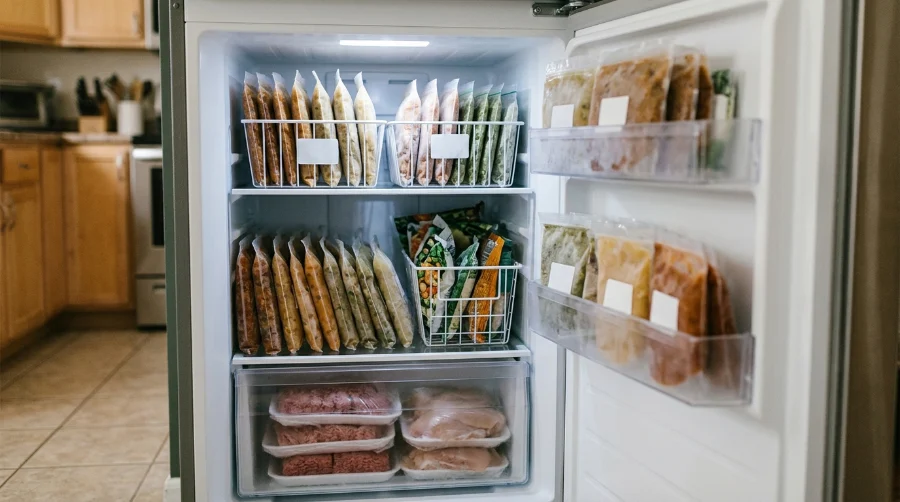
A Freezer You Can Actually See Into
A freezer is easy to forget until something is lost at the back of it. Unlike a fridge, it hides food in solid blocks and frost, and a bag of vegetables can be…
A small pantry can hold a surprising amount, but only when the shelves are planned around the way a household cooks. Without a plan, packets stand at odd angles…
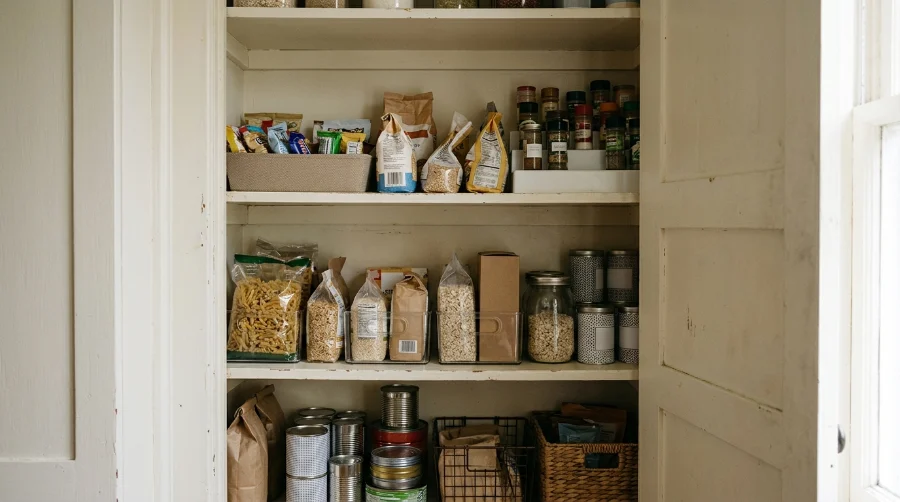
A small pantry can hold a surprising amount, but only when the shelves are planned around the way a household cooks. Without a plan, packets stand at odd angles, tins hide behind older tins, and the same item is bought twice. Organizing it is a short project that pays off every time you cook.
Take everything out and group it on a nearby surface: tins, grains and pasta, baking supplies, breakfast items, snacks and cooking oils. Checking dates as you go lets you remove anything past its best-before date or no longer wanted. Keep use-by dates in mind for anything that could spoil.
Notice which groups are largest. If snacks take half the shelf space, that tells you something about the household's habits. Organizing around real habits works better than organizing around an ideal menu nobody follows.
Choose a system that matches how you cook. A household that makes a lot of pasta may want one section for pasta, sauces and herbs. A household that bakes often may prefer a baking tray or bin that holds flour, sugar and mixes together.
Keep groups broad enough to stay simple. Five well-defined groups are easier to maintain than fifteen narrow ones. If a category only contains two items, it probably does not need its own shelf.
Store everyday items between waist and eye level, where they can be seen and reached without a stool. Heavy tins and large bottles belong on lower shelves. Light items such as paper napkins or spare napkins can go high.
Deep shelves need help. A tiered stand rises toward the back, so the second row stays visible. A turntable works well for jars, oils and condiments because the whole collection can be rotated. Use them only where they fit; an oversized turntable can waste more space than it saves.
When you put shopping away, move older items forward and place new ones behind. This habit, often called first in, first out, reduces waste and stops food from disappearing at the back of the shelf. It takes a few seconds and needs no special equipment.
For packets that are opened, use a clip or a small container that can be sealed properly. An open bag standing upright in a bin is more useful than one folded loosely at the back. Keep a couple of clips in the pantry so they are there when needed.
Labels help when containers are opaque or when several people put the shopping away. A bin marked "breakfast" is enough; each packet does not need its own label. Write on the front of the bin, where it can be read without lifting anything.
If children help unpack groceries, use short, familiar words. A system that relies on one person's memory will not survive a busy week. Clear grouping and a few labels are usually sufficient.
Flat baking trays, tall bottles and large cereal boxes do not always fit a standard shelf. Store trays upright in a dividers or beside a stack of cutting boards. Keep tall items together so shelf height can be adjusted around them where possible.
Small items such as tea sachets, sweeteners and spice packets are easy to lose. A shallow bin keeps them contained. Choose a bin that slides out, because reaching into a deep container defeats the purpose.
A pantry list does not need to be detailed. Note the staples that regularly run out, such as rice, tinned tomatoes or coffee. Add to it as soon as an item is finished, or check the shelves before the main shop.
Keep the list somewhere practical: on the fridge, in a shared note, or on a pad in the kitchen. The goal is not to track every packet. It is to avoid buying a fifth jar of something while running out of something you use daily.
In households with children, snack items disappear quickly and often end up scattered across the kitchen. Give them one low shelf or one shallow bin that everyone can reach. Keep the contents simple: a few options that are easy to grab and easy to replace.
Do not fill the zone with a month's supply. A crowded snack bin makes it hard to see what is there and encourages people to dig through everything. Refill it from the main pantry stock once a week. If the same item is gone by Tuesday every week, keep more of that item and less of what remains untouched.
A snack zone also helps at homework time or when someone is cooking dinner. People know where to look, so they are less likely to open every cupboard. The boundary matters more than the size of the shelf.
One more mistake is emptying the pantry and then trying to put everything back exactly as it was. A reset is the moment to change the system. If a group has never worked, this is the time to give it a different home.
Once a month, move older items forward, wipe one shelf and check for opened packets that need finishing. Look for anything that no longer belongs, such as a spare gadget or a bag someone forgot to return.
A small pantry will always need a little attention. The difference between a frustrating one and a useful one is not the size. It is whether the household can see what it owns and put things back without guessing. A few clear groups are enough to make that possible every day.
Guides that pair well with this one.
A freezer is easy to forget until something is lost at the back of it. Unlike a fridge, it hides food in solid blocks and frost, and a bag of vegetables can be…
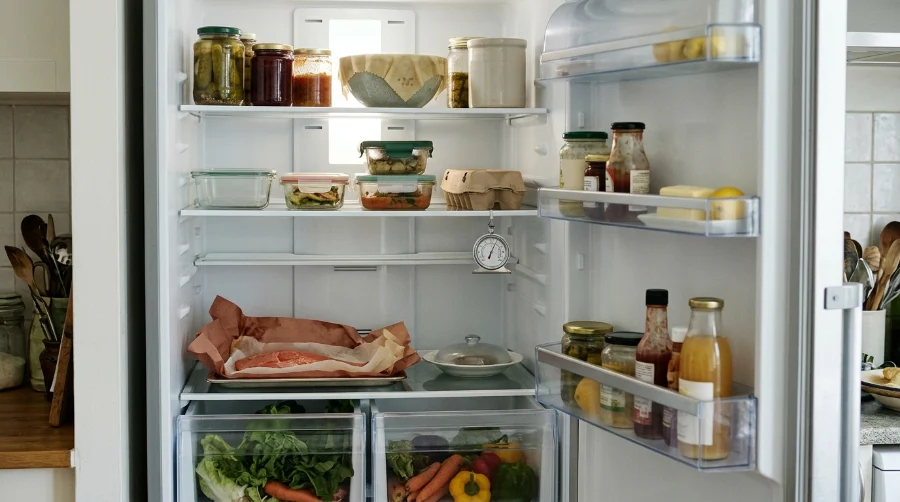
A refrigerator is easier to use when its layout matches how food is stored safely. Organizing it is not mainly about matching containers; it is about knowing which…
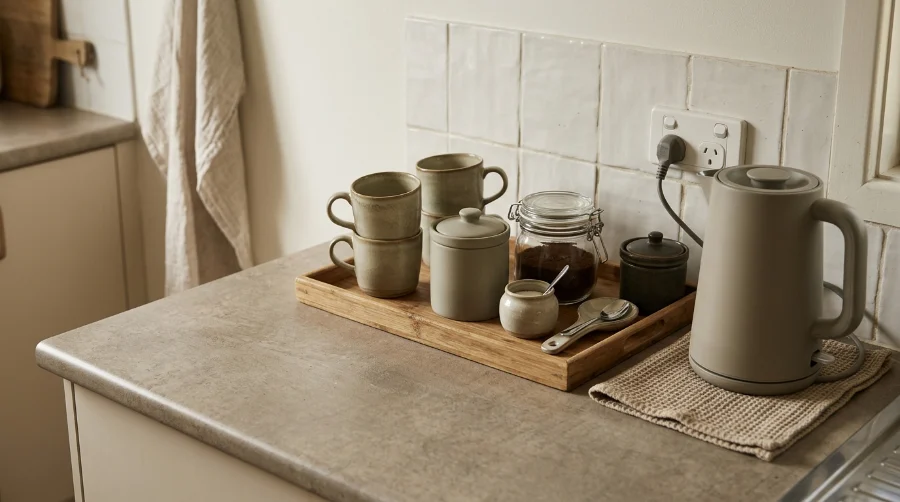
Making a hot drink is a small sequence repeated many times a day: reach for a cup, add coffee or tea, boil water, sweeten, stir, and clean up. When those six steps…