Kitchen Organization
Baking Supplies Organized by Workflow
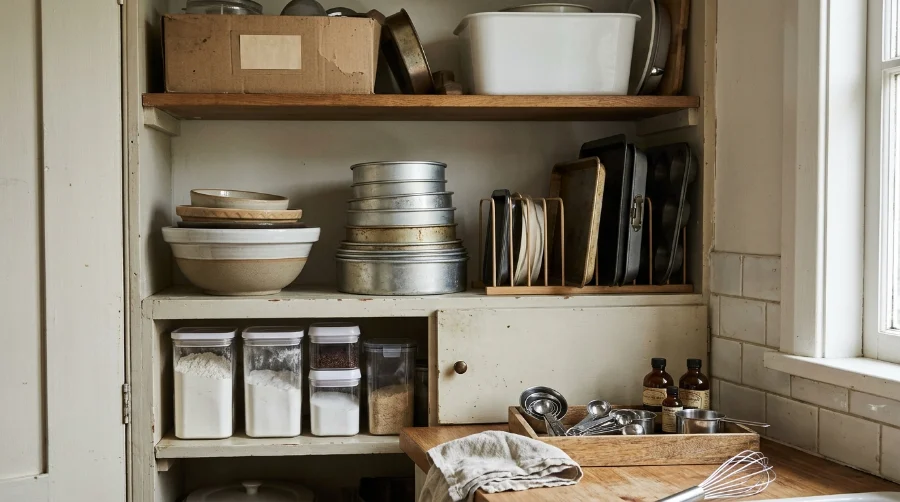
Baking equipment has a recognisable pattern. It arrives in bursts, most of it is used only occasionally, and the pieces are awkwardly shaped: flat trays, round…
A galley kitchen is a corridor with work surfaces on both sides. It is efficient by design, because everything is within a few steps, but it is unforgiving of…
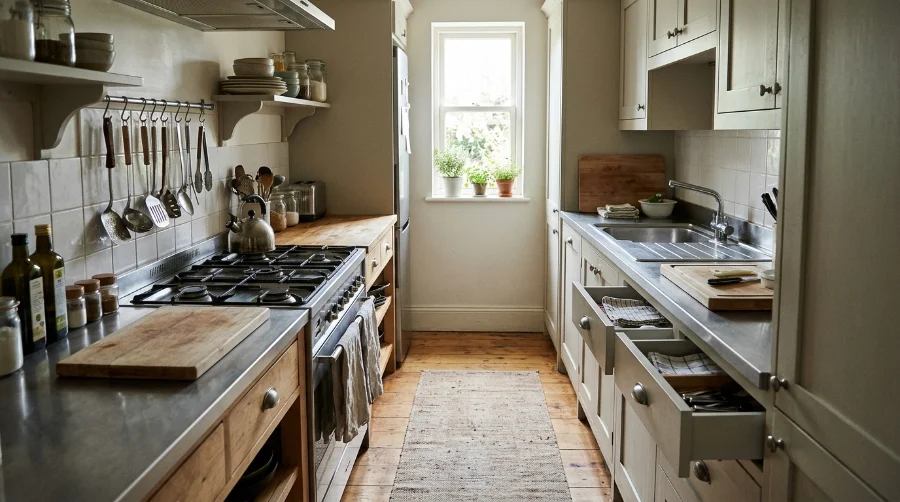
A galley kitchen is a corridor with work surfaces on both sides. It is efficient by design, because everything is within a few steps, but it is unforgiving of clutter. With only one way in and one way out, a misplaced object can block the whole workflow, and two people cooking at once can easily end up in each other's way. Organizing this layout is about protecting movement and making every item reachable from where it is used.
Unlike an L-shaped or island kitchen, a galley has no third side to absorb overflow. Traffic enters at one end and usually exits at the other, which means the central aisle is both a working area and a route through the home. Before changing storage, observe how people move through the space when cooking and when simply passing through. Those two movements compete, and the aisle has to serve both.
Note where the two busiest points sit: normally the sink and the stove. Keeping the stretch between them clear makes cooking safer and faster. Anything that forces a person to step sideways or reach across that stretch should be moved.
In a galley, the sink, stove and refrigerator form a tight triangle along the two runs. The goal is to keep the items used at each point close to that point. Cooking utensils belong beside the hob, cutting boards near the main prep surface, and cleaning supplies near the sink. When these groups drift, the cook takes extra steps across the aisle with hot or wet items, which is both slow and risky.
Walk through a typical meal in your head: take food from the fridge, wash it at the sink, chop it on the board, move it to the pan, then serve. Each stage should flow into the next without a turn back. Rearranging a few items to match that sequence often improves the kitchen more than adding new storage.
Deep base cupboards are common in galleys but awkward in a narrow space. To reach something at the back, a person must crouch and lean into the aisle, which blocks the route behind them. Drawers pull straight out and give a clear view of their contents, making them a better fit for a tight kitchen.
Where cupboards cannot be replaced, fit pull-out baskets or tiered inserts so the rear items come forward. A shallow basket that slides out is far easier to use than a deep shelf that hides half its contents. Keep the front of the aisle clear while any drawer or pull-out is open.
A galley usually has a run of wall above the counter on both sides. That vertical space is the best answer to limited floor area. Hang frequently used utensils on a rail beside the stove, mount a shelf for everyday plates, and keep only what is used regularly within easy reach. Items stored too high are difficult to retrieve safely in a narrow room.
Avoid crowding the wall directly above the worktop with too many objects. Too much hanging hardware makes the kitchen feel smaller and catches sleeves and cloths. Keep the busiest prep area visually calm, with just the tools used at that spot.
In a galley, counter space is the most precious surface in the room. Every appliance that stays out permanently removes a working area. Keep only one or two small appliances on the counter and store the rest. A kettle and a knife block are reasonable; a toaster, coffee machine, blender and air fryer lined up together are not.
Create a clear landing zone on each side of the sink and stove. Even a foot of empty counter makes chopping and plating possible. If appliances must stay out, group them at one end of the run rather than spreading them across both sides.
Many galley kitchens are used by more than one cook. When two people work together, they naturally occupy opposite runs. Problems arise when both need the same cupboard or when one stands in the aisle holding a pan. Define which run holds the prepared food tools and which holds the cooking tools, so each person can stay on their side.
Keep rarely used items out of the busiest zones. A bulk stockpot needed twice a year should not live above the main prep area where it is constantly in the way. Store it high, at the end of a run, or elsewhere in the home.
A narrow kitchen with a single light at the ceiling casts shadows across the worktop. Under-cabinet lighting makes a real difference to both safety and comfort, especially where knives are used. A battery-operated strip is enough if rewiring is not practical.
Good extraction also helps, since cooking smells and steam linger in a corridor kitchen. Use the extractor while cooking and keep a clear path to any window. Clean filters regularly so the system works as intended.
One common error is treating both runs as general storage and mixing unrelated items. The narrow space amplifies the cost of that choice: a poorly labelled cupboard is a genuine obstacle. Give each zone a clear job and keep it.
Another is overfilling wall cabinets. A shelf that is completely full hides what it holds and makes it harder to see everything at a glance. Leave a little empty space where possible so items can be put back without shuffling.
A galley kitchen cannot be made larger, but it can be made far easier to use. Keep the central aisle clear, drawers over deep shelves, group items by the tasks done at each point and protect the counter as working space. When the layout respects the tight geometry of the room, a small galley can handle serious cooking without feeling cramped.
Guides that pair well with this one.
Baking equipment has a recognisable pattern. It arrives in bursts, most of it is used only occasionally, and the pieces are awkwardly shaped: flat trays, round…
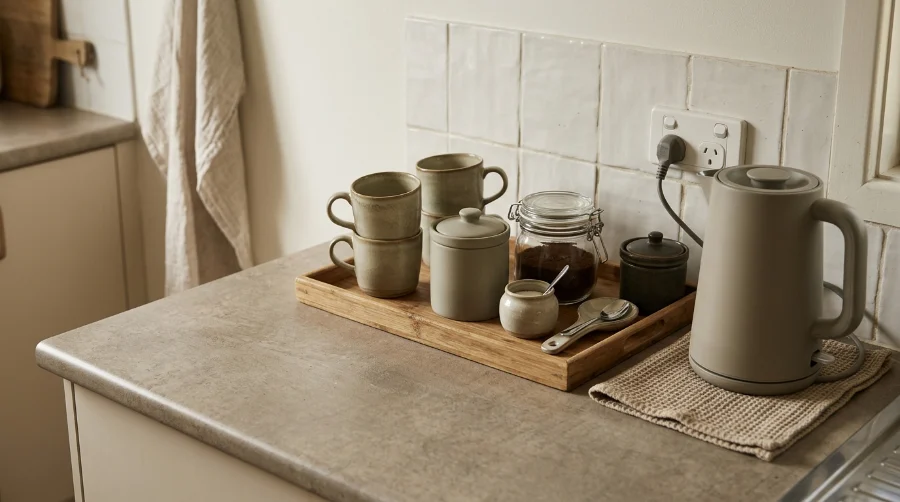
Making a hot drink is a small sequence repeated many times a day: reach for a cup, add coffee or tea, boil water, sweeten, stir, and clean up. When those six steps…
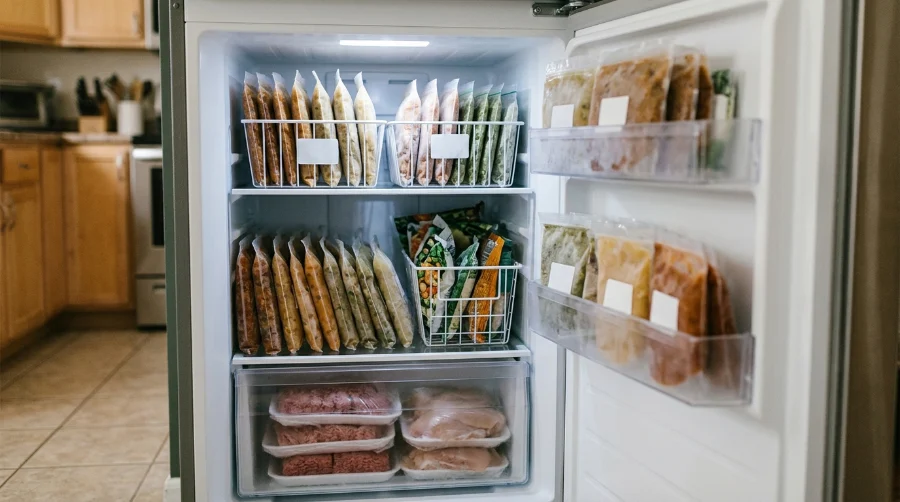
A freezer is easy to forget until something is lost at the back of it. Unlike a fridge, it hides food in solid blocks and frost, and a bag of vegetables can be…