Kitchen Organization
A Freezer You Can Actually See Into
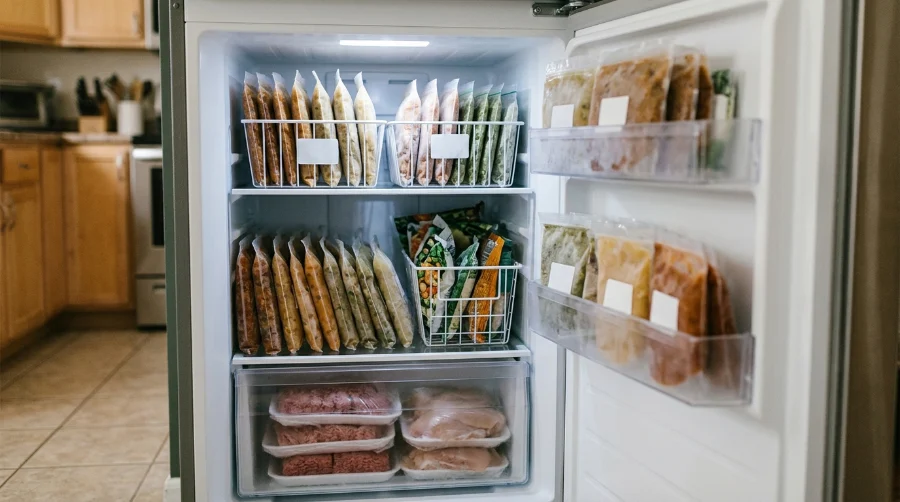
A freezer is easy to forget until something is lost at the back of it. Unlike a fridge, it hides food in solid blocks and frost, and a bag of vegetables can be…
Making a hot drink is a small sequence repeated many times a day: reach for a cup, add coffee or tea, boil water, sweeten, stir, and clean up. When those six steps…
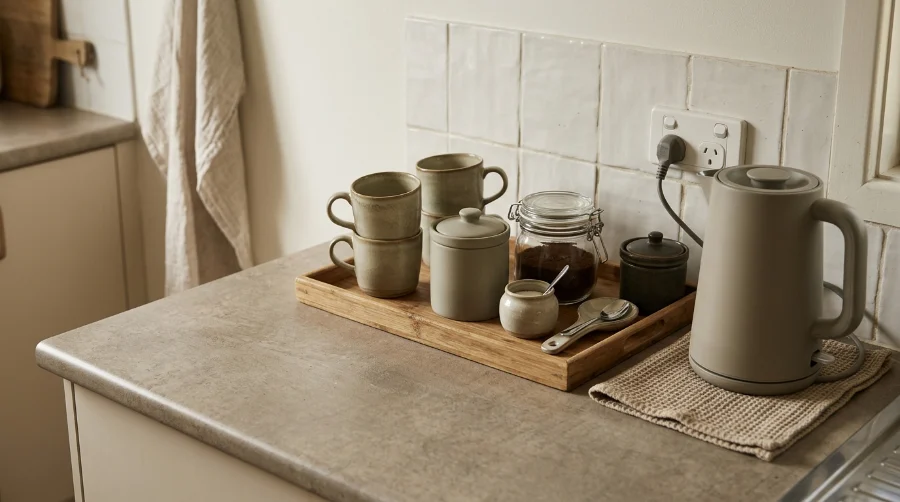
Making a hot drink is a small sequence repeated many times a day: reach for a cup, add coffee or tea, boil water, sweeten, stir, and clean up. When those six steps are scattered across four cupboards and two counters, the routine becomes a series of small interruptions. A station simply gathers the items for that sequence into one place. It is a practical workaround for limited space, not a display, and its value is measured in fewer steps rather than in how it looks.
Location decides whether a station helps or hinders. The best position is close to water and a power point, because those are the two things that cannot be carried easily. A kettle needs a nearby socket, and the walk from the tap to the brewing spot should be short and free of obstacles. If the only outlet sits behind the coffee machine or under a shelf, arrange the rest of the station around that fixed point rather than fighting it.
Consider what else happens in the same area. A station beside the hob catches splashes and grease; one in the main preparation path gets pushed aside every time a meal is cooked. A quiet corner of the counter, an end of a worktop near the sink, or a sturdy trolley parked against a wall are all more workable than a busy central stretch. Leave enough room to set a full mug down safely and to open a tin without knocking anything over. A station that needs elbow manoeuvres will be abandoned within a week.
Once the spot is chosen, lay out the items in the same order as the routine. Cups come first, then the coffee or tea, then sweeteners and milk, and finally the spoons and cloths used at the end. Setting the station up left to right, or in whatever direction feels natural to the household, means a hand can move through the steps without doubling back. This is more useful than grouping things by what they are, because a working routine follows actions, not categories.
Decide together what belongs there. If one person takes tea and another takes coffee, both need a small share of the space; there is no point in a station that serves only half the household. Keep the everyday versions of each drink within reach and store the occasional ones elsewhere. A guest's herbal tea can live in a cupboard while the morning blend stays out, and nobody misses the difference.
A station grows if it is allowed to. Give it a defined boundary, such as a tray, a shallow basket, or a marked corner of the worktop, and treat that boundary as full. When a new mug or a second tin appears, something else has to go back into the cupboard. Without a limit, a useful little corner slowly becomes a second pantry that crowds the chopping board.
Vertical arrangement helps when the surface is narrow. A tiered stand lifts the back row so packets behind the front row can be seen, and matching stackable cups use less space than a mixed collection in a row. Hooks can hold a small brush or a measuring spoon, though adhesive types should be used with care on painted surfaces. If the counter is truly tight, the station can live on a tray that slides into a cupboard and is pulled out only at brewing time; the routine stays grouped even when the items are not on display.
Mess is what turns a station from convenient into tiresome. Water splashes from a kettle, coffee grounds cling to a spoon, and a wet teaspoon left on the counter leaves a mark. A small absorbent mat under the kettle and brewing area catches most of the drips and can be rinsed or replaced when it darkens. Choose one that dries quickly, since a damp mat held against a timber worktop does more harm than good.
Keep a single used-spoon rest beside the cups, or a small container for wet utensils, so a spoon has somewhere to go between stirring and washing. As for grounds, a lidded bin or a small covered container at the station prevents a pile of damp coffee from sitting in the open. Emptying it daily takes a moment and avoids odours. Wipe the tray once a day rather than waiting for a sticky surface to build up; a quick cloth across the boundary is easier than scrubbing dried splashes later.
See-through containers are useful for tea sachets and sugar because the level is obvious at a glance, but they need lids that close properly in a steamy kitchen. A jar that is awkward to open will be left ajar, and a packet that is tipped loosely into a dish will go stale quickly. Airtight is worth having for anything ground or powdered, while whole beans and sealed tea bags are more forgiving. Label only where the contents are not obvious; a container filled with dark leaves is not always easy to identify from above.
Mugs are the bulkiest part of most stations and the easiest to overdo. Keep two or three per person in daily rotation and send the rest to a cupboard. Stacking saves space but can chip rims and make the bottom cup hard to reach, so stack only a few and choose mugs that nest neatly. Handles that catch on one another turn a neat stack into a small avalanche.
If mugs are kept on hooks, check that the fixings suit the wall and that the handles hang freely; a crowded hook line results in broken cups. For households with children, a lower shelf may be safer than an open display at eye level. The station should make the morning easier, not add a daily decision about which cup is least likely to fall.
In a very small kitchen, a permanent station can take more than it gives. If the worktop is already needed for chopping, or if the kettle and cups are naturally close anyway, a dedicated corner is unnecessary. The same applies to a household that drinks only one cup a day or uses a single type of tea: keeping those items where they already are is simpler than building a system around them.
The warning signs are practical. If the station keeps spreading, if items are constantly moved aside before cooking, or if cleaning it takes longer than making the drink, the arrangement has failed. In those cases, try a compact tray that can be stowed away, or return everything to a single drawer near the kettle. A good station earns its space by removing steps. When it starts adding them, the right move is to simplify rather than to add another organiser.
Guides that pair well with this one.
A freezer is easy to forget until something is lost at the back of it. Unlike a fridge, it hides food in solid blocks and frost, and a bag of vegetables can be…
A refrigerator is easier to use when its layout matches how food is stored safely. Organizing it is not mainly about matching containers; it is about knowing which…
Most kitchen cabinets are not short of space; they are short of a plan. When a cupboard becomes hard to use, the usual response is to buy another organizer or tip…