Kitchen Organization
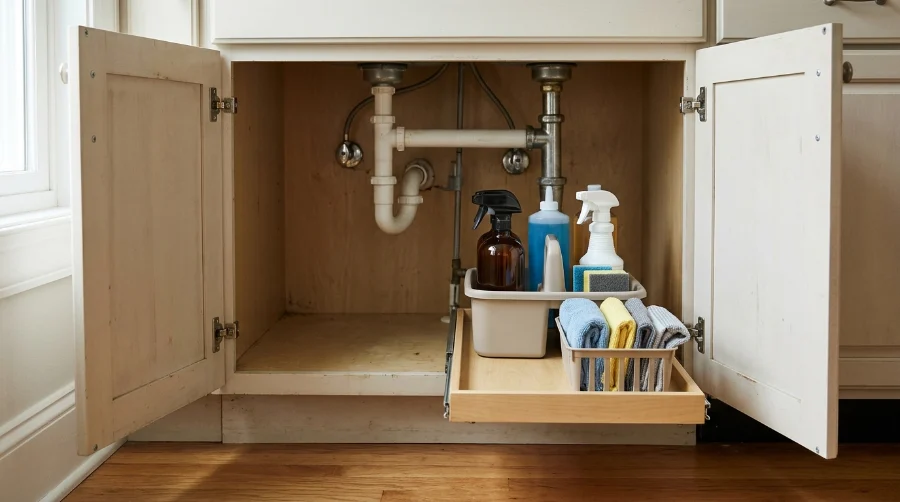
Organizing Under the Sink Around the Pipes
The cupboard under the kitchen sink is often the least ordered space in the room. It holds cleaning products, spare cloths, plumbing parts, and a few things nobody…
Most kitchen cabinets are not short of space; they are short of a plan. When a cupboard becomes hard to use, the usual response is to buy another organizer or tip…
Most kitchen cabinets are not short of space; they are short of a plan. When a cupboard becomes hard to use, the usual response is to buy another organizer or tip everything out and start again. Six months later the same problem returns. The cause is usually a small set of repeatable mistakes, and each one has a practical fix.
It is tempting to choose a rack, a set of bins or a pull-out basket first and find a place for it later. In a kitchen, a few centimetres matter. Measure the inside width, depth and height of the cabinet, including any hinges or pipes that reduce usable space. Base cabinets are commonly around 24 inches (61 cm) deep and wall cabinets around 12 inches (30 cm) deep, but older kitchens vary. Check your own cabinets rather than assuming.
Write the measurements down before shopping and leave a little clearance around any insert so it slides in without force. An organizer that has to be squeezed into place will be the first thing you remove when it gets stuck.
Check vertical clearance as well. A stackable bin that fits the shelf today may leave no room for its lid once it is inside, and an under-shelf basket can hang lower than expected. In a wall cabinet, note the distance from the shelf to the hinge. Those few centimetres decide whether an insert slides in smoothly or catches on the frame.
Check vertical clearance as well. A stackable bin that fits the shelf today may leave no room for its lid once it is inside, and an under-shelf basket can hang lower than expected. In a wall cabinet, note the distance from the shelf to the hinge. Those few centimetres decide whether an insert slides in smoothly or catches on the frame.
Cabinets often fail because the most-used items sit on the highest or deepest shelf. Everyday dishes, cooking oil and the utensils you reach for daily belong between roughly eye level and waist height. Rarely used appliances, large serving platters and spare containers can go higher or lower.
If a shelf is fixed, use a step stool rather than keeping heavy or sharp items within easy reach of children. Cast-iron pans and small appliances should stay low. A full pot stored overhead is awkward to lift and easy to drop.
Before moving anything, decide what each cabinet is responsible for. One can hold baking supplies, another breakfast items, another cleaning products. Grouping by task means you can gather what you need without opening four doors. Grouping by shape may look tidy, but it rarely matches the way a kitchen is used.
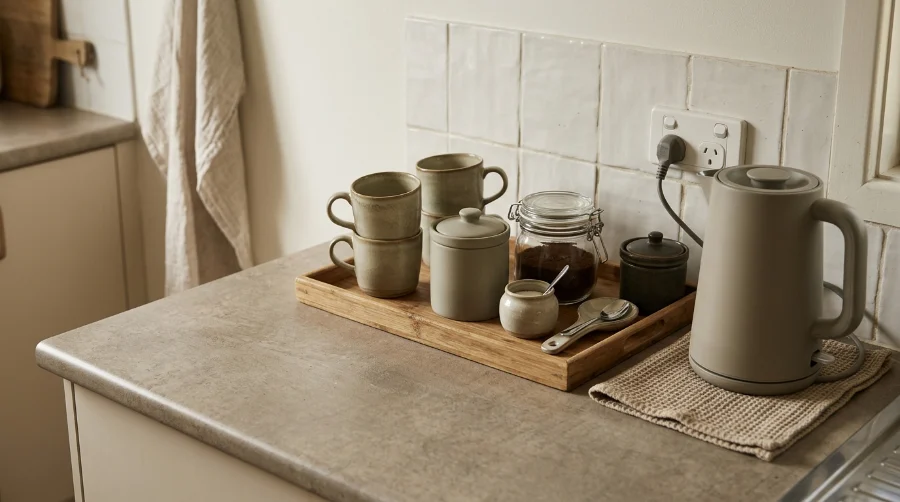
Keep similar items near the place where they are used: mugs near the kettle or coffee maker, cutting boards near the prep area, foil and wrap near the stove or microwave. A short walk across the kitchen is fine. A trip to the far side of the room for a spoon is not.
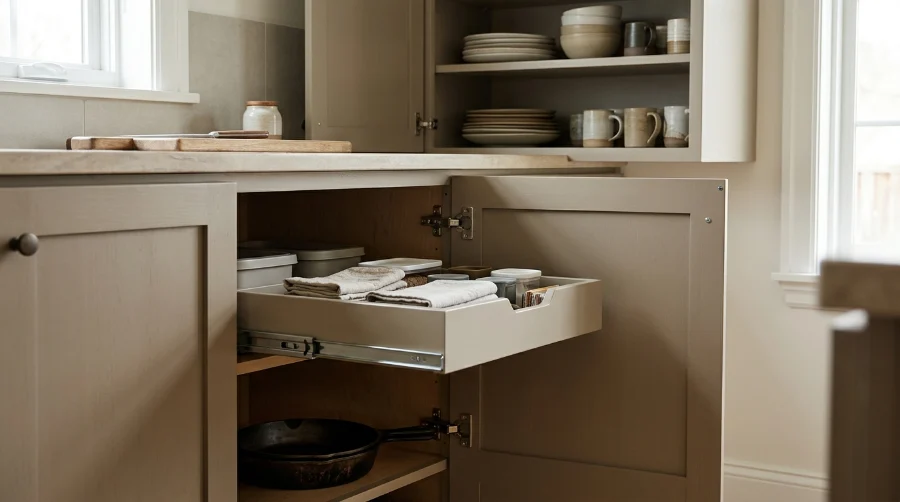
A deep base cabinet becomes a black hole when items are pushed to the back. Anything you cannot see will eventually be forgotten and duplicated. Pull-out shelves solve this well because the whole shelf comes toward you. If replacements are not an option, use a tiered organizer or two shallow bins, one behind the other, and pull the front one out to reach the back.
Never stack more than two layers of the same item in a deep cupboard. The bottom layer will be forgotten. It is better to keep a smaller amount that you can see and use.
Mismatched lids, half-used bags and four nearly empty spice jars consume prime space. This is not a storage problem until it becomes one, but it quietly pushes useful things out. Once a season, match lids to containers and discard anything chipped or warped. Combine partial packets only when they are the same product and still within their best-before date.
Keep one "mixed bits" bin if your household generates odd items, but give it a limit. When the bin is full, sort it before adding more.
Door-mounted racks can be useful for spices or cleaning sprays, but they collide with tall bottles and with the shelf itself. Many door racks are sized for standard spice jars; larger bottles will stop the door from closing. Check the swing of the door and the height of the shelf before fitting anything.
Also check that pull-out bins do not catch on the hinge. It is a small detail that turns a neat idea into a daily annoyance.
The real test of a kitchen system happens at the end of a meal. If putting an item away requires moving three other things, people will leave it on the counter. Each category needs one obvious home with enough room for the amount you actually own. If a shelf is always full, either reduce what is stored there or give the category a second spot.
Use open-front bins for children and for guests. A labelled basket that anyone can drop into is more forgiving than a drawer with a precise arrangement that only one person understands.
Corner cupboards are the hardest part of many kitchens. Anything placed at the back is difficult to reach, so give the corner one clear purpose and keep the contents light. A rotating tray works well in some layouts, but it needs a clear circle of space and a door that opens far enough. Where that is not possible, store shallow items such as baking trays or pan lids there, and keep everyday things in the neighbouring cabinet.
Do not treat the corner as overflow storage for everything you cannot place elsewhere. That is how it becomes a cupboard nobody wants to open.
You do not need to reorganize the whole kitchen. Pick the cabinet that causes the most irritation and work through these steps:
Then leave it alone for a week. If a spot is still awkward, change that one spot rather than starting over everywhere. Small adjustments are easier to keep than a full kitchen reset.
Some problems are structural. If a cabinet is too shallow for plates, or a corner is impossible to reach, an organizer may not fix it. In a rented home, freestanding shelving inside the cupboard or a small cart nearby may be the only practical answer. In a home you own, a carpenter can adjust shelves or add a pull-out properly. Knowing when to stop rearranging is part of good organization.
Guides that pair well with this one.
The cupboard under the kitchen sink is often the least ordered space in the room. It holds cleaning products, spare cloths, plumbing parts, and a few things nobody…
Making a hot drink is a small sequence repeated many times a day: reach for a cup, add coffee or tea, boil water, sweeten, stir, and clean up. When those six steps…
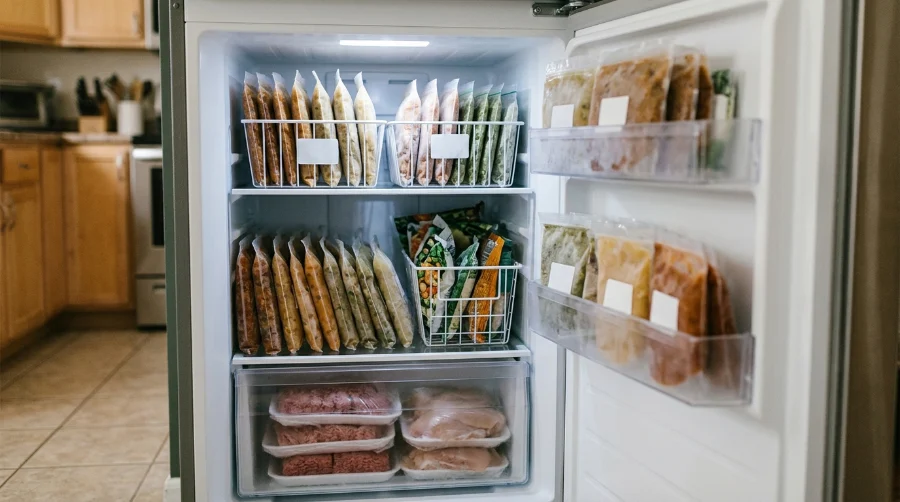
A freezer is easy to forget until something is lost at the back of it. Unlike a fridge, it hides food in solid blocks and frost, and a bag of vegetables can be…