Kitchen Organization
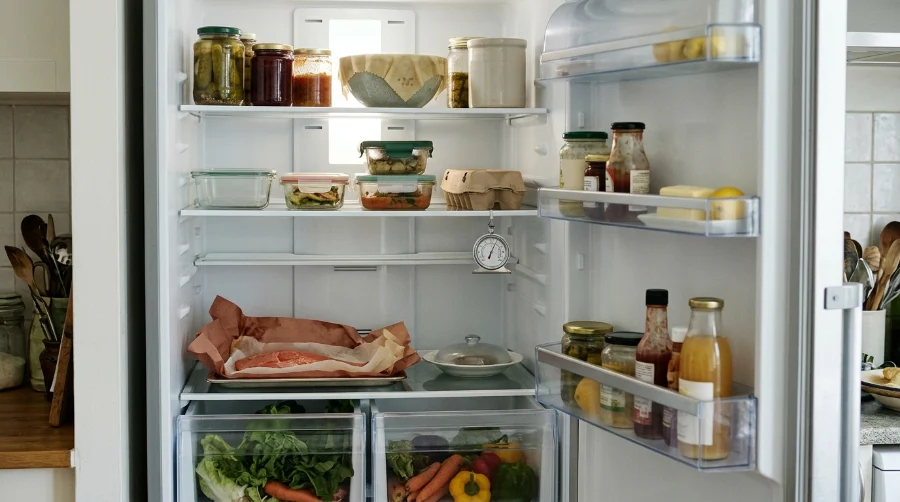
A Refrigerator Organized by Purpose, Not Just by Container
A refrigerator is easier to use when its layout matches how food is stored safely. Organizing it is not mainly about matching containers; it is about knowing which…
A freezer is easy to forget until something is lost at the back of it. Unlike a fridge, it hides food in solid blocks and frost, and a bag of vegetables can be…
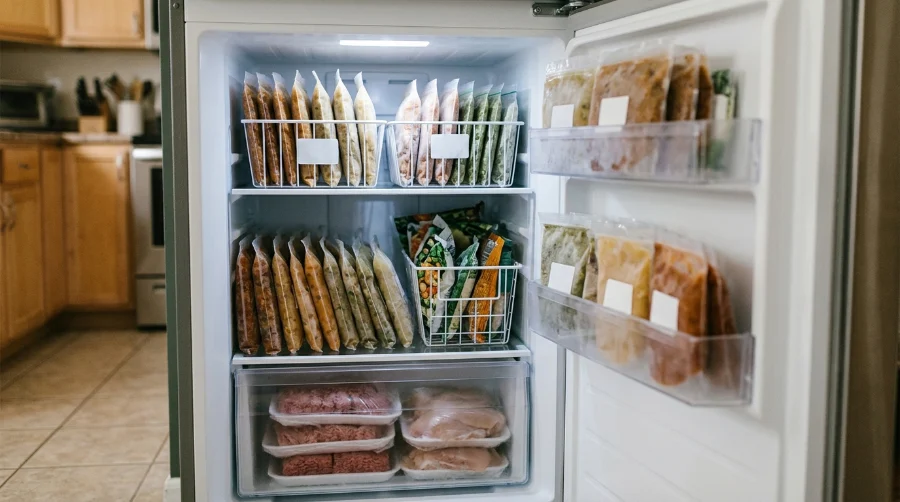
A freezer is easy to forget until something is lost at the back of it. Unlike a fridge, it hides food in solid blocks and frost, and a bag of vegetables can be forgotten for a year. Organizing a freezer is less about tidy shelves and more about making food visible, safe and actually used. A few simple habits make contents last longer and stop good food being thrown away.
Start by switching off the freezer and letting it defrost if there is a thick layer of ice. Sorting through a frost-covered freezer is miserable, and frost reduces efficiency and wasted space. While everything is out, check each item. Anything with heavy ice crystals, damaged packaging or an uncertain date should be discarded rather than returned.
Group what remains into rough categories: meat and fish, vegetables, prepared meals, bread and baked goods, and long-term staples. This gives a picture of what the household actually freezes, which should shape the organization that follows. A family that freezes mostly meal portions needs a different setup from one that stores bulk vegetables.
The single most useful freezer habit is to freeze food flat in sealed bags before stacking it. Liquids, soups, sauces and chopped vegetables take up far less space as thin slabs than as lumpy bags. Lay the filled bags on a tray in a single layer until solid, then stand them upright like files in a folder. This makes each item visible and lets the household take one portion without digging through a pile.
Standing bags upright also prevents the contents from pooling at one end and refreezing into an awkward lump. Use bags designed for freezing and press out as much air as possible before sealing, since excess air leads to freezer burn and wasted space.
Frozen food is unrecognizable once it is solid. Every item should carry its name and the date it was frozen, written on the bag or on a piece of tape. A permanent marker is enough. A label that says "soup" is more useful than no label, and a date prevents the common question of whether something is still good.
Keep the writing on one consistent corner of each bag so it can be read when items are stacked upright. If several people use the freezer, a simple shared convention for dates reduces confusion. Labels take seconds to add and save far more time than searching later.
Give each category a zone. Raw meat and fish belong on a lower shelf or in a sealed tray, so any drip cannot reach ready-to-eat food. Vegetables and portions meant for quick weeknight meals should be near the front at easy height. Long-term items such as bulk stock or spare bread can go at the back or in a designated basket.
Use baskets or shallow crates to stop groups mixing. A bin for vegetables, one for meal portions and one for meat means a person can lift out a category instead of rummaging. Avoid deep containers where items get buried; shallow bins keep everything reachable.
A written or phone-based list on the freezer door transforms how the space is used. It does not need to be elaborate. Note what goes in and cross it off when it comes out. Even a rough list stops duplicates and reminds the household of food that would otherwise sit unused for months.
For a chest freezer, a grid system works especially well. Divide the space into labelled sections, one for each category, and note where each section sits. When looking for a cut of meat, the household goes straight to the relevant basket rather than lifting every item in turn.
Frozen food does not spoil in the same way as fresh food, but quality declines over time and items can be kept far too long. Put newer items behind older ones so the oldest food is used first. When adding a new bag to a stack, slide it in at the back and bring the older ones forward.
Check the inventory monthly and plan a meal around items that have been there a while. A short note of the foods the household freezes most often helps when shopping, so the freezer is stocked with things that will actually be eaten rather than impulse bulk buys.
Frost is a sign that warm, moist air is entering the freezer or that the seal needs attention. A thin layer is normal, but thick ice reduces space and makes the appliance work harder. Defrost when the build-up exceeds a few millimetres, and check that the door closes fully and the seal is clean.
Keep the freezer at a consistent temperature suitable for long-term storage and avoid leaving the door open while deciding what to cook. A full freezer holds temperature better than a nearly empty one, so a few bottles of water can help maintain stability when the freezer is low on contents.
One mistake is freezing food in large family-sized blocks that must be thawed all at once. Smaller portions freeze faster, thaw more evenly and reduce waste. Another is wrapping food loosely, which dries it out and leaves icy patches. Use proper freezer bags or wrap tightly in suitable film.
Avoid storing opened or poorly sealed containers, and never refreeze food that has thawed completely at room temperature. Where food has been cooked after thawing, it can usually be frozen again, but raw food that has simply sat out should not be.
Organizing a freezer is a small task with a lasting payoff. When food is flat, labelled, grouped and listed, it gets used instead of forgotten. That means fewer duplicates, less waste and a clearer picture of what the household has to eat. The system is simple enough to maintain in a few minutes a week, and it quietly saves money every month.
Guides that pair well with this one.
A refrigerator is easier to use when its layout matches how food is stored safely. Organizing it is not mainly about matching containers; it is about knowing which…
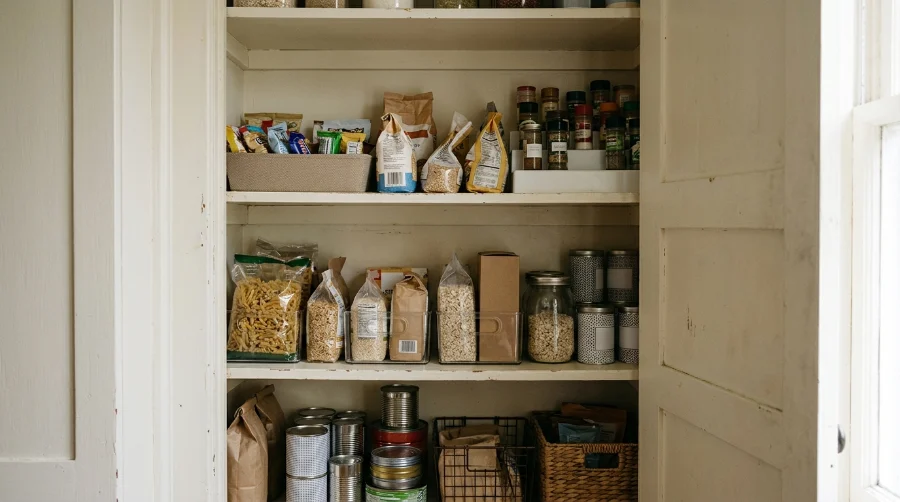
A small pantry can hold a surprising amount, but only when the shelves are planned around the way a household cooks. Without a plan, packets stand at odd angles…
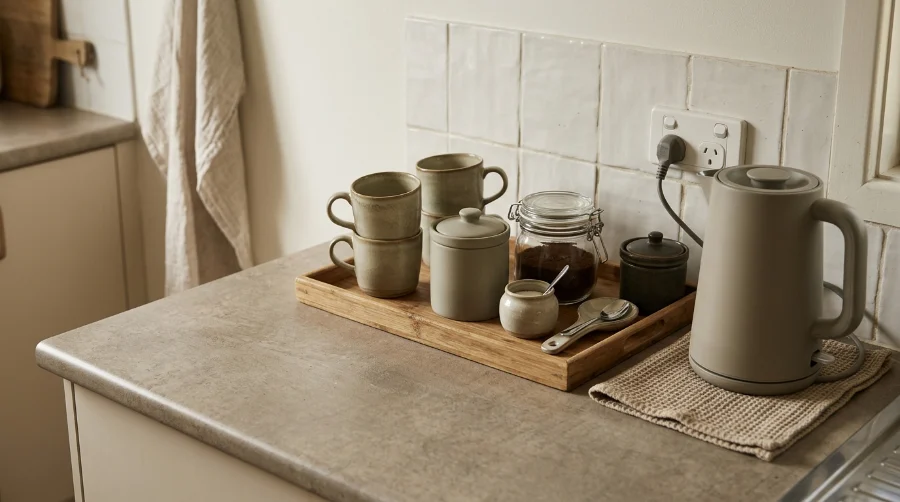
Making a hot drink is a small sequence repeated many times a day: reach for a cup, add coffee or tea, boil water, sweeten, stir, and clean up. When those six steps…