Kitchen Organization
A Coffee and Tea Station Built Around Your Routine
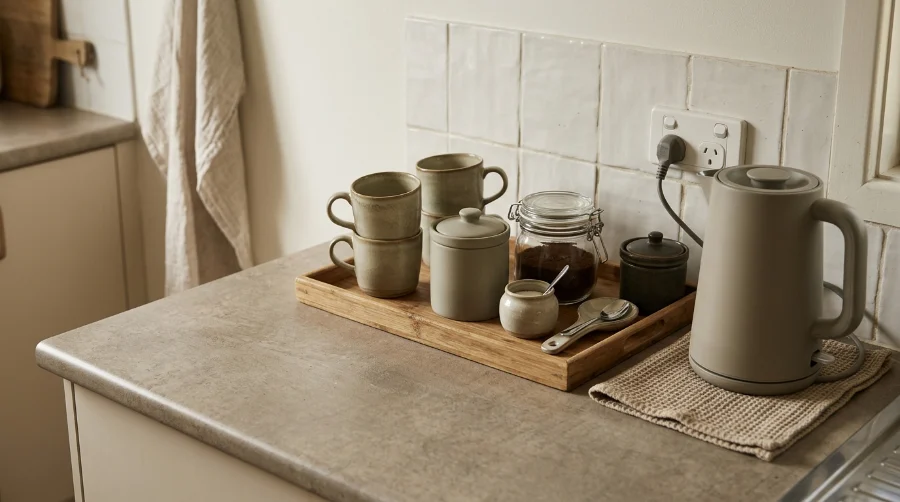
Making a hot drink is a small sequence repeated many times a day: reach for a cup, add coffee or tea, boil water, sweeten, stir, and clean up. When those six steps…
A rented kitchen comes with a rule that changes everything: whatever goes in must be able to come out again. Drilling into cabinets, fixing shelves to walls, and…
A rented kitchen comes with a rule that changes everything: whatever goes in must be able to come out again. Drilling into cabinets, fixing shelves to walls, and gluing anything to a surface are usually off the table, and even a small mark can cost part of a deposit. That constraint is real, but it does not leave the kitchen helpless. A good rental setup leans on what is already there, adds storage that stands or hangs without fixings, and keeps the exit plan in view from the first day.
Before adding anything, empty the cupboards and drawers one at a time and look at the space as it was designed. Most rental kitchens have more usable room than meets the eye, because a single deep cupboard or an under-used drawer can absorb a great deal when it is arranged properly. Wipe the shelves, note the awkward corners, and measure the width and depth of each opening before planning any additions.
Loose dividers, small trays, and shelf risers that simply sit in place can transform a cupboard without fixing anything. A tray holding baking trays upright in a deep cupboard stops them sliding into a pile, while a narrow riser creates a second level for plates or tins. These items lift out in seconds at the end of a tenancy and leave no trace. The same principle applies inside drawers: a set of adjustable dividers can sort cutlery and utensils without a single screw, and can be reconfigured for the next kitchen.
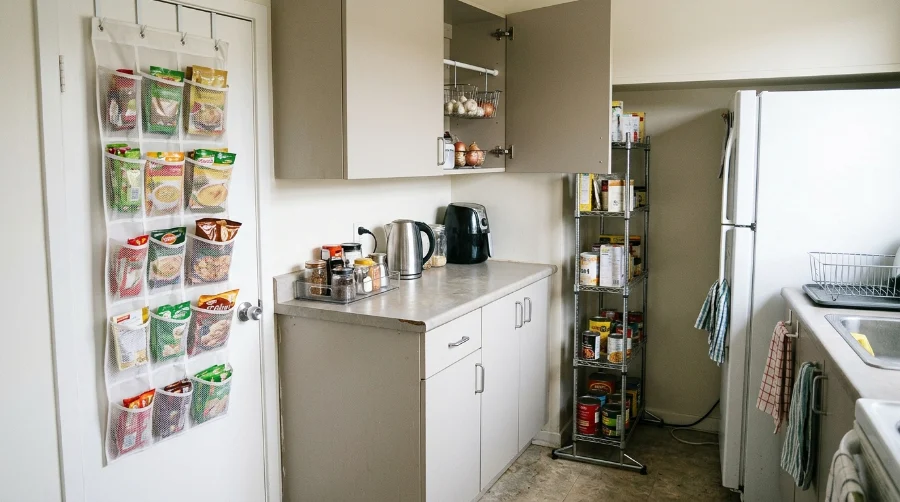
When floor and cupboard space run short, the space above and beside things becomes valuable. Over-the-door organisers are the obvious answer for a pantry or cupboard door, provided the door opens freely and the unit hangs level. Check the depth before buying, since a bulky organiser can stop a door closing or knock items off the shelf behind it. Load the pockets with light things: cleaning cloths, spare bags, wraps, and small packets rather than heavy tins.
Tension rods are another useful tool in a rental. Fitted inside a cupboard, they can hold a second row of lids or trays; stretched across a recess, they can support a small hanging basket for produce. The rod must bear against solid surfaces at both ends, because a slippery or uneven wall will let it slip under weight. A rod that falls halfway through cooking is worse than no rod at all, so test it with a light load first and add more gradually.
Removable adhesive hooks can hold a apron, a few lightweight utensils, or a small rack, but they are not harmless. On painted plasterboard they can pull off the finish when removed, especially if they have been in place for a long summer or exposed to steam. Choose hooks rated for the weight, press them firmly for the full setting time, and avoid using them on freshly painted or textured walls. If a surface feels powdery or paint flakes when lightly rubbed, leave it alone and use a freestanding option instead.
A small rental counter becomes cluttered because appliances and everyday items each claim their own patch. Start by keeping only the appliances used weekly on the worktop; anything rarer can live in a cupboard and come out when needed. Group the remaining appliances together at one end so the rest of the counter stays clear for actual food preparation.
Slim storage that tucks under a shelf or sits beside a kettle makes use of dead space. An under-shelf basket can double a cupboard's usable level for cups or bowls, and a narrow tray beside the hob can hold the salt, oil, and spoons used at every meal. Keep the trays shallow enough to wipe around, and lift them down when cleaning. The aim is a counter that can be wiped in one pass, not a surface covered in small containers that each need moving.
A freestanding unit can add a surprising amount of room, but stability matters more than capacity in a busy kitchen. Look for a wide, heavy base and a low center of gravity, and keep heavier items on the lower shelves. A tall narrow tower that rocks when brushed past is a poor trade even if it is cheap, particularly in a household with children or pets. Check the manufacturer's weight guidance and spread loads evenly across each shelf.
Where a wall is available, a unit can be strapped or wedged for extra steadiness without a permanent fixing, provided the wall surface allows it. Avoid leaning a shelf directly against a painted wall without protection, since movement can scuff the paint over time. Felt pads under the feet help on timber or vinyl floors and make the unit easier to slide when cleaning. If the unit wobbles on an uneven floor, a small shim under one foot is a better fix than stacking heavy tins on the low side to compensate.
Protecting the deposit is a habit, not a single decision. Before any organiser goes up, take photographs of the walls, cupboards, and worktops as found, and keep a note of any existing marks so they are not mistaken for new damage later. Clean with products suited to the surfaces; a harsh cleaner can dull a laminate worktop or strip the finish from a cabinet door just as surely as a scratch.
Avoid heat and moisture against painted surfaces. A kettle mat, a chopping board under a hot pan, and a cloth kept handy for spills all reduce the slow damage that accumulates over a tenancy. Where a basket or rack must sit against a wall, check it periodically for trapped moisture or rub marks. Small problems caught early are easy to put right; the same problems found on inspection day are not.
The best rental setup is one that can be packed up and reused. Keep a box labelled for the kitchen and put every removed fixing, rod, and divider into it as it comes down, along with any spare parts. Photograph the assembled shelves before dismantling them so the arrangement can be recreated in the next property without guesswork.
Sort contents as you pack rather than unloading everything into a new kitchen unchanged. Items that never earned their place in the old kitchen are unlikely to deserve one in the new one. Clean the removed organisers before storing them, dry them fully, and keep light and heavy pieces in separate boxes so nothing is crushed in transit. A little order at this stage turns a stressful moving day into a straightforward one, and gives the same storage system a second life somewhere else.
Guides that pair well with this one.
Making a hot drink is a small sequence repeated many times a day: reach for a cup, add coffee or tea, boil water, sweeten, stir, and clean up. When those six steps…
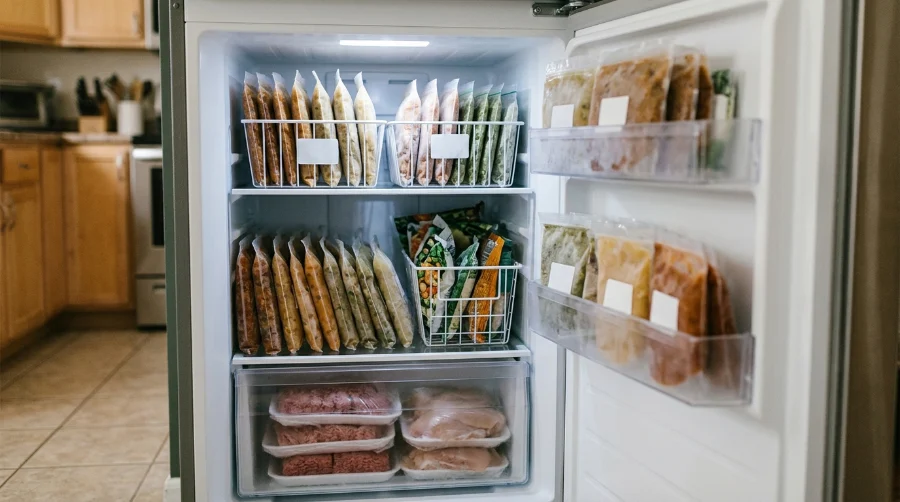
A freezer is easy to forget until something is lost at the back of it. Unlike a fridge, it hides food in solid blocks and frost, and a bag of vegetables can be…
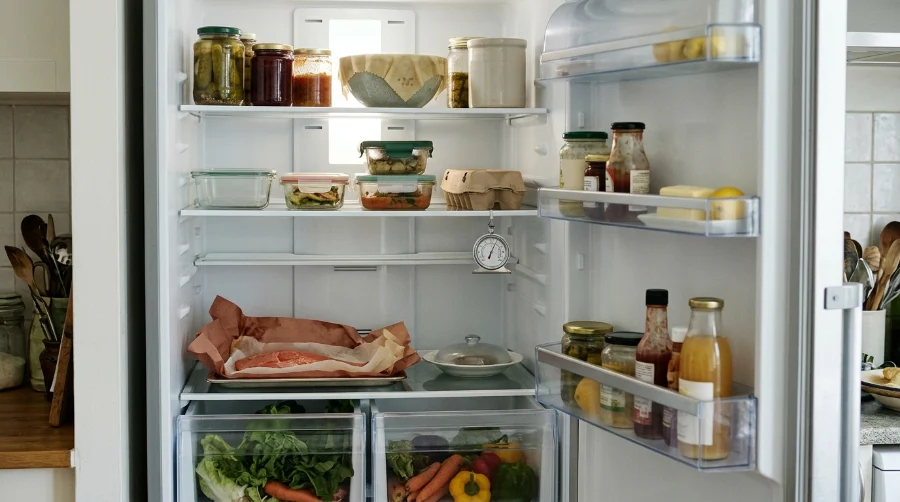
A refrigerator is easier to use when its layout matches how food is stored safely. Organizing it is not mainly about matching containers; it is about knowing which…