Home Organization
A Junk Drawer That Doesn't Refill Itself
Almost every home has one drawer that defeats every good intention. It holds batteries beside takeout menus, a lonely screw next to three unmatched rubber bands…
Paper is different from other household clutter because it keeps arriving. A basket that was emptied last week is full again by Friday, and every item in it looks…
Paper is different from other household clutter because it keeps arriving. A basket that was emptied last week is full again by Friday, and every item in it looks as though it might matter. Organizing paperwork is less about finding the perfect filing box and more about making a quick decision each time a document comes through the door.
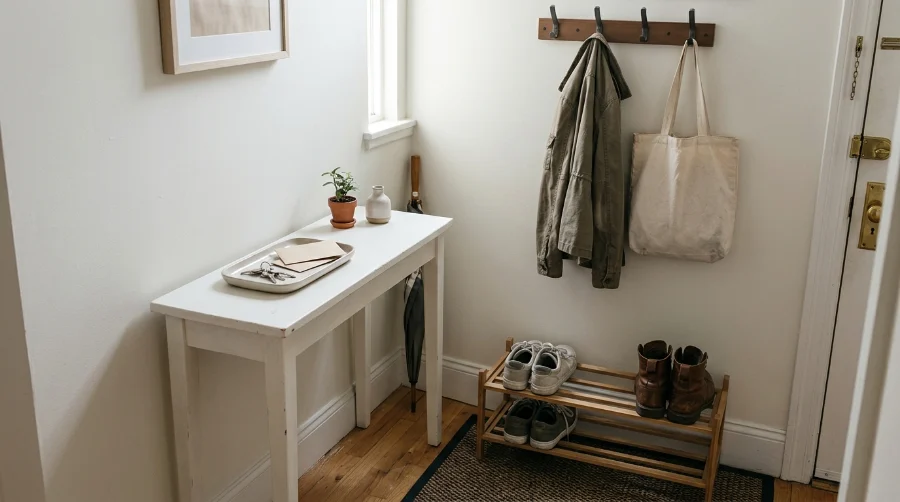
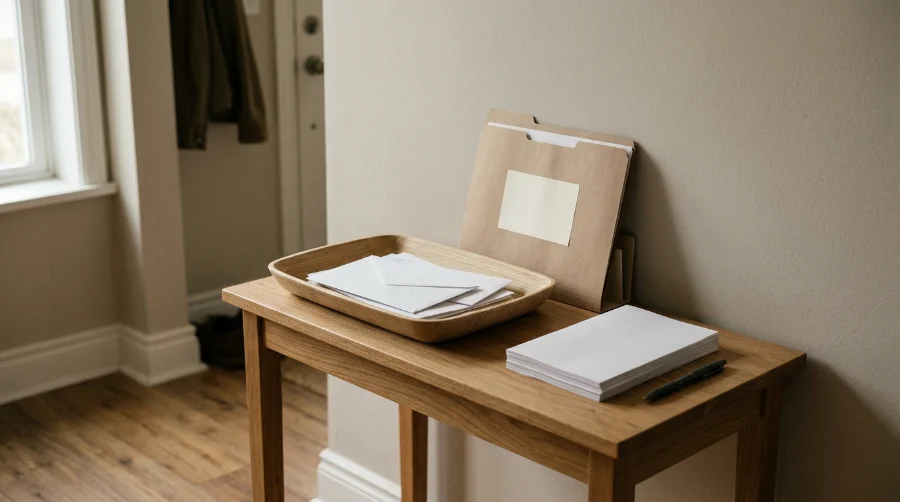
Choose a single spot where paper lands first: a shallow tray on a hallway table, a shelf near the front door, or one drawer in the kitchen. The location matters less than the fact that there is only one. When paper is allowed to settle on the worktop, the bedside table, and the stairs, no system can keep up with it.
The landing place should be visible and within easy reach. A hidden drawer out of sight is convenient for hiding a pile, not for sorting it. Use a tray or a box with low sides so that the contents can be seen at a glance. A container that is too deep becomes a place where old papers disappear.
Empty the landing place at a set time. For many households, a short sort on the same day each week works well. The aim is not to process every document perfectly; it is to stop paper from building a second home somewhere else.
When sorting, make one of four choices for each item: throw it away, act on it, file it, or scan it. Four decisions are quick enough to apply consistently. A detailed filing system with twenty categories sounds thorough but slows people down, and a slow system gets abandoned.
Throw away anything that has served its purpose: old takeaway menus, receipts for nothing that will be returned, and duplicate copies. Most household paper is already disposable, and giving yourself permission to discard it is the fastest way to reduce volume.
"Act on it" means the item needs a response: a bill to pay, a form to return, or an appointment to book. Put these somewhere separate with a clear date, and deal with them on the same day each week. A form left in the general pile loses its deadline.
"File it" applies to documents that must be kept in paper form or are easier to keep that way. "Scan it" applies to items that can be stored digitally. Choosing between the two depends on the document and on how reliably the digital copy will be backed up.
A common cause of overflow is keeping everything. Many papers can be discarded after they have been read and the important details recorded. Utility bills, for example, are rarely needed once a payment is confirmed, though a household may choose to keep a short period for reference. Manufacturer manuals are often available online, so a single page with the model number and a website may be enough.
Set a review point for papers that depend on a date. Warranty documents can often go once the period has ended. Insurance paperwork can be reduced to the current policy and a short record of past years. School letters and activity schedules have a natural expiry at the end of a term.
Be cautious before discarding legal, tax, property, or medical records. If a document might be needed to prove ownership, a purchase, or an agreement, keep it until the relevant period has passed. When in doubt, set aside a small "review later" pile rather than guessing, then check a reliable source or ask the issuing organization how long it should be kept.
A home filing system should be simple enough that anyone in the household can return a document without asking. A few broad folders are usually enough: one for money and bills, one for property and appliances, one for health, and one for family or school matters. Add a separate folder for documents that need action.
Label folders in plain language. "Car" is easier to use than "Vehicle documentation — current". If several people use the system, avoid private shorthand. A clear label reduces the chance of a paper being left on top of a pile because nobody knows where it goes.
Keep the active folders within reach and store long-term records elsewhere. Papers that are consulted once a year do not deserve the same prime space as a bill that is paid monthly. A box marked with the year is useful for records that are kept but rarely opened.
Digital storage helps only if the files can be found again. Scanning a stack of papers into a folder named "documents" simply moves the mess to a screen. Use a consistent naming pattern that includes the year and the subject, and keep related files together.
Before scanning, decide whether the original can safely be thrown away. Some documents need a physical signature or an original copy. Others are fine as images. Keep a short list of the categories that must stay on paper, so the decision does not have to be remade each time.
Back up anything important. A single copy on one device is vulnerable to a lost phone or a failed hard drive. A second copy in a different place, or a reputable cloud service, makes the system dependable. A scan without a backup is not storage.
Do not buy an elaborate filing cabinet before knowing how much paper the household actually keeps. Most families need far less space than they imagine once duplicates and expired papers are removed. Sort first, then choose storage to fit what remains.
Do not create a "to sort" pile with no date attached. An undated pile becomes permanent. If something needs attention later, write the action and the date on the front of the envelope or put it in the action folder with a visible note.
Do not file papers you have not read. Unopened envelopes and unread letters are the source of most nasty surprises. Open the post promptly, even if it goes straight into the bin afterwards.
A paperwork system survives because it is quick. Fifteen minutes a week is usually enough to empty the tray, pay what needs paying, and file a handful of documents. A longer monthly session may handle the records that are kept long term, but the weekly habit prevents the pile from growing.
The goal is not a perfectly empty tray at every moment. It is a household that knows where paper goes, what has been dealt with, and what must be kept. When those three things are clear, paperwork stops taking over surfaces and the system holds with very little effort.
Guides that pair well with this one.
Almost every home has one drawer that defeats every good intention. It holds batteries beside takeout menus, a lonely screw next to three unmatched rubber bands…
Craft and sewing supplies are difficult to put away because so much of them is small. Buttons, beads, threads, snaps, and scraps are easy to drop into a single…
A drop zone is not really a piece of furniture. It is a defined place where the things you carry every day land before they spread through the rest of the house. In…