Home Organization
One Place for a Family's Shared Information
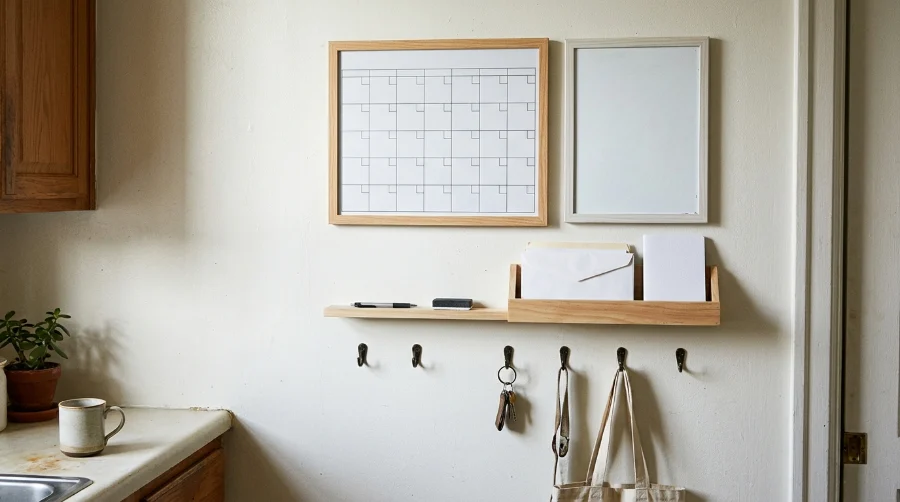
In a busy household, information tends to scatter. One person keeps the school letter in a bag, another writes appointments on a phone, and a third leaves a note on…
A drop zone is not really a piece of furniture. It is a defined place where the things you carry every day land before they spread through the rest of the house. In…
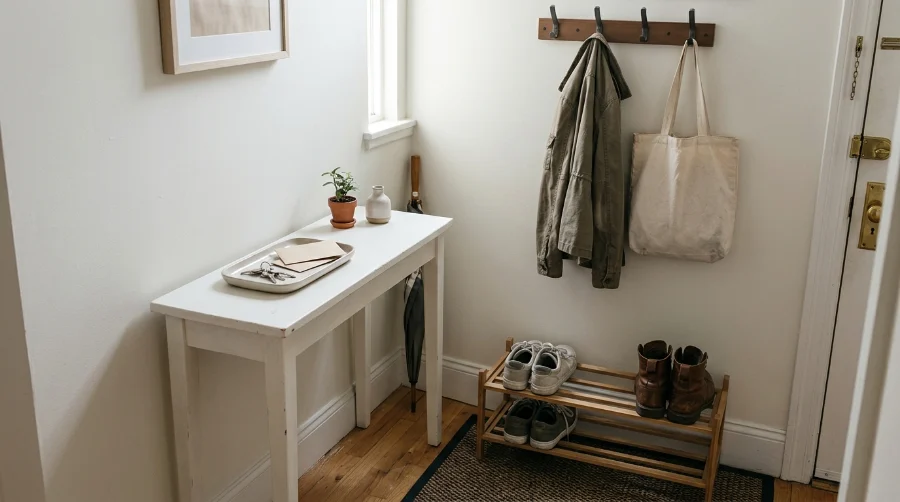
A drop zone is not really a piece of furniture. It is a defined place where the things you carry every day land before they spread through the rest of the house. In most busy homes, the entryway is where keys, mail, bags, umbrellas and shoes end up. Without a plan, those items migrate to the kitchen table within a week. A workable drop zone gives each group an obvious home and makes putting things away the easiest option, not a chore you have to remember.
Spend three or four days observing the spot before you change it. Write down what actually collects there, not what you imagine should collect there. Some households need a place for dog leashes and work badges; others mainly need somewhere for school folders and wet boots. The difference matters, because a drop zone built around a generic idea rarely matches real habits.
Pay attention to where people naturally pause. If everyone drops their bag on the bench but never uses the hooks above it, the hooks are in the wrong place. If mail lands on the floor beside the door, that is the spot that needs a tray. Designing around existing behavior takes less effort than trying to train everyone into a new routine.
A narrow wall is enough for most setups. A shallow console or a wall-mounted shelf keeps the floor clear, while a row of hooks handles coats and bags. Leave the lower part of the wall for shoes if the family removes them at the door. If the wall is short, use vertical space instead of spreading across the hallway.
In many apartments the front door opens directly into the living area. A freestanding narrow unit, a rolling cart or even a sturdy basket can serve as the drop zone. The goal is a boundary, not a built-in. A tray on a small table can do the job if everyone agrees that this is where keys and mail belong.
Over-the-door hooks and a shoe rack inside the closet can keep the same items out of sight. Make sure the door still closes with shoes on the rack, and check that hooks do not scratch the door or clash with the handle.
Almost everything that lands in an entryway fits into one of three groups: things you wear, things you carry, and paper. Giving each group a fixed spot prevents the mixed pile that makes a drop zone look messy again by Friday.
A low rack or a row of cubbies works better than a single deep bin, because you can see what is there. As a rough guide, allow about 10–12 inches (25–30 cm) of width and 12–14 inches (30–35 cm) of depth per pair of adult shoes. Boots need more height than trainers, so leave one taller section if anyone in the household wears them. Keep a small mat or tray for wet shoes in rainy months; it is easier to wipe a tray than a floor.
Keys, wallets, badges and sunglasses need a shallow landing spot. A small tray or a catch-all drawer works well because items cannot disappear under a pile. Hooks should sit at a height the shortest regular user can reach. Wall hooks are commonly placed around 60–65 inches (150–165 cm) above the floor, but a lower row is better for children or anyone who prefers not to reach overhead.
Use two containers rather than one: one for anything that needs action and one for everything else. Label them clearly. A single mail pile becomes a stack nobody wants to sort, while two trays make the next decision obvious. If the household receives very little post, a wall pocket may be enough.
Measure the width of the wall and the depth of the space before buying anything. A console that is too deep will narrow the hallway and become an obstacle. Shallow pieces around 12 inches (30 cm) deep are usually enough for keys and mail, while a bench needs more room to sit comfortably. Leave at least 30–36 inches (75–90 cm) of walking space where people pass through, especially if the door swings into that area. In a narrow hall, wall-mounted storage is safer than a freestanding unit.
Think about sightlines too. If the storage blocks the light switch or the intercom, people will stop using it. A few minutes with a tape measure prevents most of the annoying problems that appear after installation.
A drop zone stays usable only if returning an item takes less effort than leaving it out. That usually means fewer containers, not more. Three well-chosen spots beat eight labelled baskets that nobody can be bothered to open.
The most common mistake is buying storage before understanding the problem. A beautiful bench becomes a clothes chair if there is nowhere for daily coats. Another mistake is placing everything at eye level and leaving no low spot for shoes, which means the floor stays cluttered. Over-labelling can also backfire: if every bin has a narrow category, people put items in the nearest wrong bin instead of walking two steps.
Finally, avoid building a system that depends on one person. If only one adult knows where things go, the drop zone will fail on the days that person is away. Simple, visible storage works better for everyone.
Entryways are rarely static. A new baby, a pet, a part-time job or a change in weather can alter what comes through the door. Revisit the zone every few months and remove anything that is no longer used. An empty hook or an unused basket is a sign that the system can be simplified, not that you need more storage.
A good drop zone is almost boring: things go where you expect them, the floor stays clear, and nobody has to think about it. That is the point. Start with the smallest version that handles today's items, then adjust it once you see how the household actually uses it.
Guides that pair well with this one.
In a busy household, information tends to scatter. One person keeps the school letter in a bag, another writes appointments on a phone, and a third leaves a note on…
Almost every home has one drawer that defeats every good intention. It holds batteries beside takeout menus, a lonely screw next to three unmatched rubber bands…
A donation bag left in a closet usually stays there. The idea was sound, but the bag was out of sight and nobody had to pass it. A donation station works better…