Home Organization
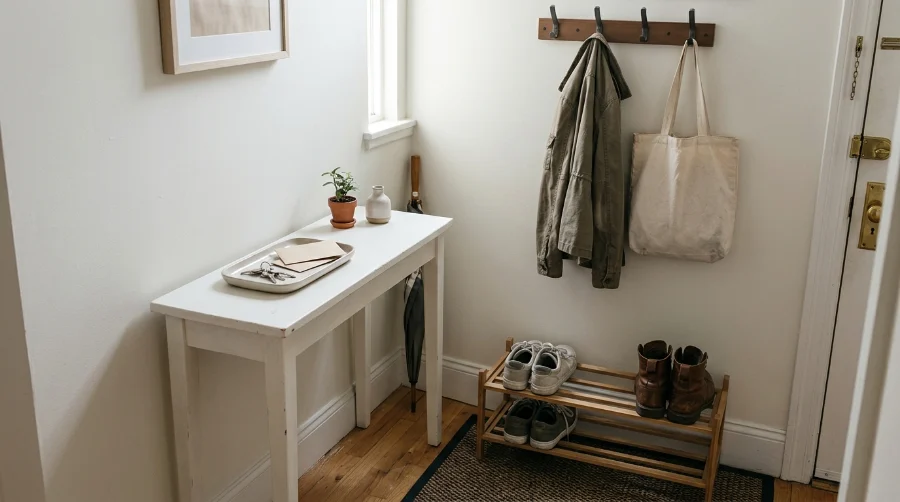
An Entryway Drop Zone That Holds Its Shape
A drop zone is not really a piece of furniture. It is a defined place where the things you carry every day land before they spread through the rest of the house. In…
In a busy household, information tends to scatter. One person keeps the school letter in a bag, another writes appointments on a phone, and a third leaves a note on…
In a busy household, information tends to scatter. One person keeps the school letter in a bag, another writes appointments on a phone, and a third leaves a note on the kitchen table that nobody sees until it is too late. A family command center gathers those loose threads in one visible spot so everyone knows what is happening. It is less a piece of furniture than an agreement about where shared information lives.
Before buying a board or a set of folders, lists the kinds of information the household needs to see. Most families need a calendar of upcoming events, a place for forms and letters to be dealt with, a spot for messages between household members, and somewhere for keys, bags or things that leave the house each morning. Not every command center needs all four.
The mistake many people make is copying an elaborate system from a photograph and then finding that half of it goes unused. Start with the two or three things that currently cause the most confusion. If nobody misses the school notices, a large notice board is wasted space. If appointments are the constant problem, a good calendar solves most of it.
A command center only works if it is seen. Choose a location that the household moves through every day: the kitchen wall, the route from the front door, or the side of a hallway. It does not need a whole wall. A section of worktop, the side of a cupboard, or a single strip of wall beside the fridge can be enough in a small home.
Avoid putting it somewhere that requires a deliberate trip to check. A system tucked inside a cupboard or in a bedroom corner will be forgotten. Equally, keep it out of the busiest cooking zone, where papers can get splashed or pushed aside during meal preparation. A visible but slightly sheltered spot is ideal.
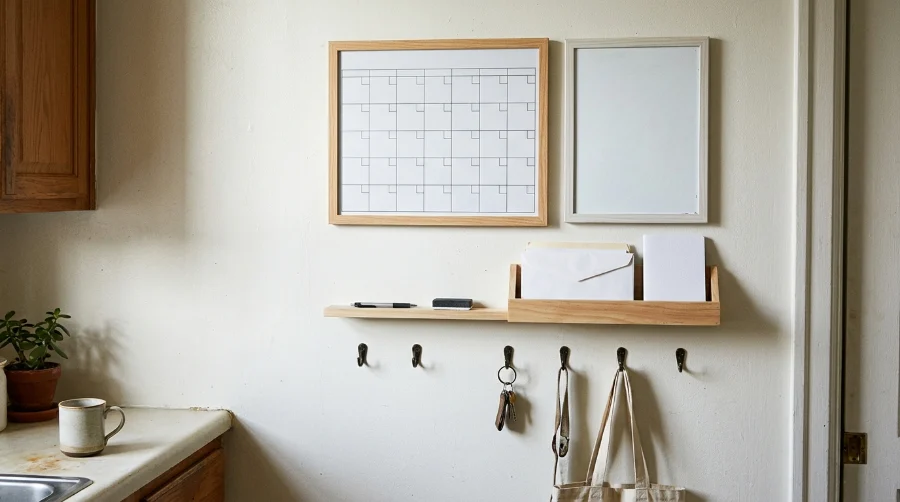
The tools should match the information. A wall calendar suits dates and recurring events. A set of wall pockets or a shallow tray suits letters and forms waiting for action. A small whiteboard or a pad suits short messages that change daily. Hooks or a shallow bowl near the same spot handle keys and anything that must be grabbed on the way out.
Keep the number of tools small. Each additional board, pocket and basket is another thing to maintain. In a compact home, a single board with a calendar, a narrow ledge for a tray, and a couple of hooks below it often does the whole job without dominating the room.
A command center fails when it becomes another pile. Give incoming papers two clear states: waiting for action and finished. A simple two-part system works well, with one pocket or tray for items that need a response and another for items that have been handled and can be filed or recycled. The visual difference between the two is what stops important letters vanishing into a stack.
Set a short, regular time to deal with the waiting area. A few minutes at the start of a weekend is usually enough to sign forms, note dates on the calendar and clear anything that no longer matters. Without that habit, an in-tray simply becomes a slower version of the kitchen table pile.
Where children are involved, the system should be readable at their height and in language they understand. A lower hook for a school bag, a simple color code, or a picture beside a label can help younger children use the center without constant reminders. Older children may prefer to add their own appointments, in which case a shared calendar with a clear space for their entries gives them a measure of control.
Be careful not to turn the command center into a monitoring system. It works best as a shared tool that helps everyone, rather than a record of who forgot what. That distinction keeps cooperation higher over time.
Even a good command center can drown in paper. Scan or photograph documents that need to be kept but not displayed, and store them in a single digital folder. Keep only the physical items that require an action or that someone needs to carry out of the house. A sheet of paper that has been read and requires nothing should leave the center the same week it arrives.
This is not about going paperless completely. It is about making sure the physical space stays readable at a glance. A center that holds thirty sheets of paper stops communicating and starts contributing to the problem it was meant to solve.
Households change. Children grow, work patterns shift, and the information that mattered last year may no longer be relevant. Every few months, look at the center and ask whether each part is still used. Remove tools that have gone unused and adjust the layout if the household has started dropping things somewhere else. That new dropout point is useful information about what the system is missing.
Paper and digital tools work best together. A shared calendar on a phone can hold appointments that everyone can update, while the wall version shows at a glance what the week holds. Choose one place as the final word so information is not recorded twice and then forgotten in one of them. If an event is added digitally, note it on the board during the weekly review. Keeping a single source of truth avoids the confusion that sends two people to two different places at the same time, and it keeps the wall display current enough to trust.
A family command center does not need to be large or decorative. It needs to be visible, simple, and maintained by a shared habit. When the calendar is current, the in-tray is short and the essentials are where people expect them, the morning rush becomes noticeably calmer. The value lies not in the board itself but in the small reduction of daily uncertainty it provides.
Guides that pair well with this one.
A drop zone is not really a piece of furniture. It is a defined place where the things you carry every day land before they spread through the rest of the house. In…
Almost every home has one drawer that defeats every good intention. It holds batteries beside takeout menus, a lonely screw next to three unmatched rubber bands…
A donation bag left in a closet usually stays there. The idea was sound, but the bag was out of sight and nobody had to pass it. A donation station works better…