Home Organization
A Junk Drawer That Doesn't Refill Itself
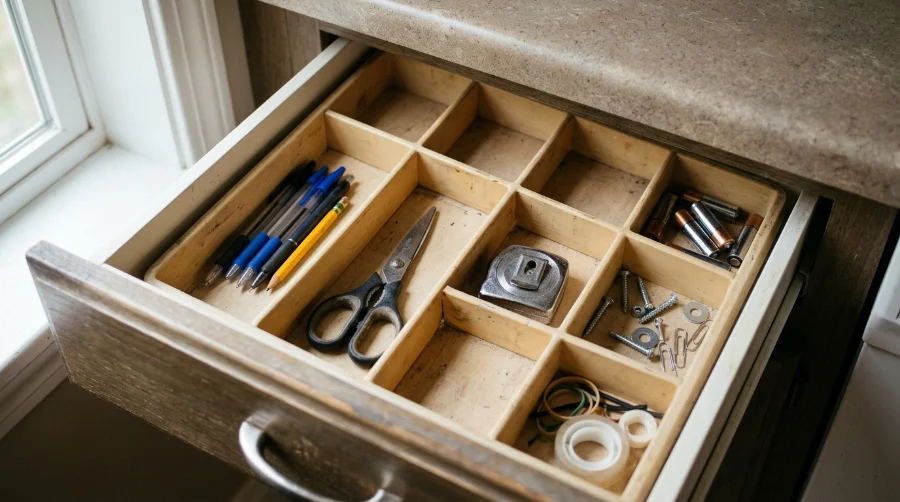
Almost every home has one drawer that defeats every good intention. It holds batteries beside takeout menus, a lonely screw next to three unmatched rubber bands…
A linen closet becomes difficult to use when stacks grow taller than the shelf above them and nobody can put a folded towel back without rearranging three piles…
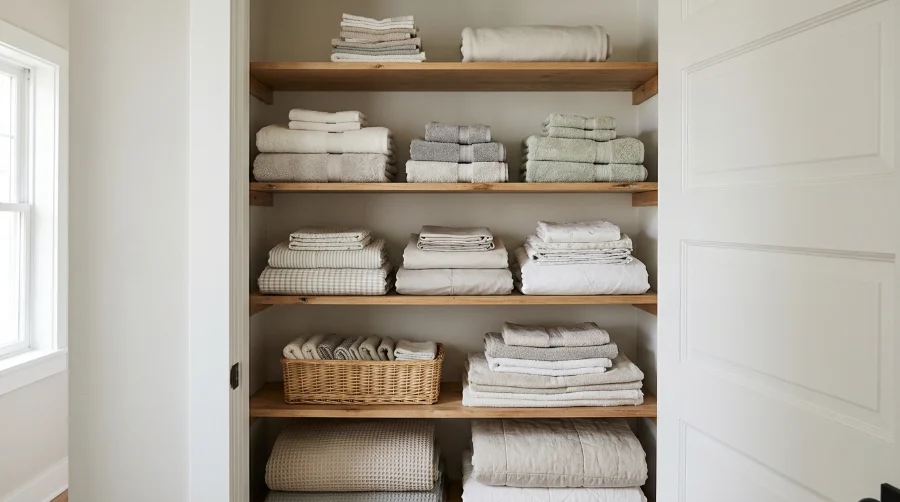
A linen closet becomes difficult to use when stacks grow taller than the shelf above them and nobody can put a folded towel back without rearranging three piles. The problem is rarely a lack of space. It is that towels, bedding and guest items share the same shelves without clear boundaries. A short, careful reset can make the closet useful again for years.
Take everything out and place it on a bed or table. Sort into four groups: bath towels and cloths, bed linen, guest items, and anything that does not belong. The last group is often the reason the closet feels crowded. Items such as spare light bulbs or craft supplies may have ended up there because no other home was available.
Count what you actually own before deciding where it goes. Many households keep several sets of bedding and far more towels than they use. Extra items are not a problem if they are stored neatly, but they should not sit in the most accessible part of the closet.
For everyday use, one set of sheets on the bed and one spare set per bed is usually enough for a household that can do laundry regularly. Guest beds may need an extra set. Bath towels can be counted in the same way: one in use, one spare, and perhaps one for guests.
Keep the rest only if you have a reason. A large stack of towels that nobody uses takes space from items you reach for every day. Pass on anything clean and usable, or move it to a clearer storage spot if it serves a purpose.
Folding method matters more than matching colors. Fold bath towels to the size of the shelf so a stack stays stable. Sheets are easier to keep together when the fitted sheet, flat sheet and pillowcases are folded into one pillowcase. That small bundle stops the pieces from separating every time someone takes a set out.
Avoid overhanging stacks. A towel that hangs past the shelf edge will be pulled down each time someone reaches past it. If a stack cannot fit within the shelf depth, remove an item or fold it more compactly rather than letting it spill forward.
The middle shelves should hold what people use most: hand towels, face cloths and the spare sheet sets for the beds used nightly. Heavy bundles belong lower down, where they are easier to lift. The top shelf suits light items that are needed only occasionally, such as a guest blanket or a spare tablecloth.
If the closet is deep, keep two shallow rows rather than one deep pile. Items at the back of a deep shelf are forgotten and then bought again. Pull-out baskets help where the shelf is especially deep, but they are not necessary in every closet.
Baskets are useful for small, loose items such as face cloths, travel-size toiletries or sewing supplies. One or two bins are enough. Too many containers reduce usable shelf space and make the closet look busier than it is.
Label the front edge of each bin rather than the lid. If the household is shared, use plain words that everyone understands. A bin that requires guessing will be left open, and its contents will gradually scatter across the shelves.
A dedicated guest area saves searching when someone stays over. One shelf or one basket can hold clean guest towels, a folded blanket and a spare pillowcase. Keep it small and clearly separated from everyday items, so guests' things are not used up during a normal week.
If guests rarely visit, a single labelled basket is enough. The aim is not to create a hotel-style display. It is to know exactly where the guest items are when they are needed.
The simplest habit is to return items to their category immediately. A towel used for drying a spill goes into the laundry, not back on the clean shelf. When a stack is removed for a guest, put it back in the same place afterwards.
Once a month, lift each stack and check for damp or musty items. Linen stored in a cupboard should be completely dry before it goes away. If the closet is against an outside wall, leave a little air space around the stacks rather than packing them tightly into the corner.
When laundry day returns spare towels to the closet, fold them to the same size as the stack they belong to. A different fold may look neat on its own but will make the pile unstable. This small consistency is what keeps the closet tidy without a regular full reset.
One more mistake is organizing the closet while tired of laundry day. It is better to do a careful reset when you have time to make decisions. Rushed organizing often moves the same problem into a different pile.
Empty the closet, sort into four groups, decide what to keep, then fold everything to the shelf size. Put everyday items in the middle, heavy items low and guest items in one clear spot. Add a bin only if loose small items remain.
A linen closet does not need to look perfect. It needs to be easy to put something back. When each category has a clear place and the stacks fit their shelves, the closet stays tidy with almost no effort. That is the real test of whether the system works on an ordinary Tuesday.
Guides that pair well with this one.
Almost every home has one drawer that defeats every good intention. It holds batteries beside takeout menus, a lonely screw next to three unmatched rubber bands…
A drop zone is not really a piece of furniture. It is a defined place where the things you carry every day land before they spread through the rest of the house. In…
A donation bag left in a closet usually stays there. The idea was sound, but the bag was out of sight and nobody had to pass it. A donation station works better…