Home Organization
A Junk Drawer That Doesn't Refill Itself
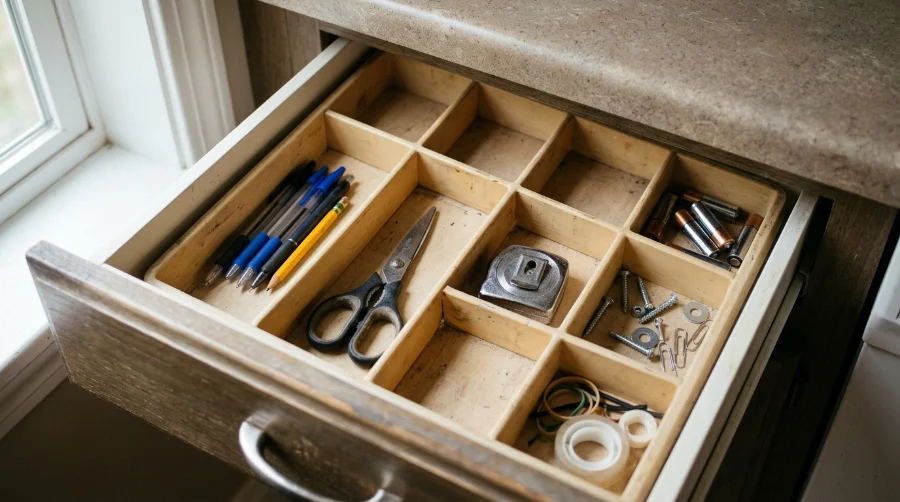
Almost every home has one drawer that defeats every good intention. It holds batteries beside takeout menus, a lonely screw next to three unmatched rubber bands…
Toys are different from most things in a home because they never stay put. A system that works for spare linen or seasonal clothes will fail with toys, since…
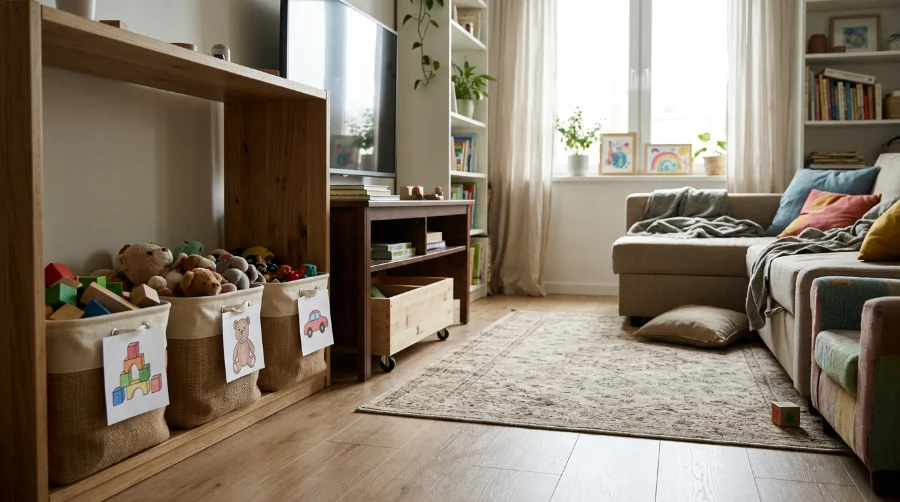
Toys are different from most things in a home because they never stay put. A system that works for spare linen or seasonal clothes will fail with toys, since children take them out daily and put them back unevenly. Toy storage in a small living space has to be fast to use, obvious to a child, and forgiving of a few items left out.
The first decision is not which container to buy. It is how much can realistically stay in the room. A small living area has limits, and no basket system will hide a collection that has outgrown the space. Choose a number of containers that fits the available shelf or corner, and treat that as the ceiling for toys kept in the room.
Rotate the rest. A smaller group of toys stored elsewhere and swapped every few weeks keeps the living area manageable and makes old toys feel new again. Rotation works because children return to familiar items with fresh interest, and the household avoids the daily pile that comes from too many choices.
Let children help choose what stays. A toy that has not been touched for months can usually move out of the main room without complaint. A bin of items set aside for donation or another room should leave the house within a week, or it becomes another pile.
Categories based on color or size look tidy but do not help a child put things away. Sort by the way toys are used: building pieces together, figures and small world play, art supplies, and soft toys. Each group can have one container, and a child can usually work out where something belongs without being told.
Avoid making too many categories. Three or four groups are enough for a small space. More than that means a child has to make careful decisions at clean-up time, which slows the process and produces mistakes. The goal is a quick return to the right bin, not a perfect classification.
Small pieces need a container with a lid or a zip, kept on a higher shelf if there are very young children in the home. Check the age guidance on toys and keep anything with choking risks out of reach of toddlers, even if an older child uses it regularly.
A storage box with a tight lid that an adult must unclip will not be used by a child. Use open bins, low baskets, or boxes with large handles. The easier the container is to open, the more likely it is that toys will go back inside. A labelled lid is useful only if the lid can be removed in one movement.
Clear containers let children see what is inside, which helps them choose and put away. Fabric bins are lighter and quieter when tipped out, but they hide their contents. A compromise is a fabric bin with a clear label or a small picture of the contents fixed to the front.
Do not fill a container to the top. A bin that is completely full cannot be closed, and the items on top always end up on the floor. Leave a little space so a child can drop items in without arranging them first.
In a small living room, floor space is precious. Look up and under before adding a new unit. A low shelf along one wall can hold baskets beneath and a lamp or plant above. The space under a sofa works for flat items such as puzzles and mats, provided they are in shallow boxes that slide in and out.
A bench with storage inside gives somewhere to sit and a place for toys, but only if it opens easily. If the lid is heavy or the hinge is stiff, children will leave items beside it instead of inside. Test the movement before buying.
Rollaway bins are useful for toys that are cleared away at the end of the day. A low, wide bin on wheels can be pulled into a corner during the day and pushed back under a console at night. Make sure it does not block a walkway when it is out.
Children respond better to a short, clear routine than to a long instruction. "Put the blocks in the blue bin and the figures in the red bin" works better than "tidy up". If the containers are labelled with pictures, a young child can follow the routine without reading.
Build clean-up into an existing moment rather than treating it as a separate event. Toys go away before dinner, or before a film, or when the household leaves the room for the evening. The exact moment matters less than its consistency. When the routine is predictable, it takes a few minutes instead of becoming a negotiation.
Accept that perfect tidiness is not the aim. A small living space shared with children will always show signs of use. The measure of success is that the floor is walkable, the toys have a home, and the room can be returned to order quickly.
Do not give every toy its own labelled spot. A small room cannot support that level of order, and the labels become a full-time job for the adult who maintains them. Group loose toys by a few broad types instead.
Do not store toys in a place that is difficult for a child to reach. A high shelf keeps the room tidy but means every tidy-up depends on an adult. Keep daily toys at child height and reserve higher storage for occasional items or anything that needs supervision.
Do not add a storage unit simply because the room looks bare. Extra furniture reduces the space where children actually play. In a small living area, an open floor is more valuable than an empty shelf.
Any toy storage system will eventually fail if new toys arrive faster than old ones leave. Birthdays and gifts make this hard to control, but a household can set a simple limit: when a new toy comes in, one of similar size moves out. Children can often choose the item themselves, which makes the decision easier for everyone.
Keep a small bag for items that are outgrown or unused and pass them on regularly. A full bin by the door is not the same as a toy leaving the home. Once the bag is full, take it somewhere that will use it.
Toy storage in a small living space is a negotiation between a child's need to play and an adult's need for order. The arrangement that works is the one that can be undone and redone in minutes. Keep the number of containers small, make them easy to open, and rotate what is on display. The room will not look like a showroom, but it will work for the people who live in it.
Guides that pair well with this one.
Almost every home has one drawer that defeats every good intention. It holds batteries beside takeout menus, a lonely screw next to three unmatched rubber bands…
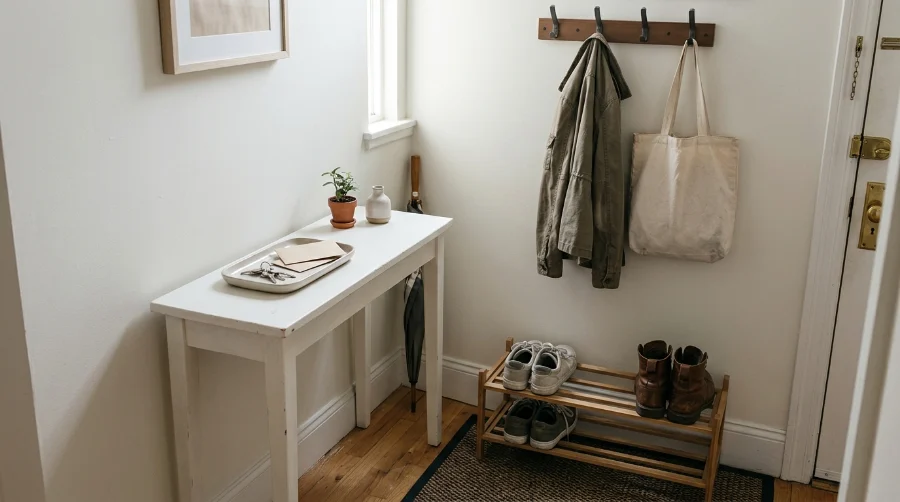
A drop zone is not really a piece of furniture. It is a defined place where the things you carry every day land before they spread through the rest of the house. In…
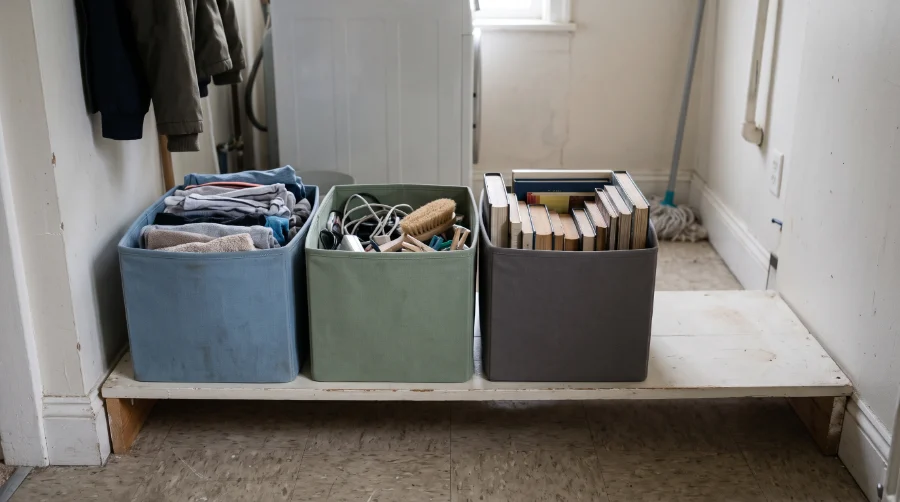
A donation bag left in a closet usually stays there. The idea was sound, but the bag was out of sight and nobody had to pass it. A donation station works better…