Everyday Home Tips
Five Weekly Checks That Prevent Costly Home Repairs
Small home problems become expensive when nobody looks at them for months. A weekly maintenance routine is not a deep cleaning session. It is a short, repeatable…
A home inventory is a record of what you own and where it is. It does not need to be a complicated spreadsheet. A simple list with a few photographs can help you…
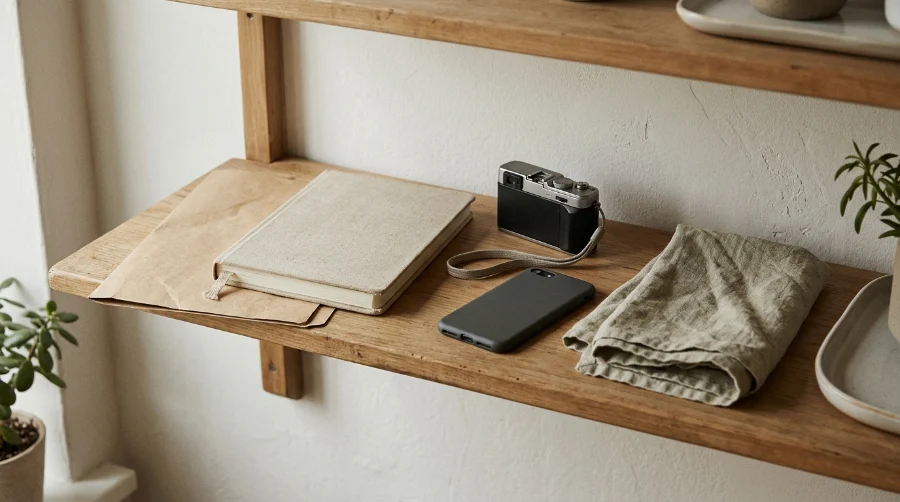
A home inventory is a record of what you own and where it is. It does not need to be a complicated spreadsheet. A simple list with a few photographs can help you find receipts, remember serial numbers and keep track of valuable items when plans change.
Start with items that would be difficult to replace or describe from memory: electronics, appliances, furniture, tools, jewellery and important documents. Clothing and everyday kitchenware usually do not need individual entries unless they are unusually valuable.
Keep the first version short. A list of the main items in two or three rooms is more useful than an ambitious list that stops after twenty minutes. You can add detail later.
Work through one room at a time, opening cupboards and checking shelves in a systematic order. Note the item, the room and any details that distinguish it. A short description is enough for most things; "blue mountain bike" is more useful than "bike".
Set a time limit of twenty minutes per session. Long sessions become tiring and lead to careless entries. Several short sessions spread over a week produce a better record than one rushed afternoon.
A photograph captures details that are easy to forget: the model of a laptop, the shape of a chair, the condition of an appliance. Take a clear picture of the item and, where useful, a separate picture of the serial number or label.
Do not write an essay for each object. A photo plus a line of notes is enough. Store the images with the list so they stay connected. If an item has a receipt attached to it digitally, note where that receipt is kept rather than copying its contents.
Serial numbers matter for electronics, appliances and some tools. They are usually printed on a label on the back or underneath. Check the label carefully, since similar characters can be misread.
For larger purchases, keep the receipt, warranty information or manual in one folder, physical or digital. Note the folder name in the inventory. The aim is not to create a second copy of everything, but to know where the original information lives.
Keep the inventory somewhere you can reach it quickly but that is not in the same place as the items. A digital document with photos, backed up to a cloud service, is convenient for many households. A printed copy stored elsewhere is also useful if access to accounts becomes difficult.
Whatever method you choose, avoid keeping the only copy on a single device with no backup. A record that disappears with the device has not helped. Check that the people who need access know where it is.
In a shared home, tell the other adults where the inventory is kept and how to update it. If you live alone, consider telling a trusted person how to find it in an emergency. This does not require sharing every detail, only the location of the record.
Keep access simple. A complicated password or a file buried in an unused folder will defeat the purpose. Write the location down somewhere safe and review it occasionally.
Add major purchases as soon as they arrive, while the receipt and box are still available. Remove items that have been sold, given away or replaced. A short monthly check keeps the record current without turning it into a daily task.
When something is repaired or serviced, add a note with the date. That small detail can be useful later when deciding whether an appliance is worth keeping. The inventory becomes a quiet household record rather than a one-time project.
An inventory becomes more useful when it records care details alongside the item. For an appliance, note the model, the date it was bought and where the manual is kept. For a tool or piece of equipment, note any attachments that belong with it. These details are easy to capture when the item is new and frustrating to reconstruct later.
Keep service dates in a short section of the same record. A boiler, washing machine or heating system may have a service schedule worth tracking. A note of the last service and the company used saves time when the next one is due.
Do not turn this into a second full record. A line under the item is enough. The aim is to make the inventory a practical reference for everyday decisions as well as for unusual situations. If something stops working, you should be able to find the relevant details without searching the house.
Another mistake is treating the inventory as a document for emergencies only. Its everyday value is simpler: it tells you what you own and where the details are. That is useful long before any emergency occurs.
Choose the room with the most valuable items and spend twenty minutes there. Write a few entries, take a few photos and put the record in a safe place. Next week, do another room.
A simple home inventory grows in a way that suits real life. It does not need to be perfect. It needs to be accurate enough that you can answer a question about your belongings without searching the whole house. Keep the record readable rather than impressive; a short list that gets updated will always beat a detailed one that is abandoned.
Review the first room after a month and add anything you missed. Small corrections are easier than a complete rebuild later. Over time, the inventory becomes a quiet piece of household knowledge rather than another task on the list.
Guides that pair well with this one.
Small home problems become expensive when nobody looks at them for months. A weekly maintenance routine is not a deep cleaning session. It is a short, repeatable…
Leaving a home for a week is easier when the preparations are ordinary and repeatable. A short checklist removes the need to remember everything on the day of…
Most cleaning plans fail for the same reason: they ask for more than a normal week can deliver. A long list of daily chores looks impressive on paper, but it…