Everyday Home Tips
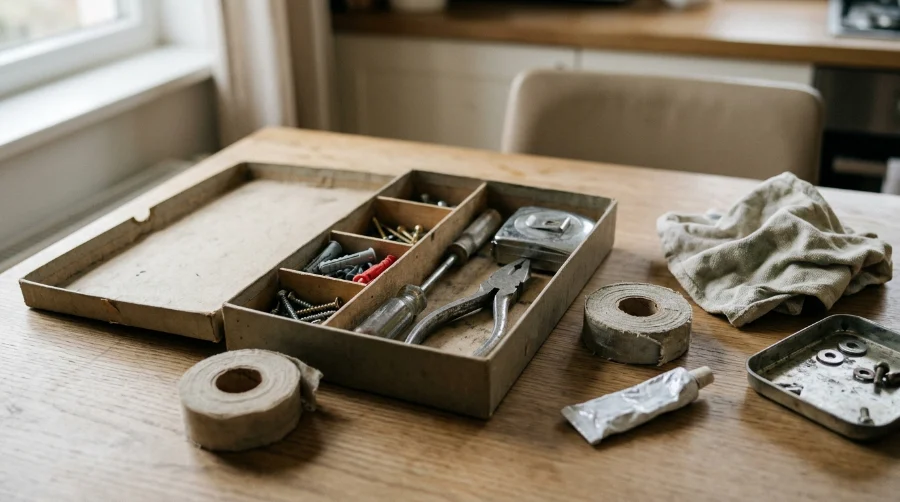
A Small Repair Kit for Everyday Household Fixes
Most household repairs are small. A cupboard door that has worked loose, a picture that needs a proper anchor, a gap around a worktop or a squeaky hinge rarely…
Moving is the one moment when every possession is handled individually. That makes it an excellent opportunity to reduce what a household owns, because the effort…
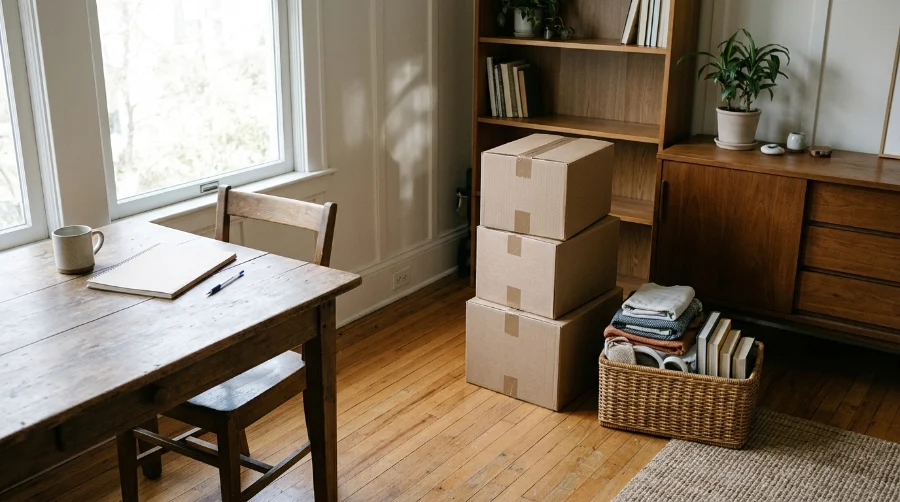
Moving is the one moment when every possession is handled individually. That makes it an excellent opportunity to reduce what a household owns, because the effort of packing an unwanted item becomes obvious. A move handled well does not simply transfer clutter to a new address. It sends things to the right destination and arrives with fewer, better-chosen belongings.
The biggest mistake is leaving sorting until packing day, when everything must go into a box quickly and the easiest choice is to keep it all. Begin several weeks before the move if possible, working through one area at a time. Early sorting gives time to sell, donate or pass on items without rushing.
Set a simple target for each session, such as one cupboard or one drawer. Short, regular sessions are more effective than a single exhausting weekend, and they leave the home liveable while the sorting is under way.
Working room by room is natural, but certain categories spread across the whole home. Books, clothing, cables, photographs and paperwork often sit in several places. Dealing with a category as a whole shows the true quantity and makes decisions easier. Gathering every book in one spot, for example, quickly reveals how many are unlikely to be read again.
A practical approach is to combine the two: work through rooms, but keep a few category boxes for items found in different places. This avoids repeatedly revisiting the same decision.
Every item should be assigned to one of four outcomes: keep and pack, donate or sell, recycle or dispose of, and return to someone else. Four options are enough to make decisions without endless deliberation. A pile marked undecided should be kept small and revisited once, since it otherwise becomes a way of avoiding the choice.
Be honest about the cost of keeping something. If an item has not been used in a year, takes up space and would cost money and effort to move, that is useful information. The question is not whether an object could be useful someday, but whether it is useful to this household now.
Begin with low-emotion zones such as spare linens, kitchen duplicates and storage boxes that have not been opened in months. These build momentum and produce quick results. Save photographs, heirlooms and children's items for later, when the habit of deciding has become easier.
Sentimental items deserve more time, but they should not be used as a reason to postpone the whole process. Set them aside in a single labelled box, make a limited selection, and revisit the rest calmly rather than deciding under pressure.
Once the destination is known, measure the new space and let it guide decisions. A bookshelf that fit the old apartment may not fit the new one. A wardrobe full of clothes that never suited the climate can be reduced before it is carried. Knowing the actual storage available prevents arriving with more than the new home can hold.
Take photographs or note the dimensions of key areas such as closets, kitchen cupboards and the garage. Use them when deciding how much of each category to keep. This turns decluttering from a vague wish into a practical plan.
Paperwork deserves a dedicated pass. Keep essential documents in one clearly labelled file that travels with the household, and scan or photograph other papers that need to be retained but not carried. Shred anything sensitive rather than placing it in a donation box.
Delete duplicate photographs, old downloads and unused files from devices before moving them. Digital clutter is easy to ignore because it takes no physical room, but it costs time to sort later and can make a new workspace feel disorganized from day one.
Set a collection point for items leaving the home and arrange a drop-off before moving day. A full box sitting in a hallway for weeks is likely to be unpacked again. Book a collection or choose a regular drop-off point, then take the items promptly.
Check local rules for disposing of paint, batteries and electronics, which often cannot go in household waste. A little research beforehand prevents a last-minute problem.
After reducing, pack by category and label each box clearly. Keep a small box of essentials for the first night: toiletries, a change of clothes, basic tools, chargers and a few familiar items. Arriving at a new home with everything sealed in unlabelled boxes makes the first days far harder than they need to be.
Note which boxes belong in which room, and keep the number of rooms in the labels consistent. This turns unpacking into a sequence rather than a search.
One frequent error is sorting other people's belongings without agreement. Agree as a household what can be donated or discarded, particularly where children and shared items are involved. A move is a good opportunity to reduce, but it is not a reason to make decisions for someone else.
Another is keeping an item solely because it was expensive. Past cost cannot be recovered by moving it. Judge possessions by their usefulness and place in the home now.
Photographs, gifts and heirlooms are the hardest things to decide about, and they should be left until the practical decisions are done. By then the habit of sorting is easier, and there is a clearer picture of how much space the new home offers. Choose a modest, defined container for these items rather than a whole box of everything. Keeping a small selection with real meaning is more valuable than carrying a large collection that is never looked at in the new home.
Reducing clutter before a move takes time, but it pays back in packing, transport and unpacking. Fewer boxes mean lower costs, a faster move and a new home that feels settled sooner. Start early, sort by category, use four clear outcomes and let the new space guide the decisions. The result is not just an easier move but a lighter, more intentional set of belongings at the other end.
Guides that pair well with this one.
Most household repairs are small. A cupboard door that has worked loose, a picture that needs a proper anchor, a gap around a worktop or a squeaky hinge rarely…
A home inventory is a record of what you own and where it is. It does not need to be a complicated spreadsheet. A simple list with a few photographs can help you…
Small home problems become expensive when nobody looks at them for months. A weekly maintenance routine is not a deep cleaning session. It is a short, repeatable…