Everyday Home Tips

Before a Week Away - A Short Home Checklist
Leaving a home for a week is easier when the preparations are ordinary and repeatable. A short checklist removes the need to remember everything on the day of…
Small home problems become expensive when nobody looks at them for months. A weekly maintenance routine is not a deep cleaning session. It is a short, repeatable…
Small home problems become expensive when nobody looks at them for months. A weekly maintenance routine is not a deep cleaning session. It is a short, repeatable check that catches drips, worn parts and blocked filters before they turn into repairs.
A routine that takes two hours will be postponed. Aim for a set of tasks that can be done in fifteen or twenty minutes, with a few monthly jobs added separately. The point is consistency, not intensity.
Choose a day that already feels like a reset, such as Saturday morning or the evening before bin day. Put the list somewhere visible and tick off each item. A printed page on the fridge works better than a note buried in a phone.
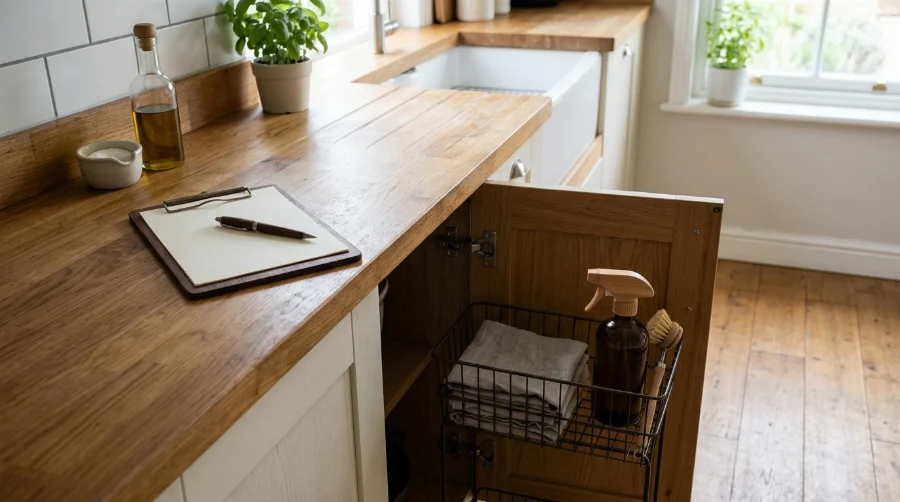
Look under the sink, around the toilet base and beneath the washing machine for signs of damp. Feel the pipes rather than relying on what you can see. A small patch of moisture found early is usually a loose connection; left alone, it can damage a cabinet floor.
Clear the kitchen drain of food scraps and run water briefly through rarely used sinks. A slow drain is easier to deal with before it becomes blocked. Check the shower and bath for cracked sealant as well, since water behind a tile can cause damage that is not visible at first.
Many heating and cooling systems use filters that need regular attention. The interval depends on the model, the household and whether anyone has allergies, so check the manual. A common range is every one to three months, but your own system should be the guide.
Clean the lint filter in the dryer after each load, and check the vent path occasionally for a build-up. A blocked vent makes the machine work harder and can be a fire risk. Wipe the door seal of a front-loading washer and leave the door open to dry between loads.
Smoke alarms and carbon monoxide alarms should be tested regularly. Many households use the first of the month as a reminder, which is easy to remember and does not rely on a calendar notification. Press the test button and replace batteries when the manufacturer says to, not only when the alarm begins to chirp.
Check that exits are not blocked and that a fire extinguisher, if you keep one, is accessible and in date. These checks take minutes and belong in the same routine as checking the boiler or the heating controls.
Heating systems are usually reliable until they are not, and a small change in sound or performance is easier to act on early. Once a month, check that the controls respond when you adjust them and that the hot water runs at a consistent temperature. If a radiator is cold at the top while the rest of the room warms, it may need bleeding.
Keep the manufacturer's instructions somewhere you can find them, along with the name of a qualified engineer. In many regions, certain gas or electrical work must be carried out by a registered professional. Knowing that before an emergency saves time and avoids unsafe attempts at a repair.
A short walk around the building once a week reveals things that are missed indoors: a loose garden hose, a blocked drain opening, peeling paint on a fence or a branch touching a window. Seasonal checks matter too. Gutters need clearing when leaves collect, and outdoor taps may need protecting before a cold spell.
You do not need to fix everything on the spot. Write it down and deal with the small jobs when you have time. The value of the walk is noticing problems while they are still small.
A maintenance list maintained by one person tends to fail when that person is busy. Assign a few items to each family member based on ability and routine. One person tests alarms, another checks the washer, another clears the outdoor drain.
Keep the tasks specific. "Check the kitchen" means different things to different people, while "wipe the washer seal and check under the sink" is clear. Children can help with simple jobs such as clearing lint or reporting a dripping tap.
Rotate the less pleasant jobs occasionally. If the same person always handles the drain or the outdoor tap, resentment builds even when the tasks are small. A short rotation keeps the routine fair and means more than one person notices when something changes.
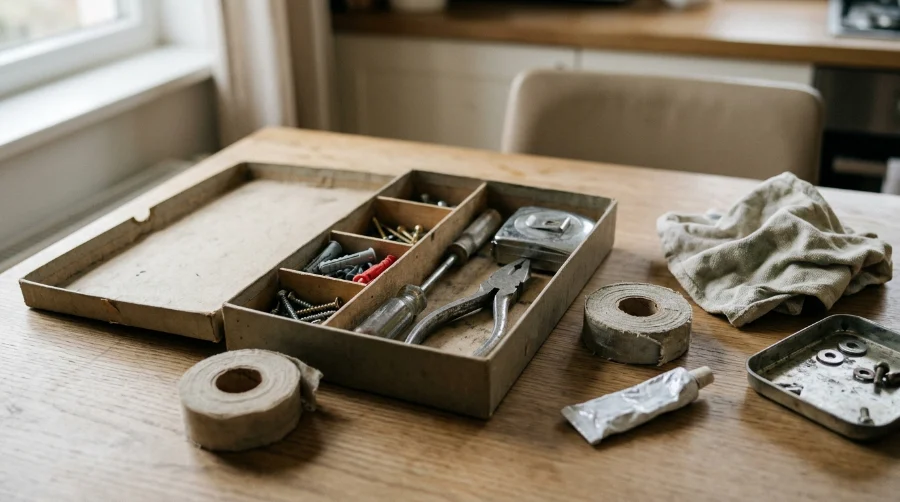
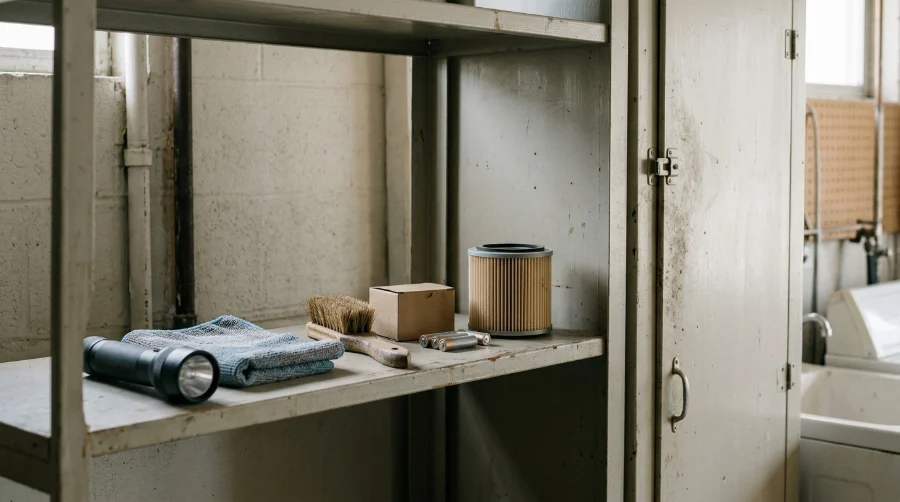
Store a torch, a cloth, a small brush, spare batteries and a note pad in one place. Most routine checks need nothing more. A short record of when filters were changed or alarms tested prevents guessing later.
Do not turn the record into a complicated spreadsheet. A page with dates is enough. If a repair is needed, keep the details with the record so the next person knows what was done and when.
Another mistake is confusing maintenance with cleaning. A clean home can still have a blocked vent or a worn seal. Keep the two routines separate so neither crowds out the other.
If the list feels daunting, begin with five checks: under the sink, the washer seal, the dryer lint path, a smoke alarm test and a walk around the outside. Add more only after those become automatic. A small routine done every week protects a home better than a long list attempted twice a year. On busy weeks, do the shortest version rather than skipping the check altogether.
Guides that pair well with this one.
Leaving a home for a week is easier when the preparations are ordinary and repeatable. A short checklist removes the need to remember everything on the day of…
Most cleaning plans fail for the same reason: they ask for more than a normal week can deliver. A long list of daily chores looks impressive on paper, but it…
Most household repairs are small. A cupboard door that has worked loose, a picture that needs a proper anchor, a gap around a worktop or a squeaky hinge rarely…