Everyday Home Tips
Five Weekly Checks That Prevent Costly Home Repairs
Small home problems become expensive when nobody looks at them for months. A weekly maintenance routine is not a deep cleaning session. It is a short, repeatable…
Leaving a home for a week is easier when the preparations are ordinary and repeatable. A short checklist removes the need to remember everything on the day of…
Leaving a home for a week is easier when the preparations are ordinary and repeatable. A short checklist removes the need to remember everything on the day of departure, when attention is usually on tickets, luggage, and time. The aim is not to secure a house like a locked facility. It is to prevent the small problems that turn a return home into a bad day.
Most of the useful work can be done the evening before leaving. That leaves the morning for the things that genuinely cannot be done early, such as emptying the last bin or loading the car. A checklist written the night before also reveals missing items while shops are still open.
Set out anything that needs to be packed or posted, and deal with the post itself. A full letterbox signals that nobody is home. Arrange for mail to be held or collected if the service is available locally, or ask someone to call in. This matters more for security than for the letters themselves.
Water damage is one of the most expensive problems a household can return to, so check the obvious places before leaving. Look under sinks, around the washing machine, and near the hot water cylinder for damp patches or a loose connection. If anything looks wrong, deal with it before departing rather than hoping it holds for a week.
In cold weather, heating should be left low enough to protect pipes but not so high that energy is wasted. Many systems have a frost setting or a holiday mode; if the property is likely to freeze, keep the heating on a low steady setting rather than turning it off completely. Check the manufacturer's guidance or ask a qualified person if the system is unfamiliar.
Know where the main water stop is and leave it accessible. Turning the water off is sensible for a longer absence or in a property with a history of leaks, but it affects anything that needs a supply, such as an automatic irrigation system. Make the decision based on the home rather than following a rule copied from someone else.
A week away is long enough for food to spoil. Eat or freeze fresh items that will not last, and check the fridge for anything opened that could leak. Raise the temperature slightly if the appliance allows it and the contents are shelf-stable, following the manufacturer's instructions.
Check that the fridge door closes properly and that nothing is propping it open. A door left ajar for a week wastes energy and can spoil everything inside. Empty the drip tray if the model has one, and clean any spills that could attract insects.
Bins should be emptied, particularly anything containing food waste. A sealed bin in a warm room will smell on return and may attract pests. Take the waste out on the day of departure rather than the day before.
A dark, silent house is a target. A timer that switches a lamp on in the evening gives the impression that someone is home. Choose one or two rooms visible from the street and set the timer to change through the week, rather than leaving one light on constantly.
Cancel or pause regular deliveries that would otherwise pile up: milk, newspapers, and parcels. A single delivery notification is harmless; a week of accumulated items is not. If the household uses a parcel locker, check that it will not be full on return.
Do not draw every curtain closed for a week. Closed curtains can look empty and stop a neighbor noticing anything unusual. Leave enough of the window uncovered for daylight to pass and for the home to look occupied.
Walk the whole property, including the rooms rarely used, and check that every window is closed and locked. Pay attention to small windows above sinks and bathrooms, which are easy to miss. Check both doors, including any garage or garden access, and confirm that locks engage fully.
If the home has an alarm, set it and confirm that it is working before leaving. Tell only the people who genuinely need to know that the property will be empty. Public posts about travel plans can reach far more people than intended.
Keys left with a neighbor should be handed over directly rather than hidden outside. A spare key under a pot is a risk in any season, but especially when the house will be unattended.
If someone will visit the home while the household is away, leave clear instructions: where the boiler controls are, how to use the alarm, and what to do if a tap leaks. One page is enough. A vague request to "check the house" is less useful than a short list.
Pets and plants need arrangements made in advance. Leave written feeding instructions, the contact details of a vet, and any medication with clear doses. For plants, group them where they receive suitable light and water them according to their needs rather than giving every plant the same amount. A single deep water before leaving suits some plants; others need a regular carer.
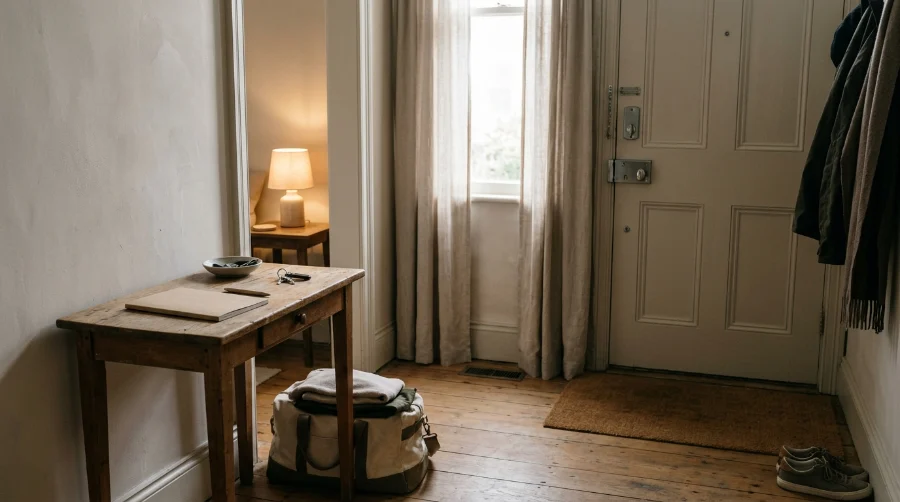
Before leaving, think about the return. Put a bag with a change of clothes near the door so the first morning back is simple if everyone arrives tired. If the journey is long, leave a note with any urgent jobs that must be done the moment the household gets home.
On the morning of departure, use the checklist rather than relying on memory. The list should be short enough to complete in a few minutes. Long lists get skipped, and a skipped list is worse than a short one followed properly.
The best leaving-home checklist is one a household will actually repeat. Keep it to the tasks that prevent real problems: clear food, check water and heating, secure openings, manage post, stop deliveries, and arrange care. Everything else is optional.
After the first trip, adjust the list. Remove anything that never mattered and add anything that was forgotten. Over time it becomes a reliable record of what this particular home needs, which is far more useful than a general checklist copied from elsewhere.
Guides that pair well with this one.
Small home problems become expensive when nobody looks at them for months. A weekly maintenance routine is not a deep cleaning session. It is a short, repeatable…
Most cleaning plans fail for the same reason: they ask for more than a normal week can deliver. A long list of daily chores looks impressive on paper, but it…
Most household repairs are small. A cupboard door that has worked loose, a picture that needs a proper anchor, a gap around a worktop or a squeaky hinge rarely…