Bathroom Ideas
Towel Storage That Lets Them Dry
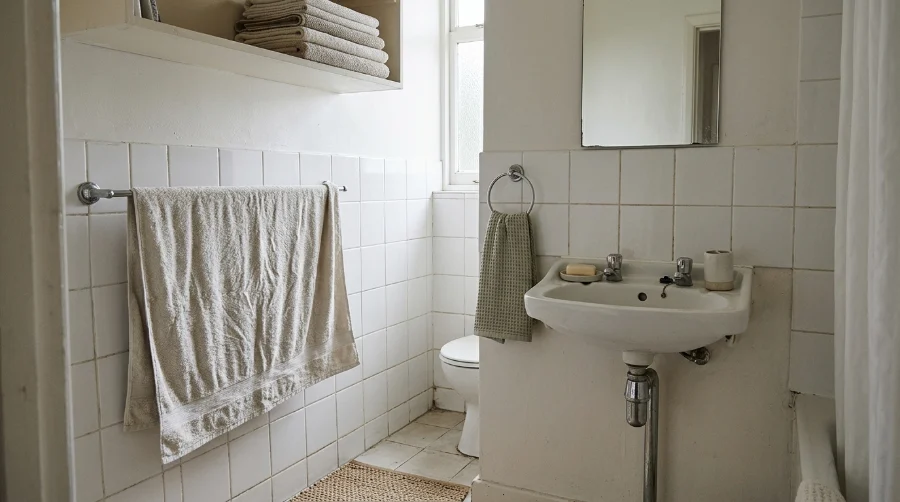
Towels are bulky, and a small bathroom rarely has a good place for them. Left on a hook behind the door, they stay damp and never quite dry. Piled on a shelf, they…
A bathroom designed for adults assumes a user who can reach the tap, judge hot water, and step over the bath edge. Children can do none of these reliably. Setting…
A bathroom designed for adults assumes a user who can reach the tap, judge hot water, and step over the bath edge. Children can do none of these reliably. Setting up a bathroom for kids is mostly about adjusting heights, reducing hazards, and making the right action the easy one.
Crouch down to a child's height and look around the bathroom. Anything sharp, heavy, or tempting at that level is worth reviewing. Bottles within reach should be checked, the bin should have a lid that stays closed, and the bath or shower edge should be assessed as a fall risk.
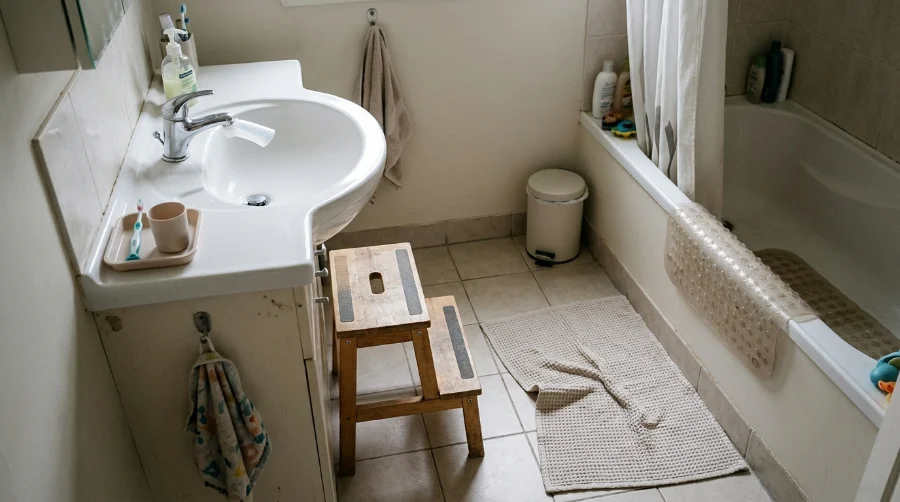
Handwashing is the habit most children practise daily, and it fails when the sink is too high. A stable step stool lets a child reach the tap independently. Choose one with a wide base and a non-slip surface; a stool that slides on a wet floor is worse than no stool at all. Keep it beside the sink when not in use so it becomes part of the routine rather than something fetched each time.
A tap extender that directs water inward can help a child wash hands without leaning over the basin. These are simple fittings, but they should be checked regularly for tightness and cleaned like any other fixture.
Scalding is a serious risk because children react slowly and their skin burns at lower temperatures than adult skin. Set the home's hot water cylinder to a safe temperature if the model allows it, and check the setting after any plumbing work. Where a setting cannot be changed, supervising a child's bath and running cold water first becomes more important.
Teach a consistent order: cold water first, then hot, with the water checked by an adult before a child gets in. Bath thermometers remove guesswork for young children, though they do not replace supervision. A child can turn a tap while playing, so never leave a young child alone in a bath, even for a moment.
Anti-scald devices fitted to taps or showers add a layer of protection but are not a substitute for care. If the family uses a shower with an overhead head, check that a child cannot turn the control to full hot by accident.
Wet bathroom floors are the most common source of injuries. A non-slip mat inside the bath or shower and a absorbent mat on the floor outside make a real difference. Both should dry quickly; a soggy mat becomes a slipping hazard of its own.
Check the grip on any mat regularly. Some lose their backing after repeated washing, and a mat that moves underfoot is dangerous. Replace it rather than trying to secure it with tape that will lift in a damp room.
Keep the floor clear of toys, bags, and clothing. Bath toys belong in a container that is emptied after use, not scattered across the floor where the next person steps. A simple rule — toys go in the basket before the water goes out — is easy for children to follow.
Toothbrushes, soap, and a cup belong at a height a child can manage, because these are the items meant to be used independently. Cleaning products, medicines, and sharp objects belong somewhere a child cannot reach, ideally behind a latch. The distinction should be deliberate, not a matter of whatever shelf happened to be free.
Use a small tray at child height for the items used every morning and evening. When everything needed is in one shallow tray, a child can complete the routine without climbing or opening cupboards. A basket with a handle can be brought to the sink and put away afterwards.
Keep the number of products small. Children do not need several bottles of soap or a row of bubble baths. Fewer items are easier to put back and easier for an adult to check.
A setup for a toddler will not suit a school-age child. Choose items that can be adjusted: a stool that remains useful as a small step, a hook lowered as the child grows, a towel ring at a height that can be changed. Fixing everything at a toddler's height means replacing it all in two years.
Hooks work better than rails for children, who often cannot reach a high bar. Place one hook at chest height for a hand towel and another lower for a bathrobe. Label a hook or a shelf with a picture if several children share the room, so each knows where their things go.
Give children a small job they can own, such as hanging their towel or putting the stool back. A task that takes ten seconds gives them a role in keeping the room usable and reduces the number of items left on the floor.
Children can manage many parts of a bathroom routine, but they cannot manage ventilation, cleaning products, or electrical safety. Keep the extractor fan in use after showers, since a damp room grows mould quickly. Wipe water from silicone edges and taps during the weekly clean rather than waiting for a dark line to appear.
Electrical sockets near water need proper covers, and any appliance used in the room should be stored away after use. A hairdryer left plugged in beside a basin is a risk that is easy to remove. Keep cords short and out of reach where possible.
Medication should never be kept in a bathroom cabinet accessible to children, even in a child-resistant container. Store it elsewhere, and check that visitors understand where items are kept if they are staying with the family.
Do not rely on a child to remember a rule that the room itself makes difficult. If the stool is across the room, handwashing will be skipped. If towels hang too high, a wet towel will end up on the floor. Put things where the routine happens.
Do not decorate with glass objects or heavy ornaments at a child's height. A bathroom is a wet room, and a broken glass item creates work and risk at the same time. Keep surfaces simple and wipeable.
Finally, do not assume a child-friendly bathroom has to look like a children's room. Bright characters and themed accessories date quickly and often create more visual clutter than calm. Safe heights, non-slip surfaces, and a few clear habits matter far more than the color of the towel.
The best child-friendly bathroom is not heavily equipped. It has a stable stool, a clear place for daily items, safe water temperatures, and floors that dry quickly. Those few choices let children do more for themselves while leaving the risks in adult hands.
Guides that pair well with this one.
Towels are bulky, and a small bathroom rarely has a good place for them. Left on a hook behind the door, they stay damp and never quite dry. Piled on a shelf, they…
Few rooms have less give than a small bathroom. The door, the toilet and the shower all need clear space, and there is usually no spare corner for a cabinet. Good…
Deep bathroom drawers have a particular way of hiding things. Small tubes roll to the back, cotton pads settle behind a row of bottles, and the items used every…