Bathroom Ideas
Bathroom Cleaning Habits That Cause Trouble
Bathrooms get dirty quickly because they are warm, damp and used many times a day. A good cleaning routine does not require harsh chemicals or a whole afternoon. It…
A bathroom used by the whole family has a problem that a single-user bathroom does not: everyone has their own things, and the morning rush puts them all in the…
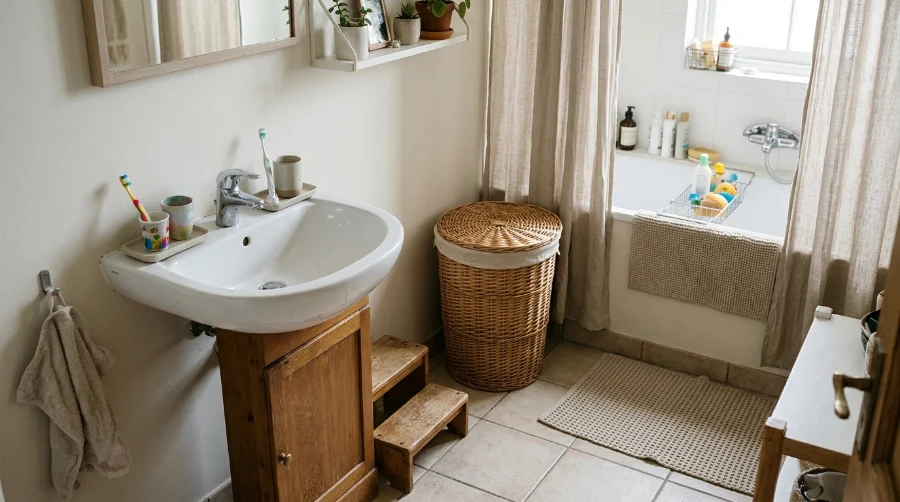
A bathroom used by the whole family has a problem that a single-user bathroom does not: everyone has their own things, and the morning rush puts them all in the same small space at the same time. Arguments about a missing toothbrush or a wet towel are rarely about tidiness. They are usually about ownership and access. Organizing a shared bathroom is largely about giving each person a defined place and making the routine predictable.
A shared bathroom accumulates items faster than any other room. Bottles, toys, spare brushes and half-used tubes gather on every surface. Begin by removing anything that is not used in the bathroom daily. Empty bottles, outgrown children's items and duplicates should leave. The fewer things that live in the room, the less there is to argue about.
Be realistic about what belongs there at all. Some families keep everything in the bathroom; others keep only the items used at the sink and store the rest nearby. In a small bathroom, the second approach almost always works better. A shelf in a hallway cupboard can hold spares without crowding the room.
Most conflicts disappear when everyone has their own spot. Assign a section of shelf, a tray or a hook to each family member. A distinct color for each person's container, or a simple name label, makes ownership clear without constant reminders. Children in particular respond well to having a place that is theirs.
At the sink, give each person a small tray or a designated section for toothbrush, toothpaste and face cloth. When the trays are lifted for cleaning, the whole surface clears in seconds. This is far easier than asking several people to keep their items tidy on a shared ledge.
Watch how the bathroom is used in the twenty minutes before school and work. The busiest sequence usually involves the sink, the mirror and the toothbrushes. Put the items used at that time at the front and at a height that suits the tallest regular user, with a step or lower shelf for children. Anything needed only occasionally should sit behind or above.
Keep the route from the door to the sink clear. A bin, a laundry basket or a pile of toys in that path causes bottlenecks when several people are trying to get ready. Move obstacles out of the line, even if that means storing less in the room.
A shared bathroom feels chaotic when wet towels and dry clothes end up together. Give wet items an obvious destination: a hook for a used towel, a hamper for dirty laundry and a rail where a towel can dry fully. Keep clean and used items clearly apart so nobody has to guess which is which.
A hamper with an open top works better than one with a tight lid that children will not lift. Place it where it does not block the sink or the door. If laundry is regularly left on the floor, the hamper is in the wrong place or too small.
Households function better when expectations are clear and short. A brief note near the mirror listing two or three habits, such as hanging the towel and putting the toothbrush back, helps more than repeated verbal reminders. Keep it positive and few in number; a long list is ignored.
Where children are involved, use words they understand and pictures where helpful. Agree the rule together so it is a shared arrangement rather than one person's demand. Rotate responsibility for a simple weekly reset so the task does not always fall to the same adult.
Shared bathrooms often include children, so store anything that should not be handled by them out of reach. Cleaning products, medication and sharp tools need a closed cupboard or a high shelf. If a lock is needed, install one that adults can open quickly but young children cannot.
Check that the floor stays clear and dry, since several people using the room in succession increases the risk of slips. A mat with a non-slip backing and a habit of wiping splashes make the room safer for everyone.
A shared bathroom arrangement that works today may fail as children grow or routines shift. Every few months, look at where items are actually being left. A repeated pile usually shows that the assigned spot is inconvenient or too small. Adjust the system to the real behavior rather than insisting people follow a layout that no longer fits.
When a child becomes old enough for more privacy or a different routine, update their zone. The aim is a system that adapts quietly, not one that needs a full reorganization each time.
One common error is buying more storage before reducing the number of items. More baskets simply give clutter more places to hide. Reduce first, then add only the trays or hooks that the remaining items genuinely need.
Another is giving one person responsibility for keeping the whole room tidy while everyone else ignores it. A shared bathroom needs shared habits. Keep the tasks small and visible so each person can do their part without a long discussion.
A shared bathroom gets dirty fast, so the cleaning method has to be fast too. Keep a cloth and a gentle cleaner in the room, and give each person one simple job that takes a minute. Wiping the basin after use, hanging a towel and clearing the drain of hair prevent most of the build-up that leads to a longer scrub later. When the routine is short and shared, the room stays reasonably clean without one person carrying all the work.
A shared family bathroom will never stay spotless all day, and it does not need to. It needs clear ownership, a workable morning route, sensible places for wet items and a few simple habits everyone follows. When those are in place, the room functions smoothly and the small daily arguments largely disappear.
Guides that pair well with this one.
Bathrooms get dirty quickly because they are warm, damp and used many times a day. A good cleaning routine does not require harsh chemicals or a whole afternoon. It…
Towels are bulky, and a small bathroom rarely has a good place for them. Left on a hook behind the door, they stay damp and never quite dry. Piled on a shelf, they…
Few rooms have less give than a small bathroom. The door, the toilet and the shower all need clear space, and there is usually no spare corner for a cabinet. Good…