Bathroom Ideas
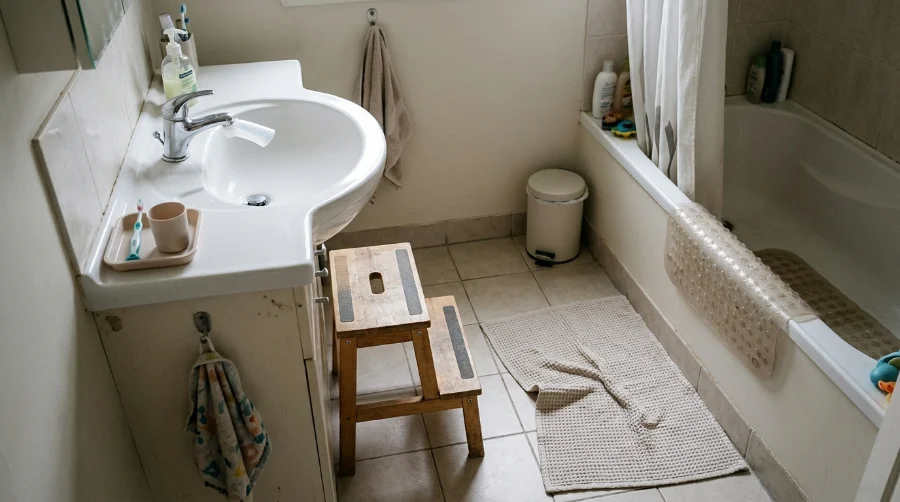
A Bathroom Set Up at a Child's Height
A bathroom designed for adults assumes a user who can reach the tap, judge hot water, and step over the bath edge. Children can do none of these reliably. Setting…
Towels are bulky, and a small bathroom rarely has a good place for them. Left on a hook behind the door, they stay damp and never quite dry. Piled on a shelf, they…
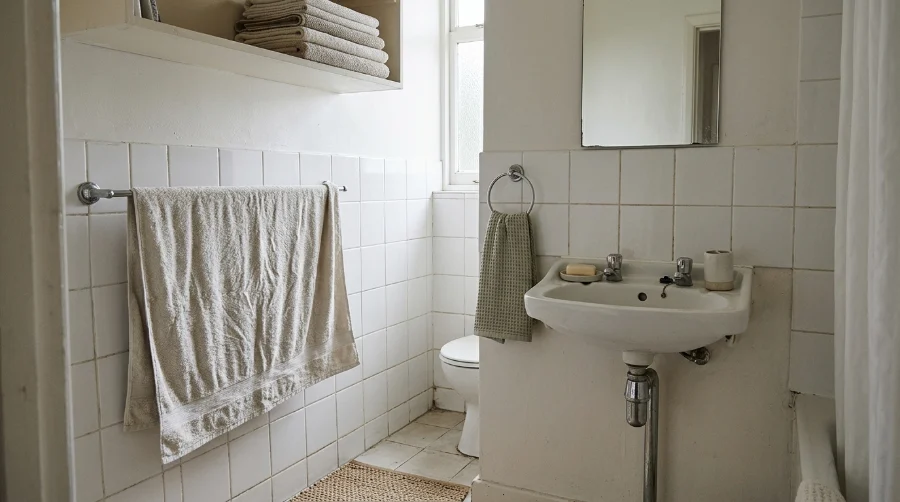
Towels are bulky, and a small bathroom rarely has a good place for them. Left on a hook behind the door, they stay damp and never quite dry. Piled on a shelf, they take up space that bottles need. Storing towels well in a compact bathroom means thinking about drying as much as tidiness, and placing each towel where it is actually used.
A household does not need every towel it owns in the bathroom at once. Keep only the towels in daily use there and store spares in a linen cupboard or another room. This single change frees surprising space. A small bathroom can easily hold two or three active towels but struggles with a stack of ten.
Decide which towel serves which purpose: one for hands at the sink, one for the shower or bath, and perhaps a separate one for children. Assigning roles prevents several towels being used lightly and left lying about, which is a common cause of clutter.
A towel left bunched on a rail stays wet in the middle and begins to smell. Hang towels unfolded over a rail with enough width for air to move on both sides. Where space is short, a rail that projects from the wall is better than one tight against it, since a gap behind the fabric allows air to circulate.
After a shower, shake the towel out before hanging it. This takes a second and makes a real difference to how quickly it dries. In a bathroom with poor airflow, a towel that dries slowly is a sign that the room needs better ventilation, not that more hooks are needed.
In a small bathroom, the wall space above the door and the side of the door itself are often empty. A high rail can hold a spare towel that is reached only occasionally. Hooks on the back of the door can hold a dressing gown or a towel used after a bath, provided the door still opens fully and the hooks do not knock the frame.
Check the door swing and the wall thickness before fitting hardware. Towels are light, but a loaded rail on a hollow wall still needs proper fixings. Use anchors suited to the wall type and avoid placing hooks where a person's shoulder will hit them when entering.
A single ring at the sink suits a hand towel and uses very little space. A longer rail suits a bath towel that needs to hang open. In a compact room, two short rails at different heights can work better than one long rail, because they let two towels dry separately without overlapping.
Heated rails are useful where the climate is damp and the bathroom is used heavily, though they add running cost. A simple rail that can be removed or repositioned is a flexible choice for a rented home. Match the fitting to how the room is used rather than to what looks tidiest on paper.
Extra towels do not need to live in the bathroom. Keep a small stack in a bedroom cupboard or a hallway closet and rotate them in when the active towels need washing. This keeps the bathroom uncluttered and means a clean towel is always available.
Fold spares to a consistent size so they stack neatly and take a predictable amount of space. There is no need for elaborate folding displays; a tidy, even stack is enough. Label a basket if several people in the home share the cupboard.
Where children use the bathroom, hang at least one towel at a height they can reach. A low hook, a step beside the rail or a small rail added below the main one gives them a place to put a towel back without help. This is more effective than expecting them to reach an adult-height rail and regularly finding damp towels on the floor.
Use a distinct color or a simple label for each child's towel if that reduces mix-ups. Keeping the arrangement predictable helps children build the habit of hanging things up after use.
One mistake is installing several towel rails in the hope that more hooks will solve damp towels. More hooks rarely help if the towels are hung bunched or the room is poorly ventilated. Improve how each towel hangs first, then add storage only if a clear need remains.
Another is storing clean and used towels in the same basket. Once mixed, neither is certain to be clean. Give used towels an obvious spot, such as a hamper or a single hook, and keep clean ones somewhere separate and dry.
Most small bathrooms have one or two overlooked spots. The wall above a door, the side of a shower screen or the narrow space beside a toilet can often hold a rail or a small stack of towels. A corner shelf high on the wall keeps spare towels dry and within reach without using the floor. Before fitting anything, check that the space is not directly in the path of shower spray and that the door or lid can still open freely. An awkward corner that suits a towel might be useless for anything else, which makes it worth using.
The towels themselves affect how well a small bathroom works. Thin, lightweight towels dry faster and take less room on a rail than thick, heavy ones, which can stay damp for days in a poorly ventilated room. If storage is tight, a smaller bath towel that dries quickly is more useful than an oversized one that never fully dries between uses. Keeping a consistent size also makes folding and stacking predictable, so spares fit the shelf without constant rearranging.
Towel storage in a small bathroom is mostly about reducing quantity, giving each towel room to dry and putting it close to where it is used. None of that requires a larger room. With a clear rail, a place for spares and a sensible height for children, the bathroom becomes easier to use and easier to keep fresh.
Guides that pair well with this one.
A bathroom designed for adults assumes a user who can reach the tap, judge hot water, and step over the bath edge. Children can do none of these reliably. Setting…
Bathrooms get dirty quickly because they are warm, damp and used many times a day. A good cleaning routine does not require harsh chemicals or a whole afternoon. It…
A bathroom used by the whole family has a problem that a single-user bathroom does not: everyone has their own things, and the morning rush puts them all in the…