Home Decorating
Decorating a Small Home With the Right Plants
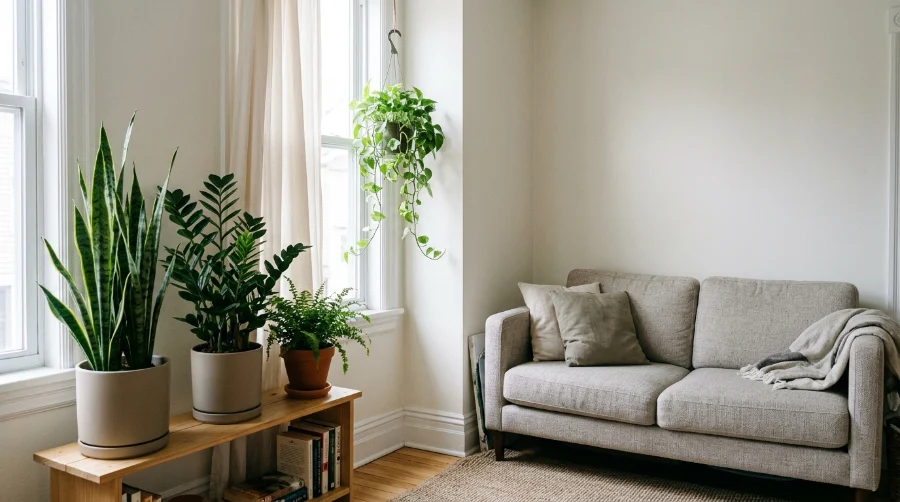
Plants bring color, texture and a sense of life into a small home, and they cost far less floor space than most decorative furniture. They also have a reputation…
One bright ceiling light can make a small living room feel flat, and it rarely gives enough light for the things people actually do there. Layered lighting solves…
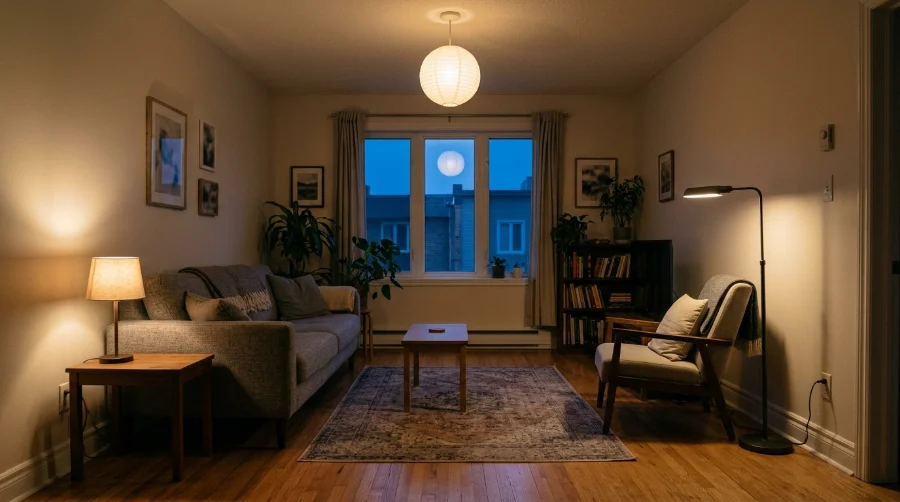
One bright ceiling light can make a small living room feel flat, and it rarely gives enough light for the things people actually do there. Layered lighting solves that by combining general light, task light and a softer accent. The idea is not to fill the room with fixtures, but to give each part of the room the right kind of light.
General light is the light you use when you enter the room and want to see the whole space clearly. In most homes that comes from a ceiling fixture. If the existing fixture is harsh, changing the bulb can make a noticeable difference before any new hardware is bought.
For living rooms, warm light around 2,700–3,000K usually feels more comfortable than cool white. A dimmer is even more useful, because the same room needs different levels for reading, watching television and hosting guests. If the fixture is wired to a wall switch, adding a dimmer is a small electrical job that should be done by a qualified electrician.
Task light is focused light for a particular activity. A floor lamp beside a reading chair, a table lamp near a sofa, or a small lamp on a side table all count. The useful question is not how the lamp looks in a catalogue but whether the light falls where the page or the hands are.
Choose a shade that directs light downward or sideways rather than one that throws most of it at the ceiling. In a small room, a lamp with a slim base takes less space than a wide ceramic one. If the side table is tiny, a wall-mounted reading light can do the same job without occupying the surface at all.
Accent light is the soft layer that makes a room feel finished. It can be a small lamp on a shelf, a strip of light behind a bookcase, or a picture light above a piece of art. Its purpose is not to light the whole room but to add a few brighter points that give the eye somewhere to rest.
In a small living room, one or two accents are enough. Too many small glowing points start to look like a display. A lamp behind a plant can create a gentle shape on the wall, which adds depth without taking up floor space.
Lighting that all comes from the ceiling tends to flatten a room. Mix heights instead: one source high, one at eye level and one low. A floor lamp behind a sofa, a table lamp on a side table and the ceiling fixture already create three different levels.
Avoid putting every lamp against the same wall. Spreading the light sources around the room reduces hard shadows and makes the space feel larger. If a corner always looks dark, it may need a lamp rather than a brighter bulb somewhere else.
Daylight is part of the lighting plan even though it switches off at night. Keep the window area free of tall furniture and heavy layers that block it. A mirror on the wall opposite the window can bounce daylight into the room, but it needs to face something worth reflecting.
Sheer curtains can soften bright sun without making the room dark. If the room gets strong afternoon light, a warmer bulb in the evening helps the transition feel natural rather than abrupt.
A large floor lamp with a wide shade can dominate a small living room. A slim lamp with a smaller shade often gives enough light while staying visually quiet. The same applies to pendants: a single small pendant may suit a compact room better than a wide multi-light fixture.
Before buying, check the stated width and height of the shade, not just the height of the whole lamp. Many lamps look modest online but have shades that overhang a narrow side table. Measure the space around the table and leave room for people to move past it.
When several light sources share a room, mismatched bulbs become noticeable. One cool white bulb beside two warm ones can make the space feel inconsistent. Choose a similar color temperature for all the main fixtures, even if the wattage differs for task and general lighting.
Check the fitting before buying a dimmable bulb, because not every bulb and dimmer combination works together. If flickering appears, the pair may be incompatible. Keep the packaging until you are sure, and replace bulbs of the same type at the same time so the light stays even.
If drilling is not allowed, plug-in wall sconces, floor lamps and battery-operated picture lights can create most of the same layers. Cord covers and clips keep cables tidy along the wall. A plug-in sconce should be mounted securely so it does not pull away from the wall when the cord is moved.
Temporary does not mean flimsy. Choose fixtures with stable bases and shades that do not wobble. In small rooms, a lamp that is knocked over easily is both annoying and unsafe.
The biggest mistake is relying on a single overhead light for every activity. The second is choosing bulbs by brightness alone, without thinking about color. A very bright, cool bulb can make a small room feel like an office. Another frequent problem is placing a reading lamp behind the reader, so the light is blocked by their body and head.
Check the room at night, not only during the day. Walk through it, sit in each seat and notice where the light falls. If one chair is always in shadow, solve that specific problem instead of replacing every bulb. Good lighting in a small living room is a set of small, deliberate choices, not a single dramatic purchase. Stand in the main seating position before buying a lamp, because a shade that looks fine from the doorway can shine directly into your eyes from the sofa.
Guides that pair well with this one.
Plants bring color, texture and a sense of life into a small home, and they cost far less floor space than most decorative furniture. They also have a reputation…
Curtains do more than cover a window. In a small room they affect how much daylight comes in, how wide the window appears and how much visual space the wall seems…
A handful of hooks on a wall is a tidy idea that can turn into a busy one. Each item added seems harmless on its own, but coats, hats, bags and tools gradually…