Home Decorating
Curtain Details That Change a Small Room
Curtains do more than cover a window. In a small room they affect how much daylight comes in, how wide the window appears and how much visual space the wall seems…
Plants bring color, texture and a sense of life into a small home, and they cost far less floor space than most decorative furniture. They also have a reputation…
Plants bring color, texture and a sense of life into a small home, and they cost far less floor space than most decorative furniture. They also have a reputation for being difficult to keep in a compact space, where light is limited and surfaces are few. Decorating with plants successfully is mostly about matching the plant to the available light and using the vertical space that a small room already has.
Choose plants after looking at the room, not before. Note which windows get bright direct sun, which get soft indirect light and which corners stay dim most of the day. A plant placed in the wrong light will struggle no matter how well it is watered. Matching the plant to the position is the single most important decision.
South-facing windows suit plants that enjoy strong light. A spot a few feet away from a bright window, or a north-facing room, suits plants that tolerate indirect light. Dark hallways and windowless bathrooms suit only a small group of very tolerant plants, and even those may need to be moved occasionally to recover.
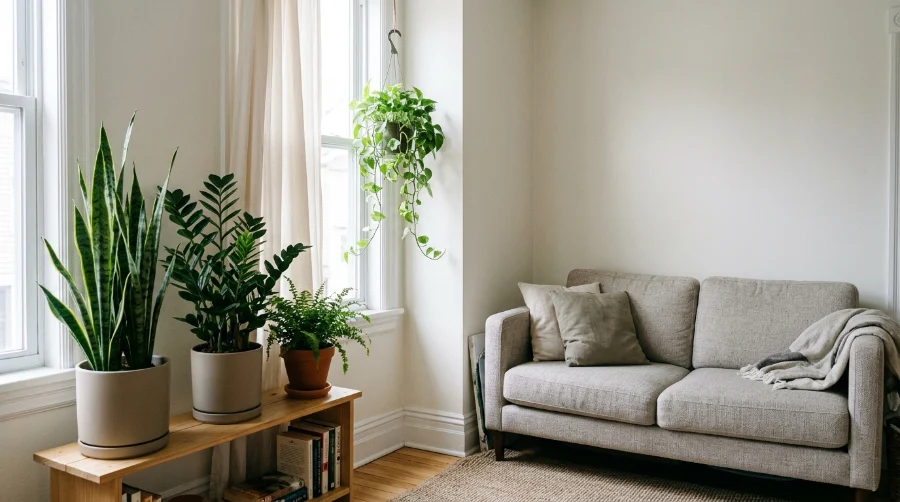
In a small room, the floor is usually the busiest surface. Hanging planters, wall-mounted pots and a tall stand with several levels all add greenery without taking up walking space. A single tall plant in a corner draws the eye upward and makes a ceiling feel higher, while a cluster of small pots on a windowsill uses space that is otherwise empty.
Before hanging anything, check how much weight the ceiling or wall fixing can take and whether a watering can can reach it easily. A plant that is awkward to water will be neglected. A simple hook and a lightweight pot are usually better than an elaborate arrangement that is hard to maintain.
Several plants placed together look more deliberate than one pot in each corner. Grouping also creates a small humid pocket around the leaves, which many indoor plants prefer. A group of three on a shelf, with different heights and leaf shapes, reads as a single decorative feature.
Vary the containers but keep a shared element, such as a similar color or material, so the group feels intentional. Too many different pot styles make a small room look busy. A plain pot in a neutral tone lets the plant itself provide the interest.
A large plant can transform a room, but it can also overwhelm a small one. Consider the mature size of a plant rather than the size it has in the shop. A small specimen may grow into a broad plant that blocks a walkway or crowds a table. Check the likely height and spread before choosing a spot.
In a tight room, upright and narrow-growing plants are easier to place than wide, spreading ones. A slender plant in a corner leaves the floor clear, while a bushy plant on a low stand may need more room than expected.
Small homes cannot spare much surface space, so pots should not take over tables, counters or window ledges that are needed for daily life. Use the edges of a room, the top of a shelf or a dedicated plant stand instead. Avoid placing pots where a person routinely sets down keys, cups or a laptop.
Saucers protect surfaces from water, but standing water attracts insects and can damage wood. Empty them after watering, or use a pot with a removable inner container so the plant can be watered away from the furniture.
An attractive arrangement that takes twenty minutes to water each week will not last. Keep plants where they can be reached with a watering can and where fallen leaves can be seen and cleared. A plant tucked behind a sofa or high on a cupboard is easy to forget until it is too late.
Choose plants that suit the household's habits. A home that is away frequently needs more tolerant varieties. A household with pets or young children should check which plants are safe before bringing them in, since some common houseplants are harmful if chewed.
One common mistake is filling every available surface with greenery. In a small room, too many plants create visual noise and make the space feel crowded. A few healthy, well-placed plants have far more impact than a large collection that competes for attention.
Another is ignoring the style of the room. Plants suit almost any interior, but the pots should sit comfortably with the existing colors and materials. A single bright pot can work as an accent; a collection of clashing colors can make a calm room feel scattered.
Decorating with plants only works while the plants are healthy. Check the soil regularly rather than watering on a fixed schedule, since a plant in a cool room needs far less water than one in a warm, bright spot. Yellowing leaves, soft stems or dry brown edges are signals that the conditions need adjusting. A plant that is struggling does little for a room, while a healthy one changes its atmosphere completely.
Keep a small cloth nearby to wipe dust from large leaves, which otherwise blocks light and dulls the color. Rotate a pot occasionally so growth stays even. These small habits take minutes a week and make the difference between plants that merely survive and plants that genuinely improve the space.
The container is part of the decoration, so it should sit comfortably with the room. A small number of pots in a shared material or color ties a group together and stops a collection from looking like a jumble. Neutral ceramic, plain terracotta and simple woven baskets work in most interiors and let the foliage provide the color. Where a room already has a strong palette, choose pots within it rather than introducing a competing shade. This keeps the plants feeling like part of the room rather than objects placed on top of it.
Decorating a small home with plants does not require a large collection or expert knowledge. Look at the light, use height, group a few plants with care and choose varieties that fit the room and the household's routine. When the plants are healthy and the placement is deliberate, a few pots do more for a small room than a great deal of furniture.
Guides that pair well with this one.
Curtains do more than cover a window. In a small room they affect how much daylight comes in, how wide the window appears and how much visual space the wall seems…
A handful of hooks on a wall is a tidy idea that can turn into a busy one. Each item added seems harmless on its own, but coats, hats, bags and tools gradually…
A neutral room can feel calm without feeling flat. Texture is what keeps it interesting: the weave of a cushion, the grain of a wooden table, the pile of a rug…