Furniture & Layout
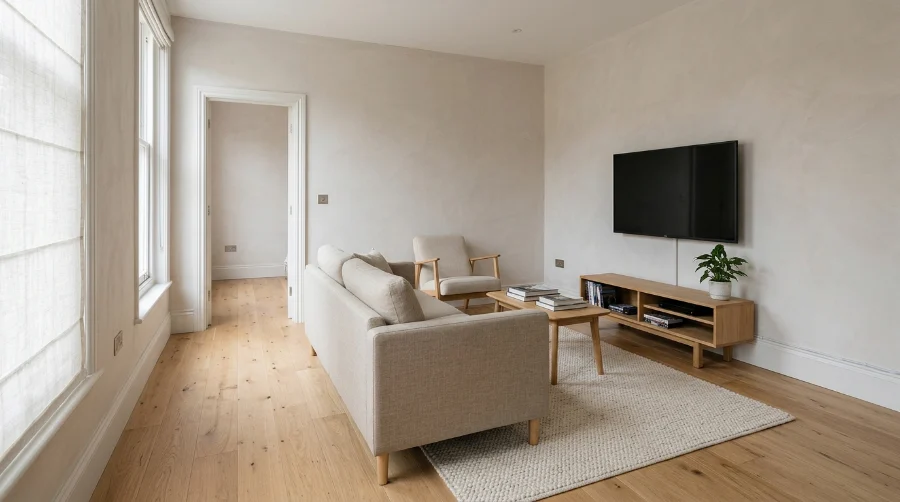
Placing a TV Where the Window Glare Falls
A television and a window often want the same wall, and the room has to decide which one wins. The window brings light and, in many homes, the only interesting…
Some living rooms have two things that both want to be the center: a fireplace and a television, or a window with a view and a fireplace. Furniture cannot face two…
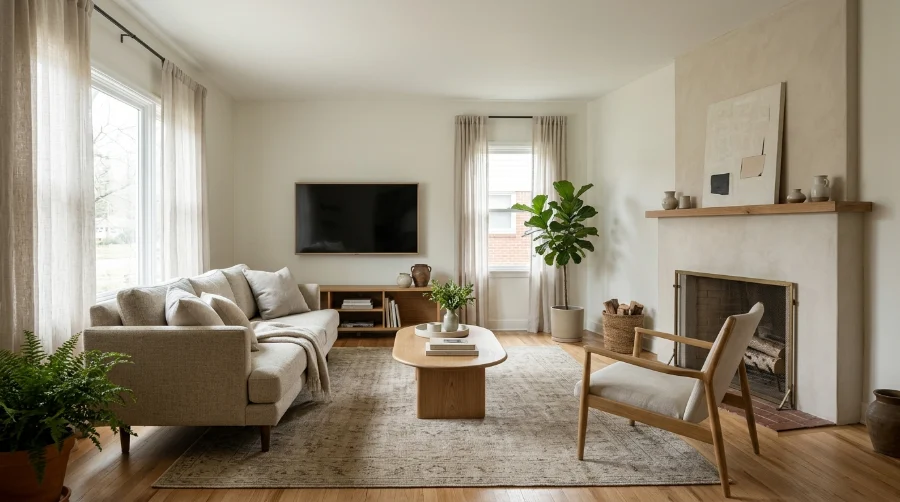
Some living rooms have two things that both want to be the center: a fireplace and a television, or a window with a view and a fireplace. Furniture cannot face two directions at once, so the arrangement has to make a choice. The rooms that work best are not those that pretend both features are equal, but those that decide which one leads.
Start by writing down what each feature is good for. A fireplace invites people to gather and talk; a television asks for a clear sightline and a fixed viewing position. A window with a view draws people toward the light, while a built-in shelf may be useful but rarely needs seating aimed at it.
Some features are visual anchors but not activity anchors. A beautiful fireplace may be worth looking at without everyone facing it for the whole evening. A television is different because watching it requires most of the group to face one way. Knowing the difference prevents a room being arranged around something that does not actually need an audience.
Consider how the room is used on a normal week. If the television is on every evening and the fire is lit occasionally, the seating should favour the screen. If the household gathers to talk and the fire is the reason people sit down, the fireplace should lead. The answer depends on the household, not on which feature cost more.
Once the roles are clear, pick one feature as the main focus. Arrange the largest seats around it first, then fit the second feature into the remaining space. Trying to balance both from the start usually produces a room where nothing feels settled and every seat is half turned.
A primary focus does not have to dominate the whole room. It simply sets the main direction of the seating. The second feature can still be visible and enjoyed, especially from the side of the room, without demanding that every chair points toward it.
In a room used for both conversation and television, a common solution is to angle the main sofa slightly rather than placing it square to the screen. This keeps the television view usable while making conversation feel easier. A small change in angle often removes the sense that the room is split in two.
Furniture can serve both features without constant rearrangement. A chair that swivels can face the fire for a conversation and turn toward the screen when needed. A pair of lightweight chairs can be moved by one person, which makes the room flexible without making it complicated.
Avoid seating that is fixed in a position that suits neither feature. A long sofa placed directly between a fireplace and a television often blocks the view of one and turns its back on the other. Moving it perpendicular to both, with chairs on either side, usually gives a better result.
Leave enough space behind seating for people to pass. When a room has two focal points, movement tends to cross it diagonally rather than along one side. A path that looks clear on a plan may be blocked once the chairs are angled.
Stand in each seat and look toward the primary feature, then toward the secondary one. Notice what blocks the view: a lamp, a tall plant, or the back of another chair. In a room with two focuses, a single object in the middle can spoil both sightlines at once.
Keep the center of the room low. A low coffee table works better than a tall one, and a lamp can often move to a side table. If one feature is a window, avoid placing anything tall directly in front of it. If one is a fireplace, keep the hearth area clear so the fire can be seen from more than one seat.
Reflections add another complication. A television opposite a window can be hard to see in daylight, and a mirror facing the window can throw light across the seating. Adjusting a curtain or moving a screen a short distance along the wall often solves a glare problem that seems difficult at first.
Lighting can make two focuses feel intentional. A brighter light near the reading or television area and a softer one near the fireplace tell people how each part of the room is meant to be used. The two areas can share the same room without competing if the light changes between them.
Keep general lighting even so the room does not feel dark in one half. Task lights should support the activity rather than replace the overall light. A single dimmer that controls the whole room is less useful than two switches that allow one area to be softened while the other stays bright.
Do not try to give both features an equal number of seats. That divides the room into two small groups and leaves neither comfortable. One main group with a second, smaller arrangement usually works better.
Do not place the television where it forces every chair to face away from the window or the fire. A screen on an adjacent wall is often a better compromise than one directly opposite the main seating. The best position is rarely the first one considered.
Do not add more furniture to fill the space between the two focuses. An empty stretch of floor is often what keeps the room usable. In a dual-focus room, clear space is what allows people to turn, stand, and move between activities.
Mark the main seats in their proposed position and use the room for a few days before moving heavy furniture. Sit in each place at different times of day and with the television both on and off. A room with two focal points has to work in more than one mode, and a short trial shows which arrangement genuinely serves both.
When the main direction is right, the second feature stops competing. The room reads as one space with two useful things in it, rather than a room that cannot decide what it is for. That clarity is more valuable than any attempt to give both features equal attention.
Guides that pair well with this one.
A television and a window often want the same wall, and the room has to decide which one wins. The window brings light and, in many homes, the only interesting…
A fireplace naturally draws the eye, but that does not mean every piece of furniture should point at it. The room still has to work for conversation, walking and…
The sofa is usually the largest single object in a small room, so its position decides how everything else fits. Move it a few inches and a walkway opens or closes…