Furniture & Layout
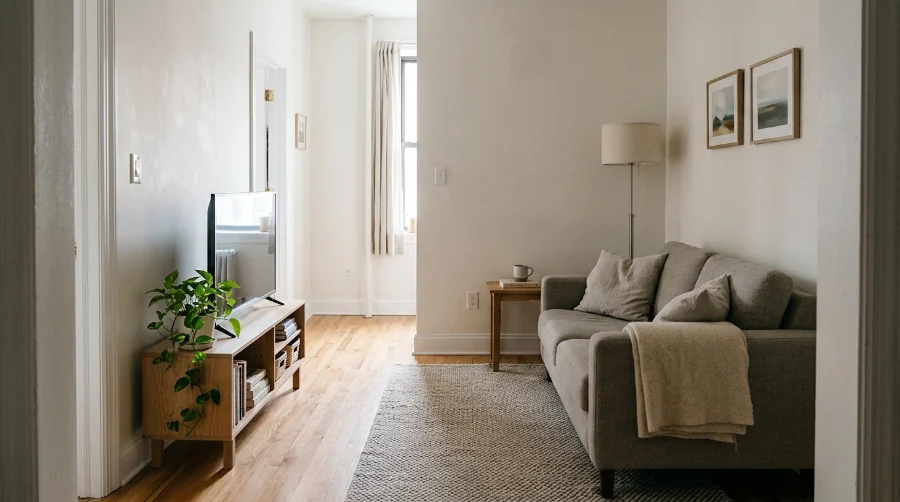
Where a Sofa Should Sit in a Small Room
The sofa is usually the largest single object in a small room, so its position decides how everything else fits. Move it a few inches and a walkway opens or closes…
Most layout advice assumes a room with one ordinary window on one ordinary wall. Real rooms have corner windows, low sills, windows beside the door, or a window…
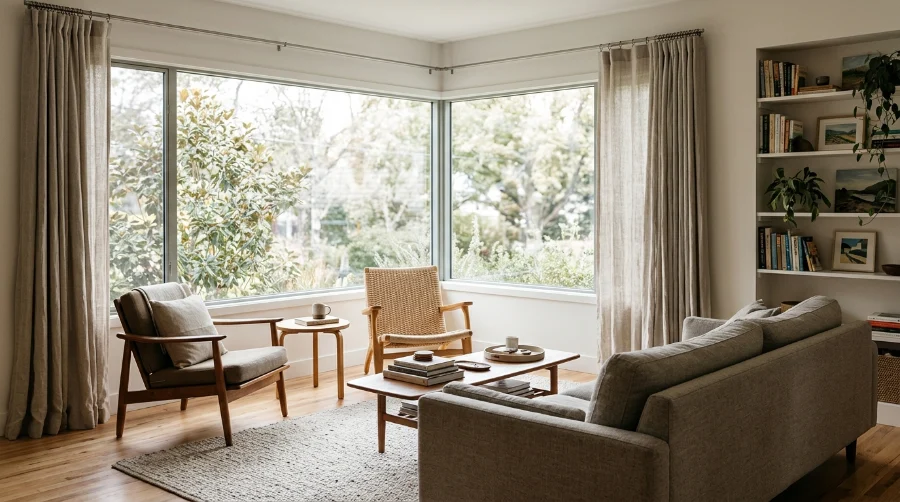
Most layout advice assumes a room with one ordinary window on one ordinary wall. Real rooms have corner windows, low sills, windows beside the door, or a window that sits exactly where a sofa should go. In those rooms, the window is not decoration to work around. It is the feature that decides where everything else can stand.
Start with the window itself, not the floor. Note the width, the sill height, and how far the glass or frame projects into the room. A deep sill or a radiator beneath the glass changes what can be placed against that wall. Record which way the window opens and whether a handle or a lock swings inward, because an open casement can occupy more space than the frame suggests.
Also note where daylight falls at different times. A sofa placed directly in strong afternoon sun may be uncomfortable for reading or watching a screen. A desk facing a bright window can cause glare rather than good light. Watching the room for a day gives more useful information than any standard layout rule.
A corner window removes the natural place for a tall item such as a bookcase or a floor lamp. Trying to fill the corner usually makes the room feel crowded and blocks light from two directions at once. Treat the corner as open space and let the furniture sit away from it.
In a room with a corner window, a low seat beneath one section of glass can work well if it does not cover the opening. Keep the seat low enough that it does not cut across the view, and leave clear access to the window latch. A small side table beside the seat gives it a purpose without creating a barrier.
If the room needs storage, put it on the solid wall opposite the window rather than forcing it beside the glass. A wide, low unit below window level can also work, provided it does not block ventilation or a radiator.
A low sill creates an awkward strip of wall that is too short for a standard chair and too high for a rug. The simplest solution is to leave the wall as it is and place seating at right angles to it. A sofa facing into the room with its back to a different wall avoids the problem of a low window behind it.
Where seating must sit under a low window, keep the back of the seat below the sill so the glass remains visible. A bulky high-backed sofa in front of a low window makes the room feel closed and wastes the light. A bench or a pair of low stools usually fits better.
Curtains and blinds need care here. A long curtain that pools on the floor behind a sofa collects dust and restricts access to the window. A short blind or a simple fabric that stops at the sill keeps the area usable.
When a window sits close to a door, the two openings compete. Furniture placed between them will block one or both. Measure the door swing and the window opening together, then treat the combined space as a route rather than a place for things.
A narrow console table below the window may work if it is shallow and does not narrow the path. Keep the surface almost empty, since items left there will be brushed past every time the door opens. A wall hook beyond the door edge is often more useful than a table.
In a small room, a window beside the door is often the best source of cross-ventilation. Avoid blocking it with a tall plant or a closed curtain during the day, or the room will feel stuffy even when both openings exist.
Some rooms have a view worth facing. In that case, arrange seating to look toward the window rather than toward a television or a fireplace. Two chairs angled inward with a small table between them create a place to sit that makes use of the light and the view.
If a television is also needed, place it so it does not sit directly against the window. Screen glare is a common problem in rooms with large windows, and moving a television even a short distance along the wall can solve it. A matte screen helps, but controlling the light behind the viewer is more effective.
In a room where the window prevents a conventional layout, lighting can define the seating area. A floor lamp beside one chair and a low table lamp on a nearby surface create a small pool of light that reads as a separate zone. This is useful in open rooms where the window leaves few solid walls.
Keep bulbs consistent in color temperature so the lamps and daylight do not clash. A warm lamp in strong daylight is fine in the evening, but during the day the difference can make the room feel patchy. Adjustable lamps are useful because their direction can change with the seasons.
Do not push a large piece of furniture against a window just because the wall looks empty. Blocking glass wastes light and makes the room feel smaller than it is. If a wall has a window across most of its width, leave it alone and furnish the other walls.
Do not hang a curtain rod so close to the glass that the curtains cannot open fully. In awkward rooms, curtains that only open halfway make the window feel like a mistake. Fit the rod wide enough that the fabric can clear the glass and any sill.
Do not fill the space directly in front of a window with tall plants or a bookshelf. That area is valuable for light and for the sense of depth it gives the room. Keeping it clear often makes an awkward layout feel intentional.
Before moving anything heavy, prop a piece of cardboard or a folded sheet against the wall at the height and width of the proposed item. Standing in the room with that outline in place shows quickly whether it covers the glass or crosses the light. Then leave the furniture in its temporary position for a few days and notice whether the routes still work and whether anyone actually sits where planned. Awkward windows often demand compromise, and a trial is cheaper than rearranging a room twice.
A good layout in a room with unusual windows does not fight the glass. It accepts the light, keeps the openings accessible, and places furniture where the room can genuinely be used. When the window is treated as part of the plan rather than an obstacle, the room usually feels better than a standard arrangement would.
Guides that pair well with this one.
The sofa is usually the largest single object in a small room, so its position decides how everything else fits. Move it a few inches and a walkway opens or closes…
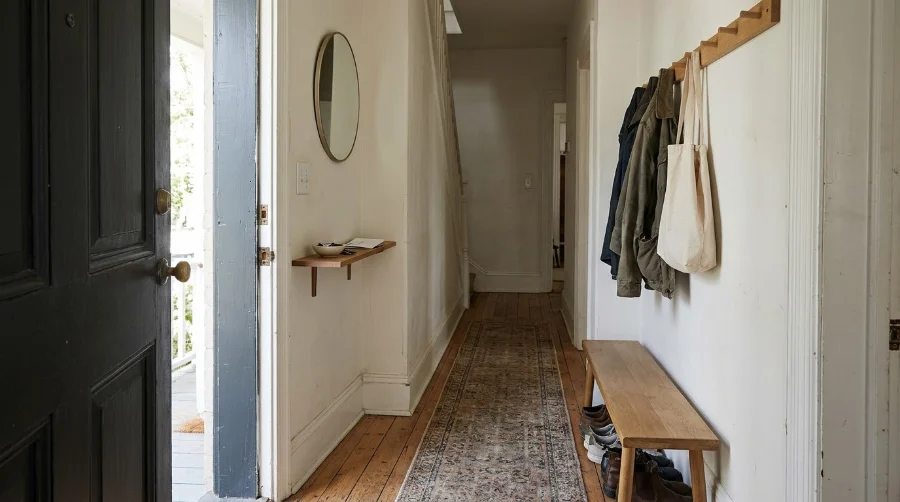
A small entryway is shaped less by the furniture put into it than by the space around the door. Before a bench or shelf is chosen, three fixed facts set the limits…
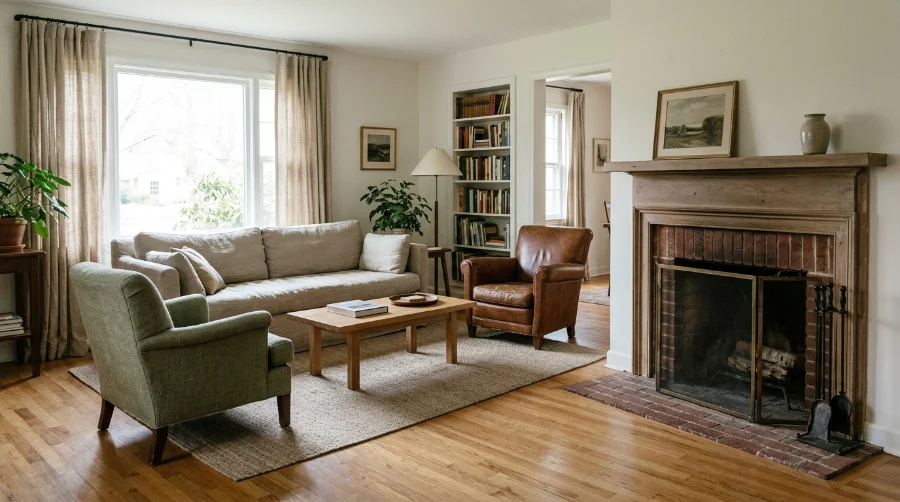
A fireplace naturally draws the eye, but that does not mean every piece of furniture should point at it. The room still has to work for conversation, walking and…