Furniture & Layout
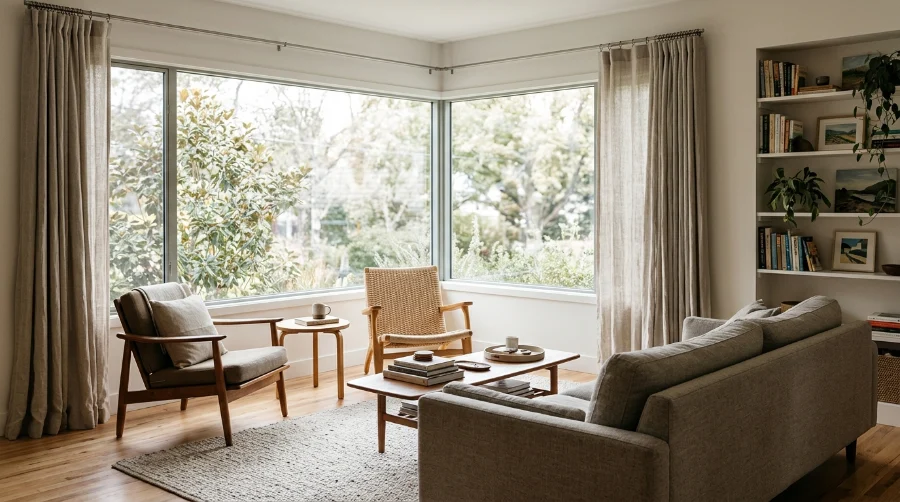
When the Window Breaks Your Layout - Furniture Fixes
Most layout advice assumes a room with one ordinary window on one ordinary wall. Real rooms have corner windows, low sills, windows beside the door, or a window…
The sofa is usually the largest single object in a small room, so its position decides how everything else fits. Move it a few inches and a walkway opens or closes…
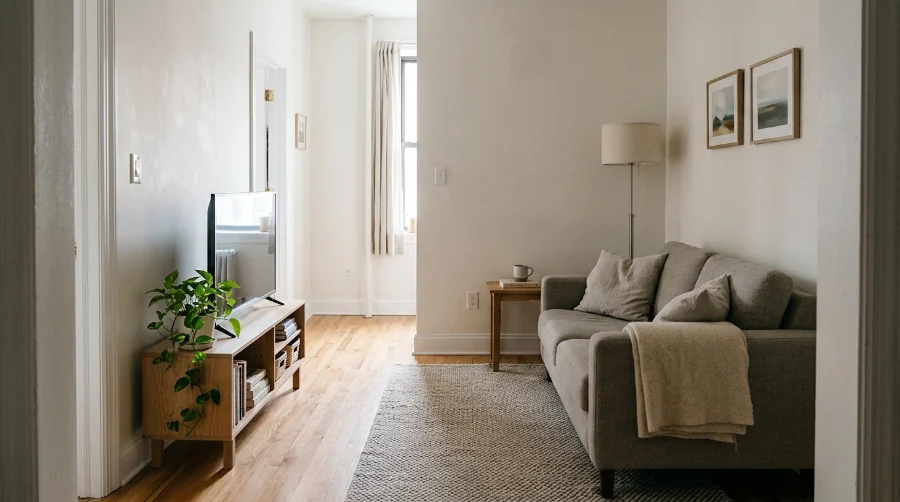
The sofa is usually the largest single object in a small room, so its position decides how everything else fits. Move it a few inches and a walkway opens or closes; turn it and the focal point changes. Getting the placement right is less about following a fixed rule and more about balancing the size of the sofa, the routes through the room and what people actually look at when they sit down.
Start with the sofa's exact width, depth and height, including the arms. Then measure the room and mark the doors, windows, radiators and any built-in features. Note the swing of each door and the path people take to reach it. Those measurements give the real boundaries within which the sofa must fit.
Also check the route used to bring the sofa into the room. A piece that fits the room may not pass through a narrow door or around a stair turn. Checking access before a purchase avoids a sofa stranded in a hallway.
In most living rooms the sofa faces the main feature: a television, a fireplace or a window with a view. In a small room, that choice is constrained by the walls. Try to align the sofa with the feature rather than placing it at an awkward angle, since a turned sofa uses more space and feels unsettled.
Where a room has two possible focal points, decide which is primary and accept a compromise for the other. A sofa that faces the television while angling slightly toward a fireplace may work, but a sofa that tries to face both usually ends up facing neither. Measure the viewing distance to a screen and make sure seats are not uncomfortably close.
A sofa should not sit across the main path through the room. People need to reach the window, the door and any other seating without squeezing past. Aim for a clear route of roughly two to three feet where possible, and treat that as more important than symmetry.
If the room is used as a passage to another part of the home, check the route at the busiest time of day. A sofa placed across a diagonal shortcut will be constantly brushed against, even if it looks fine in an empty room.
Pushing a sofa against a wall saves floor space, but a small gap behind it can make the room feel tighter and trap dust. Choose either a flush position against the wall or enough clear space to walk behind, rather than an awkward middle distance. If the sofa has a low back, leaving a few inches for a side table may be more useful than pressing it flat.
Check what sits on the wall behind. A radiator, a socket or a window will affect how close the sofa can go. Where the only available wall has a radiator, a sofa placed perpendicular to it may work better than one that blocks the heat.
A sofa that is too large will dominate a small room no matter where it is placed. Before buying, compare the dimensions with the room rather than relying on how the piece looks in a showroom. A compact two-seater or a sofa with slim arms leaves far more room than a deep, generously padded model.
Low-backed sofas make a room feel more open because the eye can see over them. Raised legs also help by leaving floor visible underneath. These details matter more in a small room than in a large one, where bulk is easier to absorb.
The sofa does not sit alone. A coffee table, a side table, a lamp and possibly a rug all compete for the same floor. Mark out the sofa position first, then check what space remains for these items. If a coffee table can only fit by blocking the route, it may be better to use a small side table instead.
Allow enough space around the seating for people to sit down and stand up comfortably. A sofa packed tightly against a table looks efficient but is uncomfortable in daily use.
Where the sofa sits determines where light is needed. A reading lamp beside one end makes the seat genuinely usable in the evening. If the main light hangs over the sofa, check that it does not create glare for people sitting below it. A wall light or a floor lamp can often solve both the practical and visual problem.
Balance the arrangement by placing something of visual weight opposite the sofa, such as a cabinet, a shelf or a piece of art. An empty wall opposite can make the room feel unfinished, even when the furniture itself is well placed.
Moving a heavy sofa more than once is unpleasant, so test the position first. Ask a second person to stand where the sofa would go and hold a light sheet or a cushion at roughly its height, then walk through the room as if the furniture were already there. Notice whether the routes still work, whether the seated view reaches the screen and where people naturally gather.
This quick rehearsal often reveals problems that are invisible on paper. It is much easier to adjust an imaginary position than to move a full-sized sofa twice.
One frequent mistake is centring the sofa on a wall without considering the door or the window. Symmetry looks tidy in a drawing but matters less than comfortable movement. Another is placing the sofa too close to the television, which makes watching uncomfortable and leaves no room for anything else.
Avoid filling the space behind the sofa with tall furniture that blocks light. Storage there should be low or open, so the room still feels airy.
The right sofa position is the one that supports how the room is used. Measure carefully, protect the walking route, match the scale to the space and give the seating a clear focal point. When the sofa is placed with those priorities in mind, the rest of the room usually falls into place around it.
Guides that pair well with this one.
Most layout advice assumes a room with one ordinary window on one ordinary wall. Real rooms have corner windows, low sills, windows beside the door, or a window…
A fireplace naturally draws the eye, but that does not mean every piece of furniture should point at it. The room still has to work for conversation, walking and…
A narrow living room is not usually short of floor space; it is short of usable width. A room that is long and slim can still feel comfortable, but only if the…