Furniture & Layout
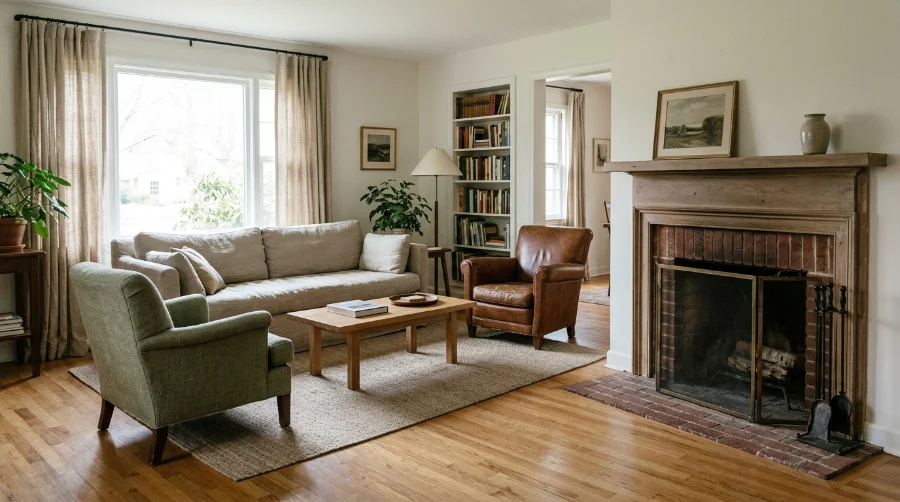
Arranging Seating Around a Fireplace
A fireplace naturally draws the eye, but that does not mean every piece of furniture should point at it. The room still has to work for conversation, walking and…
A small dining area has to do two jobs at once: seat people comfortably and let them move in and out without squeezing past furniture. The table is the obvious…
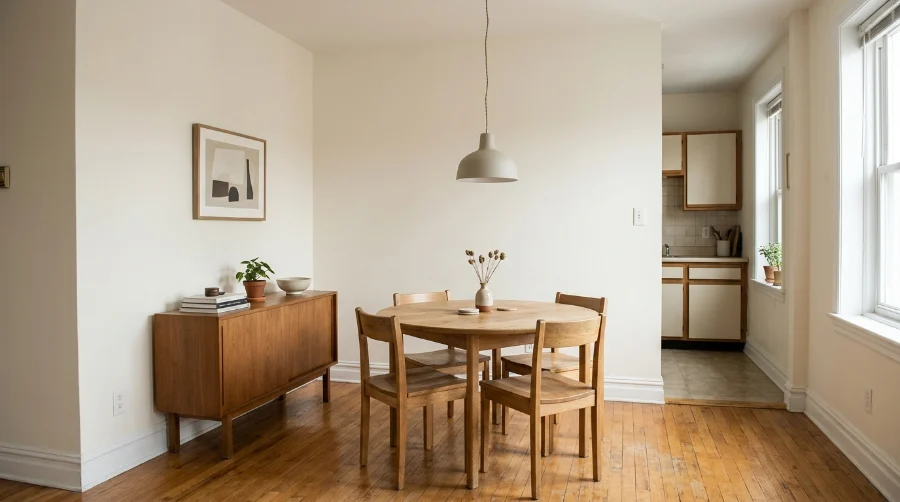
A small dining area has to do two jobs at once: seat people comfortably and let them move in and out without squeezing past furniture. The table is the obvious focus, but the space around it decides whether the room works. Careful measurements save more trouble than any particular style of table.
Write down the width and length of the space, then note doors, windows, radiators and the route to the kitchen. Leave roughly 36 inches (90 cm) behind a pushed-back chair where possible, so a person can stand and others can pass. Less than that may still work in a very small household, but it will feel tight.
Do not forget the door swing and the path people take when carrying dishes. A dining area that looks fine when empty can become frustrating when two people need to leave their chairs at the same time.
Round tables often suit small square areas because there are no corners to walk around and people can slide in more easily. A round table around 36–42 inches (90–105 cm) across can seat four in a compact space, though elbow room will be modest.
Rectangular tables fit narrow rooms better, especially when one long side can sit against a wall. A bench on that side can be tucked under when not in use. Extending tables are useful when the area is small most days but needs to seat more people occasionally.
The path between the kitchen and the table should be short and unobstructed. Avoid placing a chair at the end of the table that stands directly in this route. If the space is tight, remove one chair and add a stool that can be moved when needed.
A clear route matters more than a symmetrical arrangement. A table slightly off center is fine if people can move around it. A perfectly centred table that blocks the doorway is not.
A pendant above the table helps define the dining area, especially in an open-plan room. Hang it so the bottom sits roughly 30–36 inches (75–90 cm) above the tabletop, adjusting for the height of the people who use the room. Check that it does not block sightlines across the table.
Choose a shade that directs light downward rather than shining into people's eyes. If the room has low ceilings, a flush fixture or a pair of wall lights may work better than a low-hanging pendant. A dimmer is useful when the same space is used for work or quiet evenings.
In a small dining area, storage should be short and shallow. A low sideboard can hold table linens and serving dishes, but a tall cabinet can make the room feel narrower. Check the depth before buying; a unit that sticks out into the walkway is worse than no unit at all.
If floor space is limited, a wall shelf above the table or a narrow rail can hold a few items. Keep it sparse. A dining area looks larger when the wall behind the table is not crowded with frames and shelves.
Many small homes use the dining table for laptops, homework and paperwork. Give the surface a simple reset habit so it can return to meals quickly. A shallow tray on a nearby shelf can hold items that would otherwise stay on the table all week.
A tablecloth or placemats can mark the difference between work mode and meal mode, but they are not a substitute for clearing the surface. Keep chairs tucked in when the table is not in use. That small habit frees more space than moving furniture.
A dining table in a small home often becomes the place where keys, post and laptops land. Rather than fighting this, decide which items are allowed there and give everything else a nearby home. A shallow tray on a sideboard can collect daily items in seconds.
If there is no sideboard, a wall pocket or a small shelf near the entrance to the room works. Keep it out of the main sightline from the table so meals still feel separate from daily clutter. A basket that can be carried to another room at the end of the day is even more flexible.
Some households use a table covering to mark the change between work and meals. A simple runner that is folded away when the table is used for other things gives a clear signal. The habit matters more than the object: clearing the table takes a minute when the destination for each item is already known.
Another mistake is assuming the table must sit in the center. In a small area, pushing a rectangular table against a wall can free a useful route. It may look less formal, but it often works much better.
Mark the table size on the floor with tape and pull out imaginary chairs. Walk through the space carrying a tray. If the arrangement feels tight in this test, change it before buying furniture.
A good small dining area is not about fitting a large table into a small room. It is about choosing a table that suits the room, protecting the path to the kitchen and keeping the space easy to reset. When those things are right, the area gets used every day. A modest table that people can move around comfortably is worth more than a larger one that makes every meal feel crowded. Measure first, then choose the table that fits the life of the home.
Guides that pair well with this one.
A fireplace naturally draws the eye, but that does not mean every piece of furniture should point at it. The room still has to work for conversation, walking and…
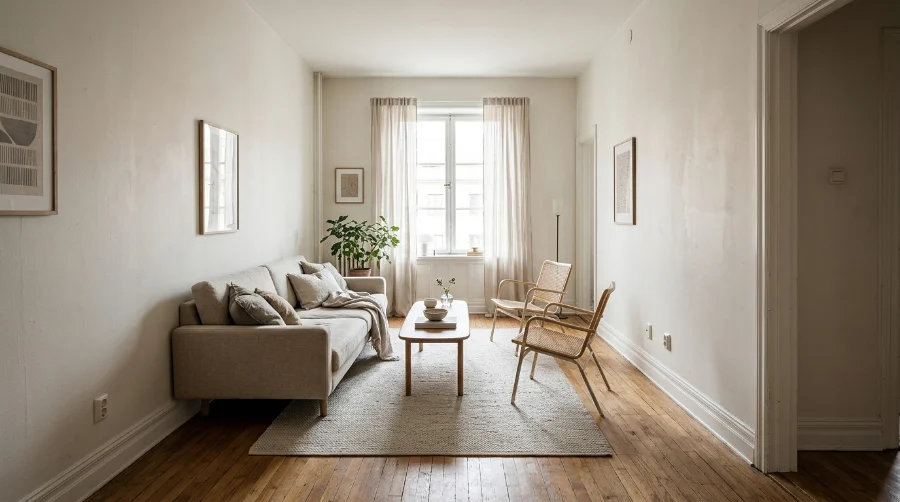
A narrow living room is not usually short of floor space; it is short of usable width. A room that is long and slim can still feel comfortable, but only if the…
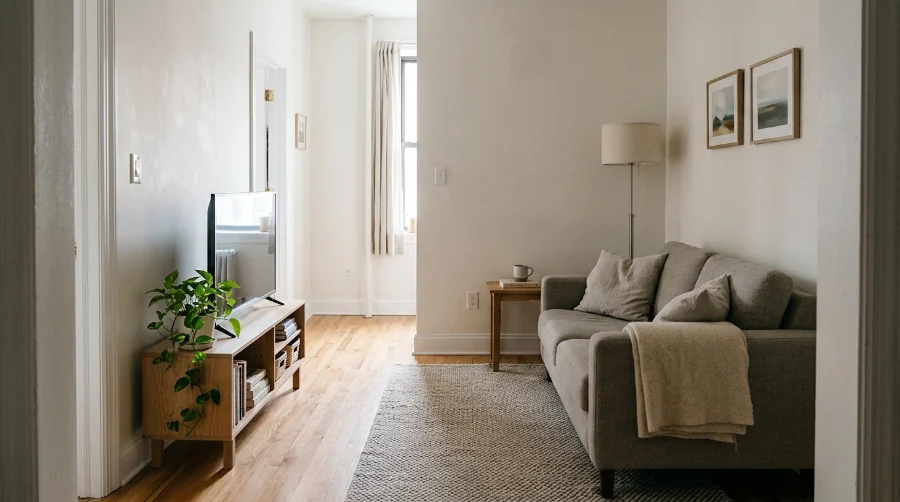
The sofa is usually the largest single object in a small room, so its position decides how everything else fits. Move it a few inches and a walkway opens or closes…