Furniture & Layout
Making a Narrow Living Room Work - One Clear Route
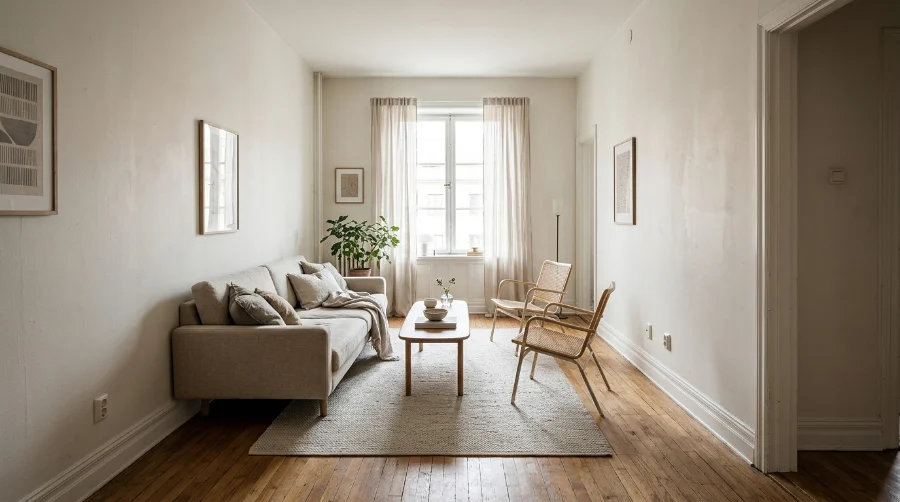
A narrow living room is not usually short of floor space; it is short of usable width. A room that is long and slim can still feel comfortable, but only if the…
A fireplace naturally draws the eye, but that does not mean every piece of furniture should point at it. The room still has to work for conversation, walking and…
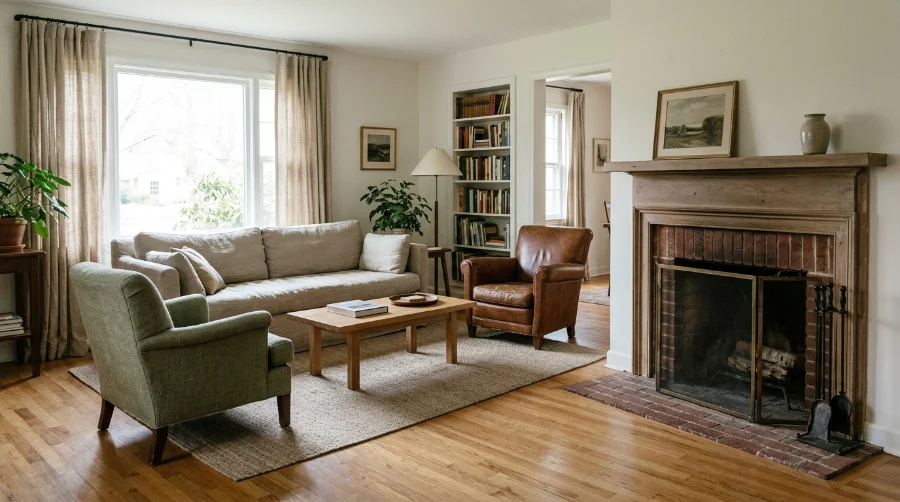
A fireplace naturally draws the eye, but that does not mean every piece of furniture should point at it. The room still has to work for conversation, walking and everyday use. Good arrangement treats the fireplace as one part of the room rather than as a wall that all seating must face.
Before moving furniture, check the manufacturer's instructions and any local rules for the fireplace. Open fires, wood stoves and gas inserts all have different requirements for how close combustible materials may be. A hearth, a guard or a built-in insert can change the safe distance considerably.
Keep rugs, cushions, throws and wooden furniture outside the stated clearance. Curtains should not hang near the opening. If the fireplace is used regularly, treat safety as a fixed boundary and plan the seating inside what remains.
In some homes the fireplace is a working heat source; in others it is mainly a visual focus. That difference changes the layout. A room that relies on the fire for heat may place seats closer, while a room where the fire is rarely lit can prioritise a television or a window view.
If a television sits above the mantel, check that the screen is at a comfortable viewing height. A fireplace can put a screen too high for long viewing, and heat may affect equipment. Keep the screen and the fire in balance rather than letting one dominate the room.
The most comfortable arrangement usually gives people a place to talk without turning their heads. If the fireplace is on one wall, angle the sofa and chairs so they form a loose conversation group. A chair that faces only the fire leaves its occupant unable to join the discussion.
Two sofas facing each other work well in a long room. In a smaller room, one sofa with two lighter chairs angled inward is easier to live with. Leave enough space between seats for people to pass without squeezing.
Trace the path from the entrance to the main seating and from the seating to any other door. Furniture around a fireplace often forms a tight half circle that blocks one of these routes. Move a chair slightly or choose a smaller table rather than asking people to sidestep.
Keep the hearth area clear of low tables and stools. Even when the fire is not lit, the space in front of it should be visible and easy to cross. A clear hearth also makes the fireplace easier to clean and maintain.
A wide, heavy mantel can overpower small furniture placed close to it. A low sofa and slim chairs often suit it better than oversized armchairs. If the fireplace is modest, a large sectional can make it disappear from the room.
Leave a little wall space on each side of the fireplace where possible. Filling every centimetre with furniture or shelves makes the wall feel crowded and reduces the effect of the fireplace as a focal point.
Rooms shift with the seasons. In cold months, seats may move closer to the fire; in warm months, the same seats may face a window. Lightweight chairs make this possible without a major rearrangement. Heavy sofas should be placed where they work all year.
Screen doors, fireguards and hearth accessories also take space when in use. Leave room for them in the plan rather than discovering that the guard cannot open fully once the furniture is in place.
The mantel often becomes the visual center of the room. What sits on it changes how far the eye travels and how heavy the wall feels. A few objects of different heights usually look better than a long row of similar items. Keep the arrangement low enough that it does not compete with a television nearby.
If the fireplace is used for heat, avoid placing fragile objects on the mantel where heat rises. Check the material of each item as well; some finishes do not cope well with repeated warmth. A simple clock, a vase and one framed piece are enough for most rooms.
Leave some empty space on the mantel rather than filling the entire length. Empty space makes the fireplace feel intentional and gives the room a pause. It also makes the mantel easier to clean, which matters in a room where dust and wood ash can collect.
Another mistake is copying a layout from a room with a different fireplace. Fireplaces vary in size, heat and position. The arrangement should respond to your own room rather than to a photograph.
Draw the room and mark the fireplace opening, the hearth and the stated clearance. Add the door swings and the main walking route. Place the largest piece first, then the smaller seats. Use tape on the floor to test the footprint before lifting furniture.
A good arrangement around a fireplace feels relaxed, not formal. People can talk, walk through the room and use the fire safely. When those needs are met, the fireplace becomes a natural part of the room instead of an obstacle everything has to work around.
Live with the arrangement for a week before making small adjustments. Notice whether people naturally move a chair, whether the coffee table gets in the way and whether the walkway stays clear when the fire is lit. Those observations tell you more than any single design rule.
If the room is used by guests, make sure they can see the fire and understand where to sit. A clear invitation to use the seating helps the room feel welcoming. The fireplace should add to the comfort of the room, not dictate every decision within it.
Guides that pair well with this one.
A narrow living room is not usually short of floor space; it is short of usable width. A room that is long and slim can still feel comfortable, but only if the…
A small dining area has to do two jobs at once: seat people comfortably and let them move in and out without squeezing past furniture. The table is the obvious…
The sofa is usually the largest single object in a small room, so its position decides how everything else fits. Move it a few inches and a walkway opens or closes…